
Mollusks are a large group of animals, with clear representatives such as snails, squid, slugs or clams. These invertebrates are studied in depth in malacology, a branch of zoology that studies everything related to them, in branches such as ethnomalacology or malacostratigraphy. Thanks to this science, you can know what the past was like, predict future ecological risks, and learn how to properly use these animals. If you want to know more about what malacology is, what it studies and why it is important, we invite you to read this article from Evidence Network.
What is malacology?
Malacology is the science that studies mollusks, being a branch of zoology and, therefore, of biology. The term comes from the Greek malakós which means soft, so it is the study of soft animals, referring to mollusks.
Once this is understood, we must know how to identify what a mollusk is. We know that clams, octopuses, snails or slugs are mollusks, and they all have characteristics in common. We can find that mollusks are all those animals that have a soft muscular body, a cavity through which they breathe and excrete called the mantle, and a gnawing structure called the radula.
Although we have the idea that all mollusks have a shell, we must know that although the majority have it, there are some that lack it or have it reduced, as is the clear example of octopuses, which have a small internal structure called a feather that gives them support, but they do not have a shell.
Here you can read more about Mollusks: characteristics, types and examples.
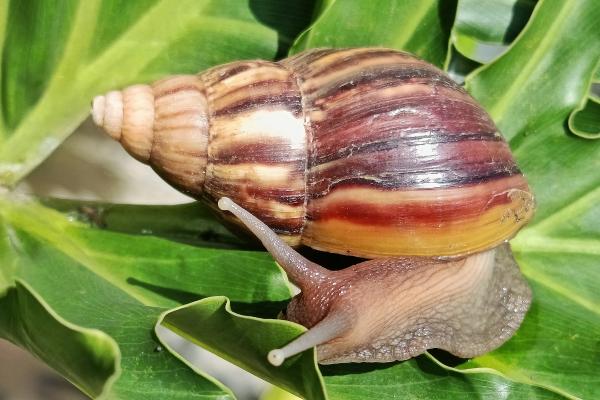
What exactly does malacology study?
Malacology studies everything related to mollusks, such as the following:
- Taxonomy: it is the way in which the different types of mollusks are classified.
- Anatomy: mollusks are complex in structure, and studying their anatomy involves studying, for example, how many spiral turns a shell has, the length of a squid’s tentacles, the shape of the radula with which they feed, among other characteristics that help determine a species as such.
- Physiology: studies the physical processes that occur within mollusks.
- Behavior: there are very interesting studies on the behavior of certain mollusks, such as octopuses, which have shown great intelligence in solving problems. Likewise, even small mollusks have important behaviors that are studied to understand how they communicate and how they respond to the environment.
- Ecology: here we analyze how mollusks interact with the environment and with other organisms from other groups, helping to understand the dynamics they generate in communities and food chains.
- Evolution: like other animals, positioning mollusks within the evolutionary scale helps to better understand how organisms develop, what they are generated from, and how the environment can modify them to differentiate into various species.
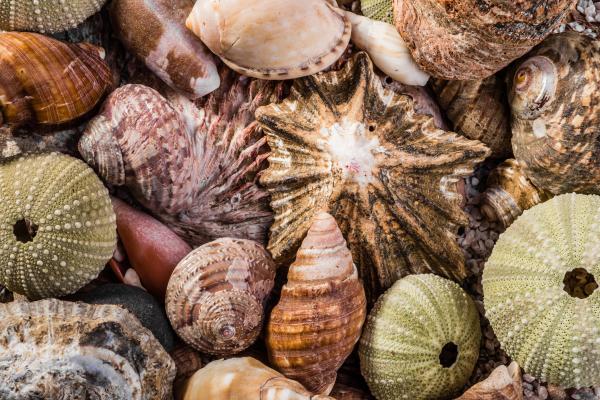
What branches does malacology have and what does each one study?
In addition to the different areas of study mentioned, there are specific branches within malacology that specialize in specific areas. Some of them are:
- Conchology: studies shells, and as a result impressive scientific collections can be formed that exhibit variety in colors and shapes. Some are exhibited in museums.
- Ethnomalacology: this branch studies the impact and use of mollusks in certain cultures, especially to understand the traditional uses of mollusks, both for consumption, for medicine and even as currency in economic exchanges.
- Malacostratigraphy: is the preparation of geological stratigraphies using mollusks, which helps to date and deduce what other organisms lived there.
- Paleomalacology: this branch makes a broader study of mollusk fossils. It integrates the aforementioned stratigraphy, but also another series of techniques such as the exploration of fossil deposits.
- Helicology: refers to the study only of land snails.
- Limacology: this encompasses the study of both terrestrial and aquatic snails, and also includes slugs.
- Octopodology: studies octopuses.
- Teutology: includes all cephalopods, which are octopuses, squids and cuttlefish.
- Nudibranchology: studies nudibranchs, which are cute shellless mollusks with very colorful and striking color combinations.
- Bivalvology: studies all bivalves, which are what we commonly know as clams, oysters, and the like.

Why is malacology important?
The study of mollusks can offer important information about the state of biodiversity and global ecosystems. It is no wonder, since mollusks have the second largest Phyllum of all animals and the most diverse of all, so through their study we will get closer to knowing more about the animal world, from evolutionary routes to inter and intraspecific functions that form the world as we know it.
On the other hand, malacology has specific applications, such as in environmental impact studies, since they function as bioindicators of different parameters of the environment, and even to know what the past was like through the distribution in geological layers from millions of years ago. Through the observation of mollusks as bioindicators, it is possible to reconstruct past and future scenarios, to make better decisions that benefit the conservation of the planet.
It is also important for human development in practical terms. For example, its study is important for the production aimed at consumption of seafood, and even for the production of jewelry such as pearls or abalone, as well as certain diseases that are transmitted through them can be regulated, and thus avoid serious epidemics.
If you want to read more articles similar to Malacology: what it is, what it studies and why this branch of zoology is important, we recommend that you enter our Biology category.
- National Museum of Sciences Spain (sf) Malacology. Available at: https://www.mncn.csic.es/en/colecciones/cientificas/malacology
- The Senckenberg Institutes Natural History Museum Frankfurt (sf) Malacology. Available at: https://www.senckenberg.de/en/research/institutes-overview/sf/ffm-abt-marine-zoology-2/ffm-sekt-malacology/
