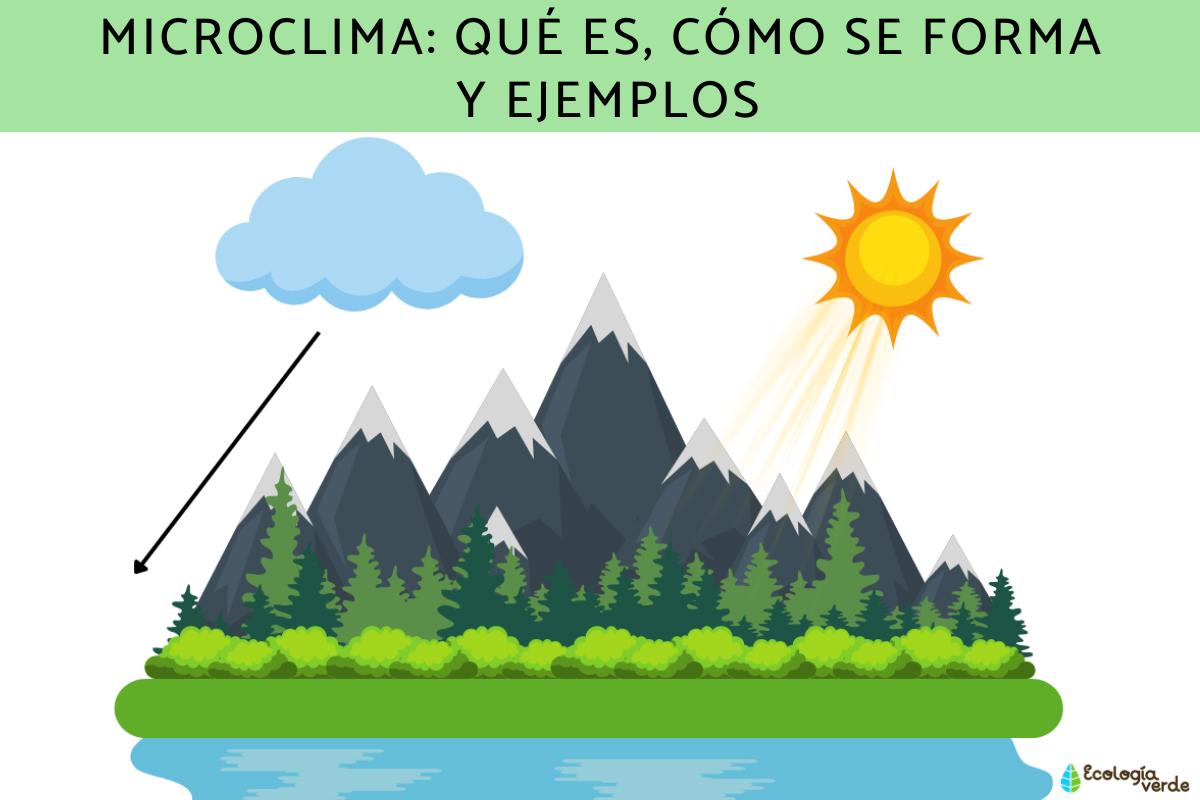
In the study of climate, there are small-scale phenomena that directly influence the environmental conditions of very specific spaces. One of them is the microclimate, defined as the set of climatic characteristics of a small area, which differ from the general climate that surrounds it. This type of local climate can be observed in areas as small as a garden, a hillside, or an urban street, and arises from the interaction of site-specific physical and environmental factors. In this Evidence Network article we are going to offer you detailed information about what a microclimate is, how it is formed and examples.
What is a microclimate
A microclimate is a set of particular climatic conditions that occur in a very localized area, which may be considerably different from the general climate that prevails in the broader region where it is located. That is, within the same city, town, valley or even within a garden or room, there may be variations in temperature, humidity, wind, sunlight or precipitation that make up its own climate: a microclimate.
What characterizes the microclimate is not only its small scale, but also its ability to remain relatively stable and differentiated from the broader environment. Although these differences may seem small from a global perspective, they are significant enough to influence the development of vegetation, the behavior of animals and even the way people build their homes or manage their crops.
For example, in a geographic area where the general climate is dry and hot, there could be a specific area with a higher concentration of humidity or a slightly cooler temperature due to local terrain characteristics. This type of situation occurs in many places around the world and is essential to understanding how environmental elements interact on small scales.

How a microclimate is formed and its factors
The formation of a microclimate is the result of the interaction between various elements of the physical environment that modify local atmospheric conditions. Although the general climate of a region is determined by large-scale phenomena, microclimates are generated from much more specific factors close to the ground. These factors act as climate modulators, creating small “bubbles” with conditions different from those that predominate in their immediate environment.
Let’s see what are the factors that affect the formation of a microclimate:
- Topography: the shape of the land is one of the most determining elements. Mountains, hills, valleys, slopes or depressions alter air flow, sun exposure and moisture accumulation.
- Altitude: has a direct impact on temperature and atmospheric pressure. As you ascend in altitude, the air becomes colder and less dense. Vegetation and fauna also change rapidly with altitude, in response to these differences.
- Bodies of water: the presence of rivers, lakes, ponds or the sea influences the humidity and thermal regulation of the environment. Water has a high capacity to retain heat, which smoothes out temperature variations between day and night.
- Plant coverage: vegetation acts as a natural thermal insulator. Forested areas, for example, tend to be cooler and wetter than open spaces due to tree shade and evapotranspiration. Even in urban environments, the presence of parks and gardens can reduce local ambient temperature, decrease wind speed and increase humidity.
- Type of soil and color of the surface: dark or asphalt soils absorb more heat than light or vegetation-covered soils, raising the temperature of the environment. Likewise, sandy soils warm faster, but retain less moisture than clay soils, which can modify thermal and humidity conditions in a small area.
- Human constructions and urban design: the layout of buildings, the orientation of streets, the presence or absence of trees and the density of infrastructure can alter air circulation, solar radiation and heat accumulation.
- Wind: the speed and direction of the wind directly influence the thermal sensation, the evaporation of water and the natural ventilation of a place.
- Solar orientation: The orientation of a space with respect to the sun affects the amount of solar radiation it receives. This factor is especially important on sloping terrain or in buildings, where facades facing south (in the northern hemisphere) or north (in the southern hemisphere) receive more hours of direct sun.

Examples of microclimates
Let’s see what are the most outstanding examples of microclimates that exist:
- Urban microclimates (heat islands): One of the best-known examples of microclimates is the “urban heat island” phenomenon. In large cities, the concentration of buildings, roads, cars and asphalt surfaces absorb and retain more heat than surrounding rural areas. As a result, the temperature in the center of a city can be several degrees higher than its surroundings, especially at night. This effect is intensified in the absence of vegetation and is moderated in areas with parks, trees or vertical gardens.
- Microclimates in gardens or patios: Even in very small spaces, such as a backyard or garden, microclimates can form. For example, a south-facing corner of the garden may receive more sun and therefore be warmer and drier than another area shaded by a wall or tree. This directly influences what type of plants can thrive in each corner of the same garden.
- Valleys and depressions: Deep, closed valleys tend to retain cold air at night, creating cooler microclimates compared to slopes or higher areas. This phenomenon is known as thermal inversion.
- Mountain slopes: In the Northern Hemisphere, south-facing slopes typically receive more sunlight, resulting in a warmer and drier microclimate, while northern slopes are cooler and wetter.
- Coastal environments: areas near the sea, lakes or large rivers usually have milder microclimates than the interior. The mass of water acts as a thermal regulator: during the day, it absorbs heat from the sun, and at night, it slowly releases it, reducing thermal extremes.
- Caves and ravines: Deep caves, crevices or gullies can maintain a cold and humid microclimate throughout the year, even if they are located in warm regions. This is due to the lack of direct sun exposure and the accumulation of moisture.
- Greenhouses and artificial structures: A greenhouse is a classic example of an artificially created microclimate. Thanks to its closed and transparent structure, it traps solar energy, maintains a high temperature and regulates humidity, allowing plants to be grown outside of their season or natural climate.
- Protected agricultural zones: In agriculture, farmers take advantage of microclimates to improve productivity. For example, a plantation located on a sunny or wind-protected slope may mature faster or produce better quality fruit than another nearby plantation without those conditions.
- Oases in desert areas: oases are exceptional microclimates in arid regions. Thanks to the presence of underground water or springs, small areas with vegetation, humidity and shade are created, surrounded by dry and hot deserts.
- Forested areas in warm regions: A dense forest can create a cooler, wetter microclimate than surrounding open spaces. The tree canopy reduces direct sunlight, while evapotranspiration contributes to increasing air humidity.
If you want to read more articles similar to Microclimate: what it is, how it is formed and examples, we recommend that you enter our Other environment category.
- The Editors of Encyclopaedia Britannica. (2022, March 17). Microclimate. Encyclopaedia Britannica. Available at: https://www.britannica.com/science/microclimate
- StudySmarter. (s.f.). Microclimate: Factors, Importance. StudySmarter Spain. Available at: https: https://www.studysmarter.es/resumes/ciencias-ambientales/entorno-vivo/microclima/
- García, C. (2014). Microclimate, macroclimate and their elements. SlideShare. Available at: https://es.slideshare.net/slideshow/microclima-macroclima-y-sus-elementos/32679927
