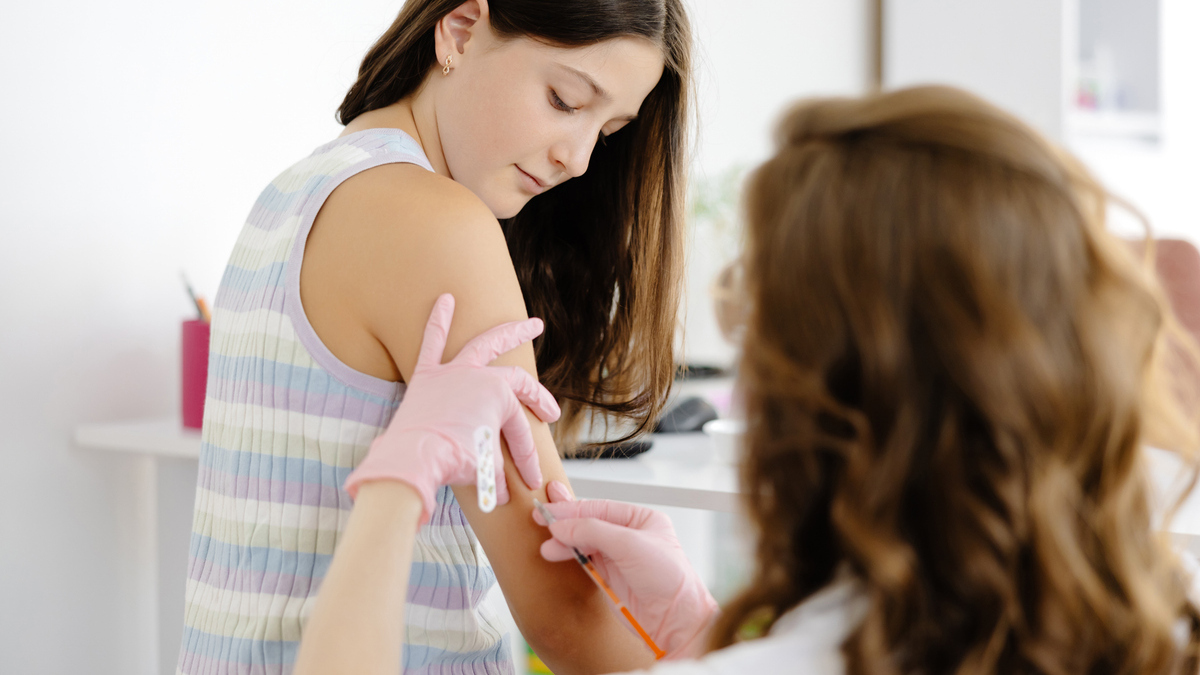
It is estimated that 80% of sexually active people come into contact with the virus over the course of their lives. This is why, although not among the mandatory vaccines, its administration is strongly recommended in the twelfth year of age, when its effectiveness is higher
Often it is thought that vaccinations are reserved for young children or elderly people (as in the case of flu or that against Covid-19), but there are vaccines that are also recommended for teenagers and adults. Among these is the vaccine for the Papillomavirus (HPV, Human Papillomavirus), very widespread viruses (it is the most common sexually transmitted infection in high income countries) whose infection can bring rise to skin diseases and mucous membranes; To date, it is the only infection recognized as a necessary cause for the onset of uterine cervix cancer.
In this article we will try to understand how the papillomavirus vaccine works and why it is important to promote its administration.
What is the papillomavirus
What is Papillomavirus and how exactly does it work? The HPV is a virus transmitted mainly by sexual path that infects the cells of the skin and mucous membranes, giving rise to injuries (warts, condition) and in some cases to tumors (neck of the uterus, anus, external genitalia, oral cavity).
How do you transmit the papillomavirus? It is the most frequent sexual transmission infection: it is estimated that 80% of sexually active people come into contact with this virus during their lives.
Unlike other sexual transmission infections, the use of condoms reduces the risk of contagion but does not completely avoid it, because the transmission can also take place through leather leather contact with areas not protected by condoms.
In most cases, the HPV infection takes place without symptoms or, less frequently, with the appearance of warts or conditions and within an to two years the virus is eliminated thanks to the immune response. In some cases, however, the virus can remain longer in the body and cause injuries that over time (many years) can progress towards the development of a tumor. There are several factors that can influence the possibility that the virus will remain in the body for a long time:
- the type of HPV;
- the immune response;
- genetic factors;
- environmental factors (for example cigarette smoke).
There are more than 200 types of papillomavirus and of these associated with the development of a tumor are 14, also defined as “high oncogenic risk”. Types 16 and 18 are the most frequently responsible for the cervical cancer (alone are associated with 7 out of 10 cases). Then there are types of HPV rarely associated with tumors (low oncogenic risk) and among these the types 6 and 11 are those most associated with condition.
In the case of uterine cervix cancer, the HPV represents the only cause: protecting from viral infection means avoiding the development of the tumor. For other tumors, however, the virus is one of the causes but not the only one, with a percentage that varies from 40% for vulva tumors to about 90% in the case of anus tumors.
HPV vaccine: what it is and what it protects
How does the papillomavirus vaccine work? What is the effectiveness of the cervical tumor vaccine?
The non -avalent vaccine against the papillomavirus protects from 9 types of HPV, including types 6,11.16 and 18. It contains some virus proteins together with aluminum salts used to stimulate the response of the immune system (adjuvant effect).
The vaccine has high effectiveness in preventing HPV infections and reducing the incidence of precancerous injuries. Since the tumor develops many years from the infection, the data on the reduction of cases of cherry cancer of the uterus are still limited, but it is somewhat probable that the estimates concerning precancerous lesions can be applied. In girls who have vaccinated before 14 years of age, the effectiveness in preventing precancerous infections and injuries from viruses contained in the vaccine (in particular the types 16 and 18) is greater than 90%.
The available studies indicate that the benefit of vaccination also extends to the unpaid population: thanks to the decrease in the circulation of the virus, in contexts with a high percentage of vaccinated girls, a lower incidence of injuries has also been observed in adult women, not involved in the vaccination campaign.
Thanks to the vaccine, it is somewhat probable that over the next 10 years in Australia, uterine cervix cancer becomes an extremely rare event and other nations, such as Norway, Canada and the United Kingdom, could achieve the same goal.
Papillomavirus vaccine: when to do it
At the papillomavirus vaccine at what age it should be done? It is recommended for girls and boys during the twelfth year of life (between the 11 years of age and the completion of 12) and provides for the administration intramuscularly of two doses, the second after 6-12 months from the first.
Vaccination is recommended in this age group because its effectiveness is higher if administered before the start of sexual activity, but it can also be carried out by the older girls and boys and adults. After 14 years of age there are three doses (the second one 2 months after the first and third six months after the first).
HPV vaccine for women and men: protecting both is essential
We understood how much the HPV vaccine for the woman represents a very important form of prevention. And for man?
At the time of its introduction in Italy (2007), the vaccination against HPV was recommended and offered free of charge to girls, but starting from 2017 the recommendation and offer of the vaccine has been extended throughout the national territory also to the boys, adopting the strategy gender neutral recommended by the World Health Organization and other international health institutions.
The reasons that motivate the importance of offering the papillomavirus vaccine to males are different. From the point of view of individual protection, the condition and tumors associated with the HPV not only affect women. The main objective of vaccination prevention is the reduction of the incidence of the uterine cervix cancer, which is always associated with papillomavirus infection, but it must be considered that vaccination also reduces the risk of other tumors, with a lower incidence and not in all cases due to the HPV. In detail, let’s talk about the tumors that affect:
- anus;
- penis;
- vagina;
- vulva;
- oral cavity.
The vaccine against male papillomavirus is also important with a view to collective health: to reduce the circulation of the virus and try to achieve group immunity it is essential that both boys and girls are vaccinated. Finally, the neutral vaccination strategy guarantees equity in accessing this preventive intervention.
HPV vaccine and adults
As mentioned, the effectiveness of the vaccine against Papillomavirus is maximum in people who have never come into contact with the virus, and it is for this reason that vaccination is recommended and offered as a priority to girls and boys in the twelfth year of age. But in any case, a so -called “recovery” vaccination is recommended for unvaccinated girls (or who have not completed the vaccination cycle) up to 26 years of age and for boys up to 18 years of age.
How much is the HPV vaccine for adults is recommended and effective?
After 26 years of age, the decreased effectiveness of the vaccine no longer makes the offer of this preventive intervention to the whole population more sustainable. In adults, the usefulness of vaccination can however depend on the status of individual health and sexual habits and can be evaluated with the attending physician or with a specialist (Andrologist/Ao urologist for men; gynecologist for women). For example, in women with a removal intervention of a portion of the neck of the uterus (cones) following the presence of a precancerous lesion, vaccination could reduce the risk of reinfections and recurrences. In general, some studies indicate that in people with HPV infection the vaccine could stimulate the immune response and encourage the elimination of the virus (but the scientific evidence in this regard are not concluding).
Another health condition in which vaccination is recommended is the intake of immunosuppressive drugs or the presence of diseases that reduce the immune response.
HPV vaccine and pregnancy
Not containing a attenuated virus virus, the HPV vaccine is unable to cause an infection. It is therefore not necessary to let a time interval pass between the end of the vaccination cycle and the search for a pregnancy, as recommended for other vaccines such as antosolia and anti -tank.
The data available regarding women who were vaccinated during the first weeks of pregnancy (before the gestation was ascertained) do not indicate, in any case, an increased risk of malformations and are therefore further reassuring.
Papillomavirus vaccine: the side effects
The side effects of the papillomavirus vaccine are generally mild. The most frequent ones are:
- swelling and pain on the injection site;
- fever;
- muscle and joint pain;
- gastrointestinal disorders.
The available studies have not observed an association between the HPV vaccine and the onset of autoimmune diseases or multiple sclerosis.
Papillomavirus vaccine: pros and cons
The only contraindications to the HPV vaccine concern hypersensitivity to the components of the vaccine or the onset of serious allergic reactions after previous administrations.
So: Papillomavirus vaccine yes or not? This vaccination does not fall among compulsory ones, but this does not mean that it is less important. As we have seen, the benefit of the vaccine changes with the age and individual conditions: it is maximum in girls and twelve -year -old boys and remains relevant if carried out within 26 years of age. In adults this benefit is, however, less, if not in particular situations.
In any case, it is necessary to be aware that the vaccine protects only from the types of HPV that most frequently cause conditioning and tumors, but not by all: it is therefore necessary in adulthood to perform periodic screenings recommended for the prevention of the cervical cancer.
Just as the use of the condoms for the prevention of sexually transmitted diseases is always recommended: being vaccinated against HPV does not mean being protected by all sexual transmission infections.
