
Talk about psychological violence It means entering a delicate and often submerged territory. Unlike the physical one, it leaves no visible bruises, but equally profound emotional injuries. It is a form of domestic violence that can creep into any relationship, manifesting itself through a set of behaviors and attitudes that aim to control, diminish and isolate the other. Although this article focuses in particular on the female experience within the couple, it is important to remember that psychological violence has no genre. In these lines, we will try to understand together what psychological violence is, how to recognize their signals and what steps can be taken to ask for help and find their own well -being.
What is psychological violence?
When it comes to violence Domestic, attention often focuses on physical abuses, obvious and undeniable ones. However, there is a submerged iceberg, much wider and insidious: that of psychological attacks. On a social and sometimes even legal level, this form of abuse is not yet given the right importance, leaving the victims in a limbo of unrecognized suffering.
There psychological violence manifests itself as a form of emotional violence And minutes that leaves no signs on the body, but scars in the soul. It is made of words, silences, looks and behaviors that, day after day, erostimate erost. Precisely because it is so thin, it can be difficult to identify. A well -known example of this dynamic is Gaslighting, a mental manipulation so serious as to be recognized in Italy as a crime, that it is fully part of the forms of psychological violence.
The consequences of psychological violence they can be devastating. Those who suffer it can manifest a profound malaise that is expressed through different symptoms: from psychosomatic disorders, in which the body expresses a pain that the mind struggles to elaborate, up to states of anxiety and panic attacks. In the most severe cases, prolonged exposure to abuse can lead to the development of a real post-traumatic stress disorder.
In which relationships does psychological violence develop?
According to the psychiatrist and psychoanalyst Sandra Filippini, who has a vast work experience in anti -violence centers, psychological mistreatment can develop especially in toxic relationshipscharacterized by a strong aspect of distortion of reality by the aggressor.
At the beginning of a relationship, it can be very difficult to recognize these signals. Psychological abuse insinuates itself slowly, in a subtle way, often masked by gestures of affection or concern. For this reason, for a long time, the person who suffers him may not have a clear perception of what is happening, feeling Paconfusa, disoriented and, in some cases, even guilty.
This feeling of loss becomes clearer if you observe closely the mechanism of Gaslighingone of the best known forms of psychological violence. It is a manipulative behavior that leads the victim to constantly doubt itself, of its perceptions and memories. The goal is to question them:
- itself
- their own
- your ideas and perceptions
By generating confusion and, in the most extreme cases, the feeling of being going crazy.

What are the characteristics of those who act psychological violence?
Although there is no unique profile, the behaviors of those who act a Psychological abuse on the partner They can sometimes be traced back to specific personality traits. In some cases, these traits can associate with a personality disorder, such as that narcissistic. As described by the psychiatrist and psychoanalyst Vittorio Lingiardi in his book Archipelago N. Variations on narcissismthere are multiple shades of this operation.
According to the Diagnostic and statistical manual of mental disorders (DSM-5), the narcissistic personality disorder is characterized by:
- grandeur
- need for admiration
- reduced empathic capacity
For a person with these characteristics, others can be perceived not as individuals with proper needs and feelings, but as objects To be used to confirm your grandeur and support fragile self -esteem. In love, those who have a functioning of this type may appear unable to love and build a report based on reciprocity, ending up adopting manipulative relational methods.
In this perspective, it becomes easier to understand how anyone can be fascinated by apparently brilliant and charismatic partners, ending up finding themselves in what are defined toxic relationshipsin which the psychological violence It can become the norm.
How to recognize the signs of psychological violence?
Often there is a tendency to think that, if there are no bruises or physical aggressions, it is not true of true violence. This belief is dangerous, because it can prevent you from seeing reality. Learn to recognize the signals of the psychological violence It is the first, a fundamental step to get aware and find the strength to ask for help.
Marie-France Hirigoyen, psychiatrist and psychoanalyst expert in victimology, in his book Submitted. Violence against women in the couple, He described very clearly the different violent or devaluing attitudes put in place by the aggressor towards his partner: let’s see them better.
Control
Control is one of the forms of psychological violence more pervasive. This is not a simple care, but the attempt to dominate every aspect of the life of the partner: what he wears, who frequent, how he spends money. In some cases, you can get to check the hours of sleep, the time of meals and even thoughts. Often, this control also extends to personal ambitions, preventing the person from making a career or continuing their studies, thus limiting their autonomy.

Isolation
Isolation is a subtle strategy that aims to make the partner the only point of reference. With apparently harmless apologies, those who abuse can gradually remove the victim from their support network: family, friends, colleagues. The goal is to deny the right to have an autonomous social life, making it more and more dependent and vulnerable. Gradually, the world narrows until it coincides only with the couple relationship.
There pathological jealousy
Jealousy, when it becomes pathological, turns into a powerful tool of abuse. It has nothing to do with love, but it is a manifestation of possessiveness and profound insecurity. Those who act it, often due to a low self -esteem, are not based on real elements but on unfounded suspicions. This translates into a series of oppressive behaviors, such as:
- demand a continuous and exclusive presence from the partner
- nourish constant suspicions towards him
- reproach him or attribute false intentions to him
- Look for evidence to justify one’s jealousy and extort confessions
Pathological jealousy can also concern events of the sentimental past of the partner victim of these behaviors, on which you cannot have any control. In the clinical field, this condition has sometimes been called “marital paranoia”.
Humiliations and disheartened criticisms
Humiliation and constant criticism are forms of verbal violence who aim to destroy the identity of the person. Those who suffer these attacks are treated as an relief valve, a target on which to pour anger and frustration. Through insults, debases and systematic denigration, its value is denied as an individual, leading the person to convince himself
not to be worthy of love and respect.
Sometimes, these humiliations can have sexual content, amplifying the sense of shame and making it even more difficult for those who suffer them and ask for help. To these direct attacks are often added more subtle but equally harmful behaviors, such as:
- sarcastic attitudes
- offensive words
- contemptuous speeches
- unpleasant observations
Always with the aim of annihilating the self -esteem and dignity of the person.

Intimidation and threats
Intimidation does not always pass through words. Gestures how to slam a door, break an object, guide in a reckless or harassing a pet are acts aimed at demonstrating force and incussion terror. These are non -verbal messages that communicate danger. To these intimidation, those who act abuse can add explicit threats to maintain control, such as threatening to:
- remove access to children (who are often secondary victims of assisted violence)
- use physical violence
- prevent access to economic resources
- hurting loved ones
- implement self -elevative or suicidal gestures
The latter blackmail is extremely serious, since it can bring out in those who suffer violence deep feelings of guilt, difficult to stem.
Indifference to affective requests
When a person is treated as an object, his needs and feelings are systematically ignored. This form of emotional violence It manifests itself with a profound indifference towards the physical and psychological state of the partner. Those who act abuse can show themselves entrusted and demand, for example:
- to have an intimate relationship after a violent discussion
- that the other takes care of the household chores even when he is not well
- not to accompany him to the hospital, even in the presence of a necessity.
Misrepresented the language
A common manipulative tactic consists in misrepresenting communication. For example, during a discussion, those who abuse can maintain a calm and neutral tone of voice to cause an exasperated reaction in the partner, then accusing it of being “hysterical” or “exaggerated”. The messages can be deliberately vague and ambiguous, leaving the other in a state of perennial confusion, leading him to ask himself constantly if he has made a mistake and try a sense of guilt towards his partner.
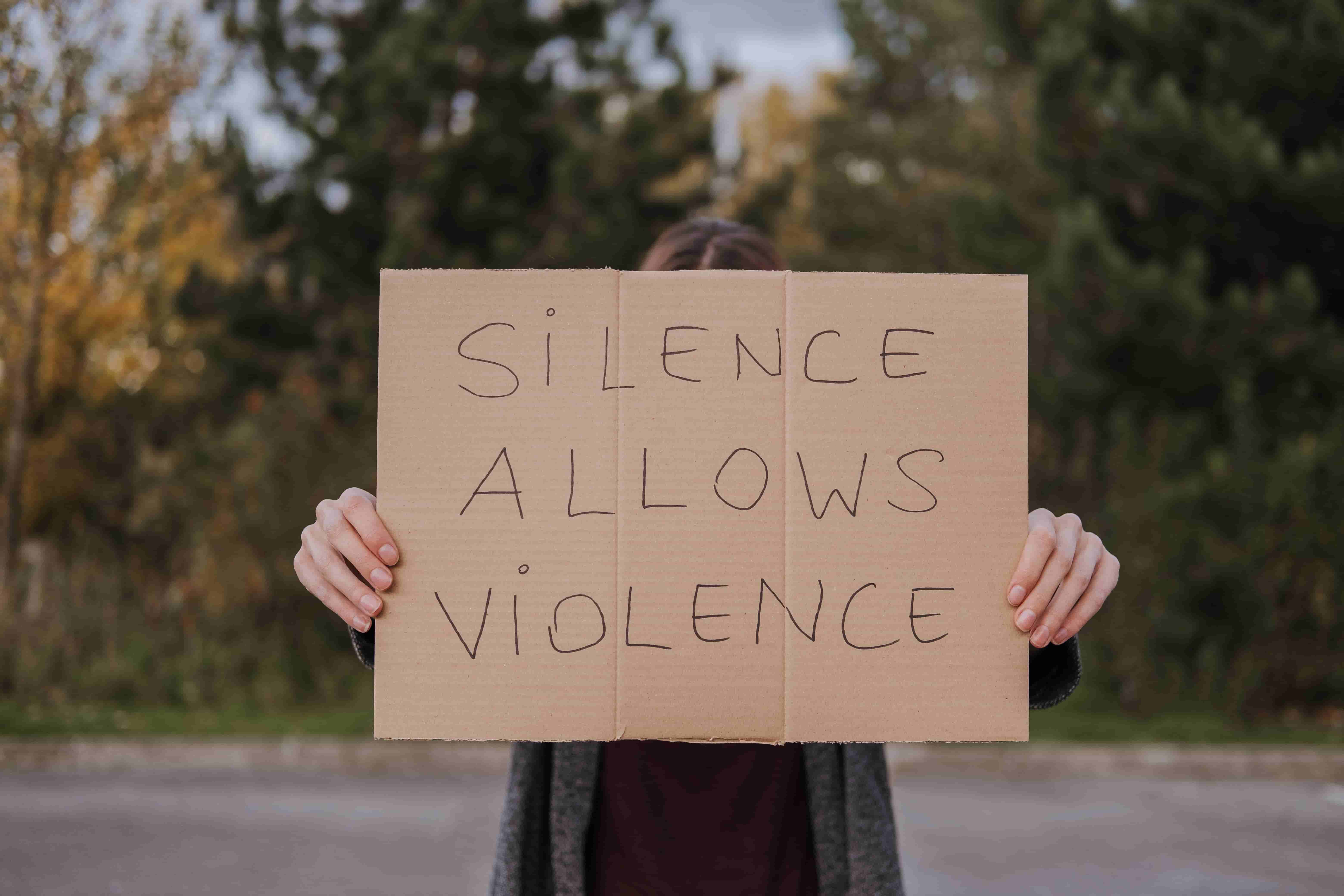
Who to ask for help?
If you recognize yourself in some of the situations described, remember that you are not alone/alone and that asking for help is an act of courage. Throughout Italy there are anti -violence centers, safe places born to offer listening, support and concrete help. In addition, the Equal Opportunities Department has established the free number of anti -violence and stalking 1522active 24 hours a day.
Next to these resources, a psychological path can be essential to elaborate experience, reconstruct self -esteem and rediscover their resources. If you feel the need for a space just for you, you can contact a psychologist or an online psychologist who deals with themes related to violence. In onebravo, you can find a professional ready to listen to you in a safe, empathic and non -judgmental environment.
