
The Sahara Desert is the largest hot desert in the world and occupies much of North Africa. Its extension covers more than 9 million km2 and crosses several countries, from the Atlantic coast to the Red Sea, from Mauritania to Sudan and Egypt. This space is characterized by an arid climate, extreme temperatures and little rainfall, which conditions both human life and the presence of plant and animal species. Some of the best-known animals that live there are dromedaries and fennecs or desert foxes.
In this Evidence Network article you will be able to know in depth where the Sahara Desert is, its countries, temperature, animals and floods, among many more interesting details.
Where is the Sahara Desert on the map?
The Sahara Desert is located in North Africa and is so large that it occupies much of the map of this continent. It extends from the Atlantic Ocean in the west to the Red Sea in the east, and from the Mediterranean Sea in the north, almost touching the area of sub-Saharan Africa in the south.
On the map, you can locate it as a huge yellow or beige strip that crosses several countries, including Morocco, Algeria, Tunisia, Libya, Egypt, Mauritania, Mali, Niger, Chad and Sudan. Altogether, it covers about 9 million square kilometers, making it the largest hot desert in the world.
In this other post you can find more information about The largest deserts in the world.
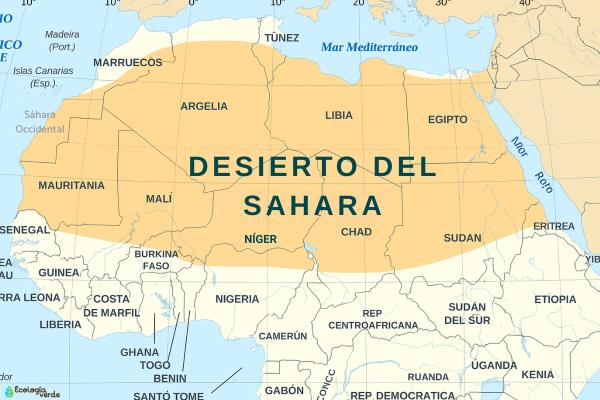
What countries are part of the Sahara Desert?
The Sahara Desert is not limited to a single country, but extends across much of North Africa. In total, it crosses eleven countries partially or almost completely, although there are areas on the borders that change. These are:
- Morocco – with desert areas in the south.
- Algeria – much of its territory is covered by the Sahara.
- Tunisia – its southern part goes into the desert.
- Libya – almost all of its interior is desert.
- Egypt – especially in the west and south of the country.
- Mauritania – much of its surface is desert.
- Mali – especially in the north.
- Niger – the Sahara occupies a large part of the territory.
- Chad – with the desert dominating the northern area.
- Sudan – its northernmost part belongs to the Sahara.
- Western Sahara – disputed territory, almost entirely covered by desert.
What are the climate and temperatures like in the Sahara Desert?
The climate of the Sahara Desert is extremely arid. This means that rainfall is very scarce and, in some areas, years can go by without a single drop of water falling. When it rains, it is usually sudden and brief, sometimes causing rapid flooding rather than constant moisture. Here you can learn more about Why it doesn’t usually rain in the desert.
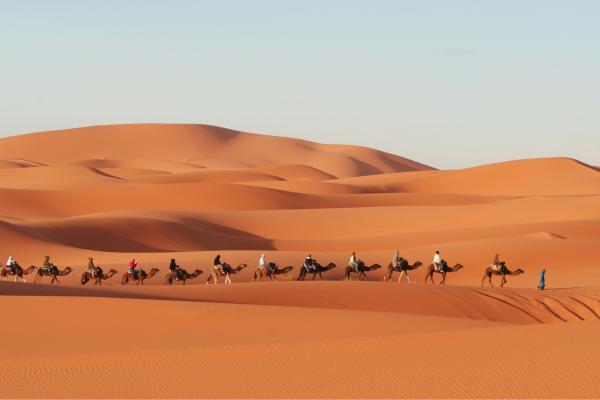
As for temperatures, the Sahara is known for its contrasts. During the day, in summer, thermometers can easily exceed 45 °C, reaching more than 50 °C in some areas. However, at night the situation changes radically: the heat disappears and temperatures can drop to close to 0 °C, especially in winter.
This strong contrast between the scorching heat of the day and the cold at night is due to the lack of clouds and vegetation, which in other places help maintain a more stable temperature. Additionally, the Sahara receives an enormous amount of solar radiation, making it one of the sunniest regions in the world.
In this link you will find more information about the Desert Climate: what it is, characteristics, temperature, flora and fauna.
What are the plants of the Sahara desert?
The flora of the Sahara Desert is limited due to the harsh climatic conditions, but that does not mean that the desert is completely devoid of plant life. On the contrary, there are plants that have developed surprising adaptations to survive with very little water, withstand high temperatures and resist strong winds that carry sand. Many of them are essential not only for the ecosystem, but also for the human communities that live in this region.
Let’s see some of the most representative species:
desert acacia
Acacias are resistant trees that grow in different areas of the Sahara. They are distinguished by their twisted trunk and small leaves, which reduce water loss. Its deep roots allow it to reach underground sources of moisture, and also offer shade and wood to local populations.
date palm
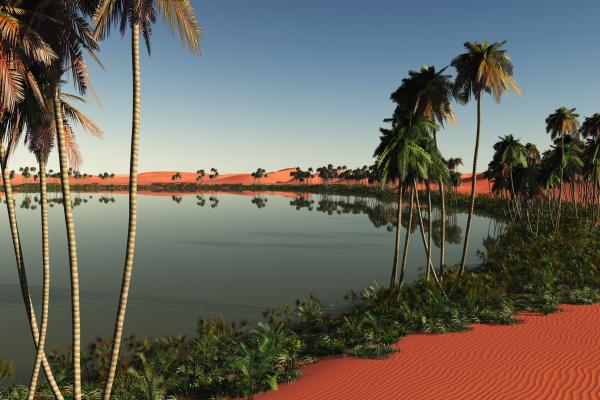
The date palm is perhaps the most famous plant in the Sahara, as it is grown in oases. Its fruits, dates, are a fundamental source of food for those who live in the desert. In addition, its leaves and trunks are used in construction and in the production of handicrafts.
camel grass
It is a type of grass that grows in sandy, dry soils. It is popularly known as “camel grass” because it is a common food for these animals, essential in desert life. Its ability to resist prolonged drought makes it a key plant in the Saharan flora.
Cactus and succulents
Although they are not as abundant as in other deserts, some species of cacti and succulents are found in specific areas of the Sahara. These plants store water in their fleshy stems and leaves, allowing them to survive long periods of drought.
In this link you can learn more about Desert Plants.
What are the animals of the Sahara?
The fauna of the Sahara Desert is as surprising as its flora, as it has managed to adapt to one of the most extreme environments on the planet. The animals that live in this region have developed unique strategies to withstand the lack of water, the high temperatures of the day and the cold at night. Some are nocturnal to avoid heat, while others store water or energy in their body to survive.
Let’s see some of the most representative animals:
Arabian camel or dromedary
The Arabian camel is the quintessential symbol of the Sahara. Its ability to store fat in its hump and resist several days without water makes it a fundamental ally of nomadic populations. In addition, it can travel long distances carrying heavy weights under the scorching sun.
Fennec or desert fox
This little fox is famous for its big ears, which not only make it adorable, but also serve a vital function: dissipating body heat. The fennec is a nocturnal animal, which allows it to escape the high temperatures of the day, and feeds on insects, small rodents and fruits.
Addax (desert antelope)
The addax is an antelope adapted to life in the Sahara. It can go a long time without drinking water, obtaining the necessary moisture from the plants it consumes. Unfortunately, it is critically endangered due to hunting and habitat loss.
desert beetle
Although not as striking as mammals, the desert beetle plays an essential role in the ecosystem. Some species have developed the ability to collect water droplets from dew on their bodies, a key adaptation to surviving in an environment with such low humidity.

What are Sahara Desert floods?
Although it may seem contradictory, floods do exist in the Sahara Desert, and they occur due to the extreme characteristics of its climate and terrain. In this desert the rains are very scarce, but when they occur, they are usually sudden, intense and concentrated in a short time.
The soil of the Sahara, being so dry and compact, does not absorb water well. This causes water to run quickly across the surface, instead of filtering, forming currents and accumulating in low areas. As a consequence, flash floods are generated, also known as floods or flash floods.
These floods can have both positive and negative effects. On the one hand, they can destroy roads, affect nomadic communities and endanger people and animals in the area. But, on the other hand, they are also a blessing for the desert ecosystem, since they allow the temporary appearance of vegetation, fill the oases and make it easier for fauna to have access to water sources.
How important is the Sahara Desert for the planet?
The Sahara Desert plays a key role in the balance of the planet. Its sandstorms transport millions of tons of dust rich in nutrients, such as phosphorus, which fertilize soils and jungles in places as far away as the Amazon. In addition, it influences global weather patterns, regulating atmospheric currents and temperatures. Its biodiversity is also important, which, although adapted to extreme conditions, also provides ecological and cultural value.
What threats does the Sahara face?
The Sahara faces several environmental and human threats.
- Climate change intensifies desertification and increases extreme temperatures. Here you can learn more about the Effects of climate change.
- The overexploitation of aquifers and natural resources puts fragile biodiversity at risk.
- Furthermore, the pressure of unregulated tourism, urban expansion and conflicts in some countries in the region aggravate the vulnerability of the ecosystem and the communities that depend on it.
If you want to read more articles similar to Sahara Desert: where it is, countries, temperature, animals and floods, we recommend that you enter our Ecosystems category.
- Editorial team. (November 30, 2022). GEOencyclopedia. The Sahara, an unusual desert. Available at: https://www.geoenciclopedia.com/el-sahara-un-desierto-poco-comun-541.html
- Feel Morocco. Sahara Desert. Available at: https://www.sientemarruecos.viajes/sahara-desierto/
- José D. Elche moves. The Sahara Desert: An Ocean of Sand in Africa. Available at: https://elchesemueve.com/desierto-del-sahara-oceano-arena-en-africa
- Segui, P. Ovacen. Desert; Climate, flora, fauna and characteristics. Available at: https://ecosistemas.ovacen.com/bioma/desierto/
