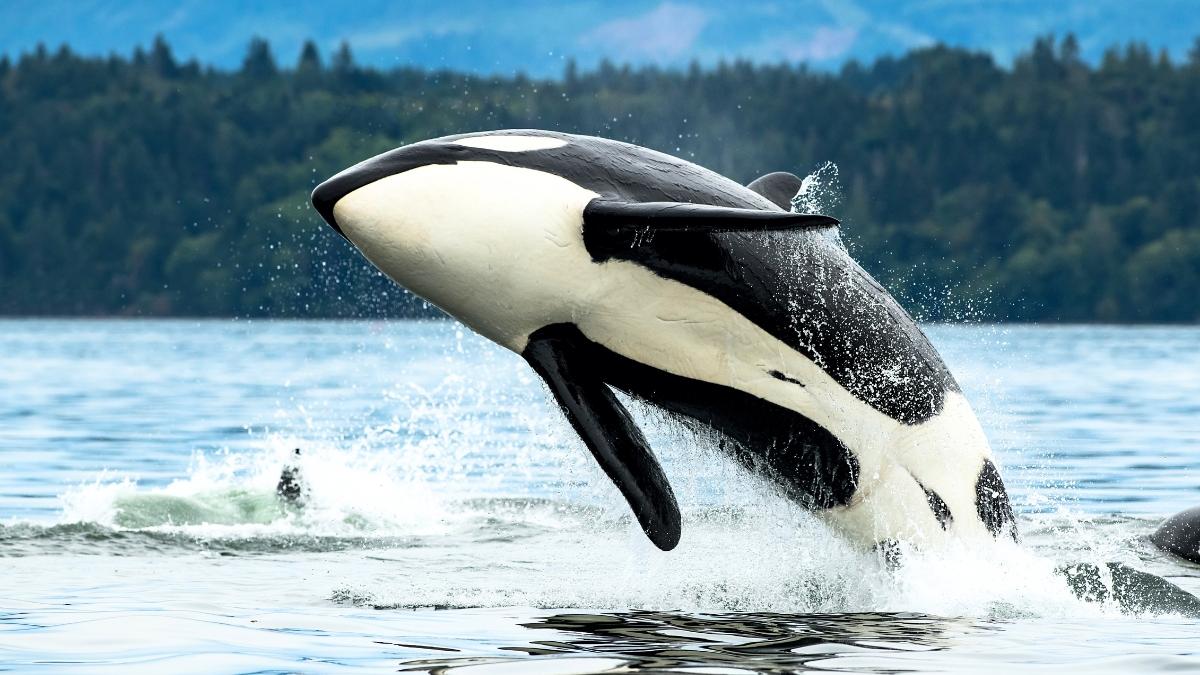
The ancestors of whales, dolphins and orcas did not always live in the ocean. Cetaceans come from land mammals that, over millions of years, progressively adapted to water until they became completely aquatic animals. The question is inevitable: if evolution allowed us to follow this path, could the opposite process one day occur?
The answer offered by an extensive evolutionary study is overwhelming. Cetaceans have passed an evolutionary “point of no return” and the modifications accumulated in their bodies make it extremely unlikely that their descendants will be able to recover a terrestrial existence.
The phenomenon also allows us to observe to what extent evolution can impose limits: some specializations provide enormous advantages in a specific environment, although at the same time they reduce the possibilities of responding through radical changes towards previous forms of life.
The conclusion comes from research published in Proceedings of the Royal Society B which examined thousands of species to reconstruct how transitions between terrestrial and aquatic life occurred among mammals.
The study that analyzed 5,635 species to discover where the “point of no return” is
The team led by researcher Bruna M. Farina, then linked to the University of Freiburg and the Swiss Institute of Bioinformatics, analyzed 5,635 species of current and recently extinct mammals.
The scientists used, among other sources, information from the Red List of the International Union for Conservation of Nature (IUCN) and divided the species into four categories according to their adaptation to water.
The first brought together animals without specific aquatic adaptations. The second included species that have some characteristics for functioning in water, but retain full terrestrial mobility, such as the platypus. A third comprised animals with important aquatic adaptations and limited movement on land, such as seals, walruses, and sea otters. Finally, completely aquatic mammals appeared, including cetaceans, manatees and dugongs.
The results showed that 96.7% of the 5,635 species studied were terrestrial, while only 3.3% presented different degrees of adaptation to the aquatic environment.
The most interesting thing appeared when reconstructing their evolutionary transitions. Going from terrestrial to partially aquatic—and also going the other way—is possible. From a certain degree of specialization onwards, however, the return to a terrestrial life ceases to occur.
What changes made it impossible for orcas and dolphins to return to land
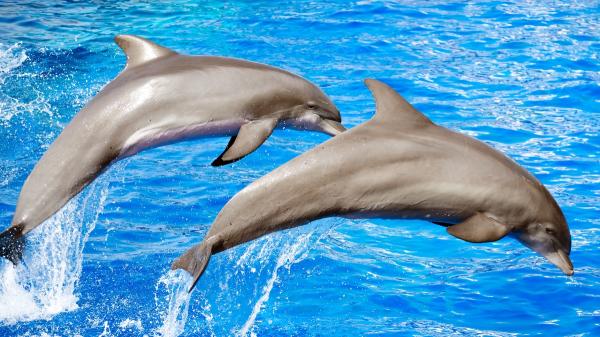
The explanation does not depend on a single characteristic. Becoming a completely aquatic mammal, such as dolphins, orcas or whales, means accumulating numerous anatomical and physiological modifications.
In cetaceans, the forelimbs evolved into fins, while the hind limbs disappeared externally. The body acquired a hydrodynamic shape and locomotion became fundamentally dependent on the vertebral column and the caudal fin.
The research also found a trend towards larger body size as adaptation to water increased. One explanation is related to thermoregulation: water conducts heat much more efficiently than air, and large bodies have a lower surface-to-volume ratio, which helps reduce heat loss.
The study also detected an association between aquatic adaptation and a more carnivorous diet, capable of providing the energy necessary to maintain demanding metabolisms. The complete work, also available in the scientific repository PubMed Central, thus shows that the transition to water involves a set of transformations and not simply learning to swim better. Undoing all these changes simultaneously would represent an enormous evolutionary barrier.
Dollo’s law explains why evolution cannot always reverse itself
The results fit a principle known as Dollo’s law, named after Belgian paleontologist Louis Dollo. Originally proposed at the end of the 19th century, it maintains that a complex structure or condition lost during evolution hardly reappears in exactly the same way.
That does not mean that evolution has a predetermined direction or that it can never produce characteristics similar to others that have disappeared. The study’s conclusion is more precise: certain transformations can accumulate until they create thresholds that make taking the reverse path extraordinarily unlikely.
The researchers found precisely that border between mammals that retain good terrestrial mobility and those whose anatomy already depends intensely on water. The estimated rates of return from the states with the greatest aquatic specialization were practically zero.
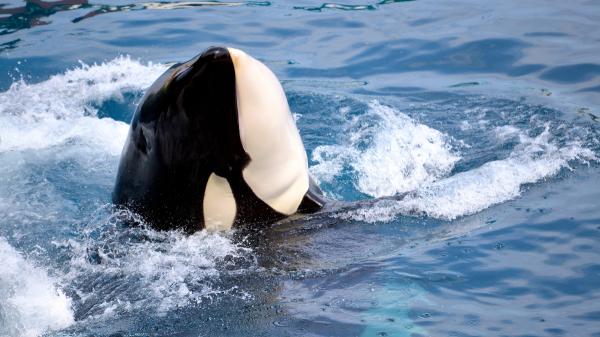
That’s why a seal can still move along a beach, while an orca or a dolphin is completely dependent on the water to support and move their bodies.
The paradox is that extraordinary adaptation also implies dependence. Millions of years of evolution allowed cetaceans to exploit aquatic ecosystems with enormous efficiency, but practically closed the possibility of abandoning them. Its evolutionary future, according to available evidence, will continue to be linked to water.
If you want to read more articles similar to Scientists discover that orcas and dolphins have reached an evolutionary point of “no return” and will not be able to return to dry land, we recommend that you enter our Biology category.
