
Family roles represent a fundamental element in the structure and functioning of each family. Each member occupies a specific position that profoundly influences the relationship dynamics, personal development and emotional well -being of all members of the family unit. Understanding how these roles are formed, when they are functional and when they become limiting, it can help create healthier and more authentic family relationships. The impact of family dynamics on individual well-being is such that the diagnostic and statistical manual of mental disorders (DSM-5) has introduced a specific condition, the ‘Child affected by parental relationship distress’ (caprd), to describe the psychological, behavioral and physical consequences that children can manifest in response to the relational discomfort of the parents (Bernet et al. 2016).
In this article we will explore what family roles are, how to recognize when they become dysfunctional and what strategies can encourage a balance between belonging and personal realization.
What are family roles
Within each family, each of us assumes, often without realizing it, a specific part. THE family roles They are born just like that: as positions that define who we are, what we expect from us and how we should behave. This process begins soon and model our identity through a set of rules, values and expectations that are sometimes silently translating from generation to generation.
It is as if each family wrote an invisible “script”, an complex plot in which each person has a precise assignment. Although the architects of our history is, we contribute to this script, interpreting a part that fits with those of others. Understand these family dynamics It is the first step to understand ourselves and our deepest relationships.
Types of family roles
Within these scripts, roles can take different forms, often understood and intertwined with each other:
- Ideals: These are the roles that embody the most desired qualities from the family, such as strength, independence or success. Often they become a model to which each member feels they have to aspire to.
- Rejected: represent the characteristics that the family disapproves or fears, such as weakness or dependence. It is the parts of us who learn to hide, to ourselves and others.
- Agreed: These are the roles assigned explicitly or implicitly to each, like ‘the strong mother’, ‘the absent father’, ‘the responsible son’ O ‘the confident daughter’. These define the practical and emotional functions of each person in the system.
These roles, when they are assigned unconsciously, can turn into real family mandates. These are not declared missions that are entrusted to us: the daughter who must create the mother’s work ambitions, the son who must be responsible ‘like dad’. These mandates, although born from good intentions, can limit our freedom of choice.
Flexibility and rigidity of roles
In a healthy family, the roles are flexible. They adapt to everyone’s needs and change over time, allowing each person to grow and express themselves freely, without feeling forced into a part that no longer belongs to them.
On the contrary, in one dysfunctional family The roles tend to be rigid and unchangeable. This rigidity can generate suffering, because it forces people to repetitive patterns that hinder personal growth and can lead to psychological difficulties.
In these cases, family balance has a very high emotional cost. To maintain the status quo, a scapegoat in the family: a member who, through his suffering or his ‘problematic behaviors’, takes charge of everyone’s discomfort, becoming the symbol of collective malaise and in fact preventing a real change.
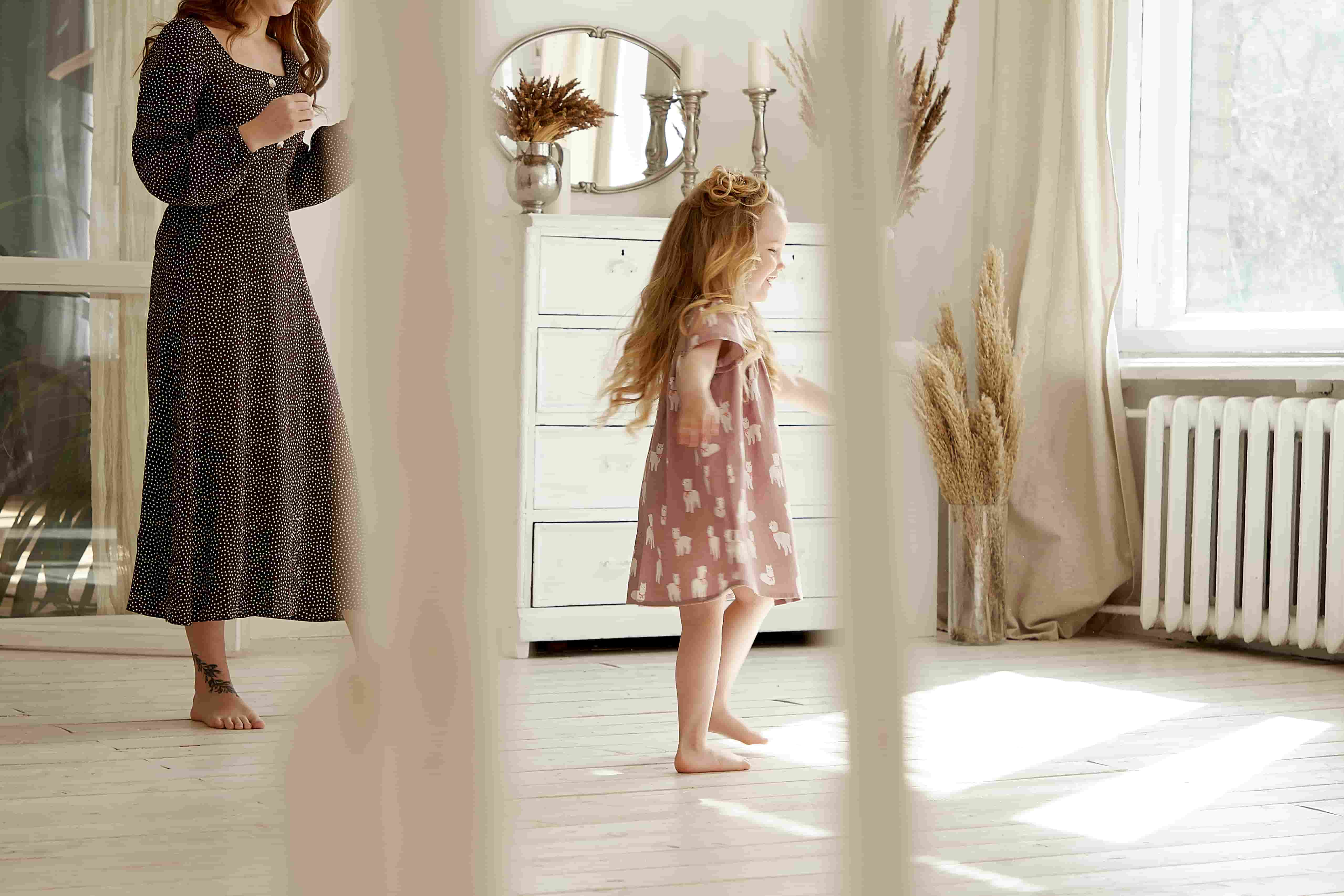
The reversal of family roles
Sometimes family dynamics can lead to areversal of rolesa condition also known as ‘Parentification’. This happens when a child or daughter assumes emotional or practical responsibilities that would be up to parents.
For example, a child could become the confidant of a parent, mediate couple conflicts or take care of the minor brothers continuously. Although it may seem a sign of maturity, this exchange of roles can be very heavy for a child, depriving it of the light -heartedness of his age and loading him with an emotional burden that is not yet able to manage. The consequences may include anxiety, guilt and difficulty in recognizing their needs in adulthood.
The possibility of differentiating
Each family system is based on a pact of loyalty, an unwritten agreement that binds us to each other. If on the one hand this loyalty is a source of belonging, on the other it can turn into an obstacle to our self -realization. Staying faithful to these implicit pacts can prevent us from asking us if the roles we cover are still in line with our most authentic needs, leading us to replicate dysfunctional schemes of generation in generation.
A psychological path, such as the family psychotherapy or individual, it can help shed light on these invisible agreements and understand the profound meaning of family roles. It offers a protected space to choose, to define healthy family borders And to wonder if the function we have always covered is still useful for us, or if it needs to be rewritten according to our needs and our emotional experiences.
“The best way to explain growth is to consider it the achievement of a balance between belonging and differentiation. Growth is a continuous process in which one tends to be without stopping at larger levels of belonging and at the same time of greater differentiation. This oscillation forward and backwards creates the flexibility of expanding them and developing them both. As much as we have the courage to belong, the greater our freedom to be independent. our ability to differentiate ourselves, the more we will be free to belong. ” Virginia Satir
When family roles become a problem
Family roles become a problem when they are rigid, imposed and do not allow individual growth. If you feel constantly trapped in a function that does not reflect you, if you warn that the expectations of your family limit your self -realization or if a role causes you suffering, it could be the signal that the balance of the family system is kept at your expense.
Recognizing this discomfort is the first fundamental step. Understanding the dynamics that led you to hold that role gives you the opportunity to choose whether to continue to interpret it or whether to rewrite your personal script. A psychological path can help you explore these dynamics, to give voice to your needs and find a new balance, more authentic and functional for you. If you feel that the roles in your family are hindering your well -being, you may consider talking about it with a professional. Start the questionnaire to find your psychologist online and find out how we can support you.
