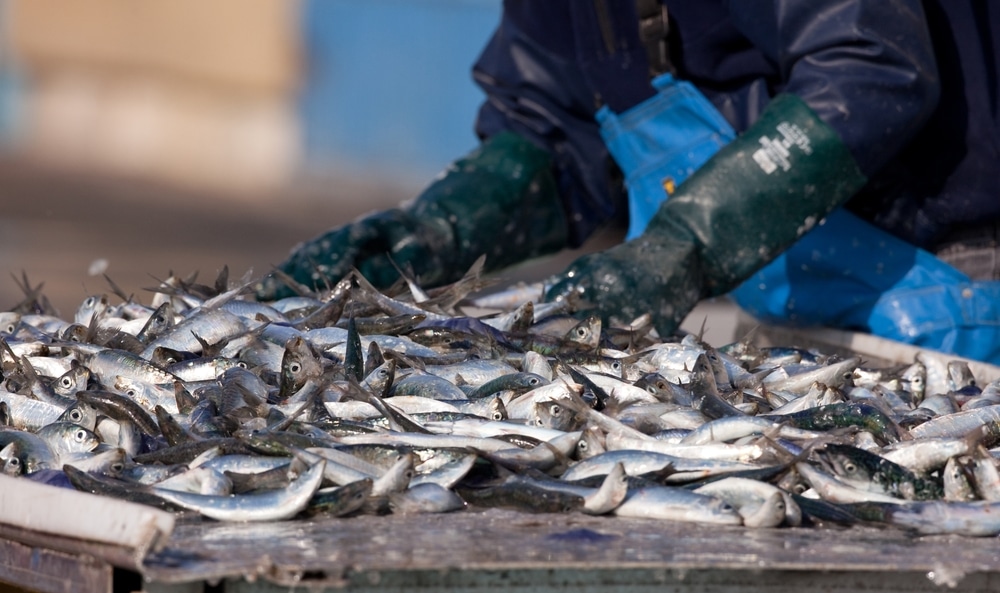
PFAS spread from one country to another along with fish, after accumulating in the marine food chain: they are not a local problem.
Through global fish trade, perfluoroalkyl substances (PFAS) spread from one end of the Earth to the other, also reaching the plates of consumers in countries where they are less present. A study published in Science explains how the global fish trade has become a guaranteed shipping system of these industrial chemical compounds resistant to the main degradation processes. And how their management is now to be considered a global problem.
Big fish eats small fish. Who eats PFAS
Perfluoroalkyl substances (PFAS), or perfluoroacrylic acids, are a family of chemical compounds with a structure that gives them a particular thermal stability, as well as water- and oil-repellent properties. They are very strong acids produced by man and used in many industrial clothes (from food packaging to technical clothing, from pharmaceutical products to paints) to increase resistance to high temperatures, water and grease. The same properties that make them desirable for the market mean, however, that they have a very high persistence in the environment, where they accumulate with less than reassuring and still little-known effects on our health and that of ecosystems.
PFAS now contaminate waters and aquifers and once they reach the sea, they are absorbed by the smallest organisms at the base of the food chain, such as plankton. Through them they accumulate in the bodies of the fish that feed on them, thus moving up the various steps of the trophic ladder to the largest predators. The larger fish that end up on our plates, preying on smaller creatures, are therefore those in which the accumulation of PFAS in the tissues is most significant.
Import-export of PFAS
A team of scientists from Harvard University used computer models including 212 fish species to map how PFAS move through the marine food chain, and then validated their findings in laboratory tests on fish caught in different countries. At this point, using data on the global fish trade, researchers have tried to understand how PFAS move, together with the fish they contaminate, from one point to another on the planet.
The most interesting deduction is that the sale of fish acts as a factor in redistributing the risk of coming into contact with PFAS through food. Even consumers in a country with relatively little contaminated waters can absorb high levels of PFAS if their country consumes a lot of fish from a country where this type of pollution is more persistent.
For example, consumers in Italy (country in which Anyway PFAS risk is very high) buy only 11% of their catch from Sweden, but over 35% of their exposure to PFAS comes from this catch.
Pollution without borders
What purpose do these analyzes serve? Certainly not to attribute blame and responsibility to one country or another (nor to exonerate one’s own). Rather, the research provides a starting point for reflection on the spread of perennial industrial pollutants, which are no longer, or never have been, a local problem, but are a matter of global concern. Since we certainly won’t stop eating fish, it would be more useful to find more sustainable alternatives to this type of substance, and investigate their effects on our health.
