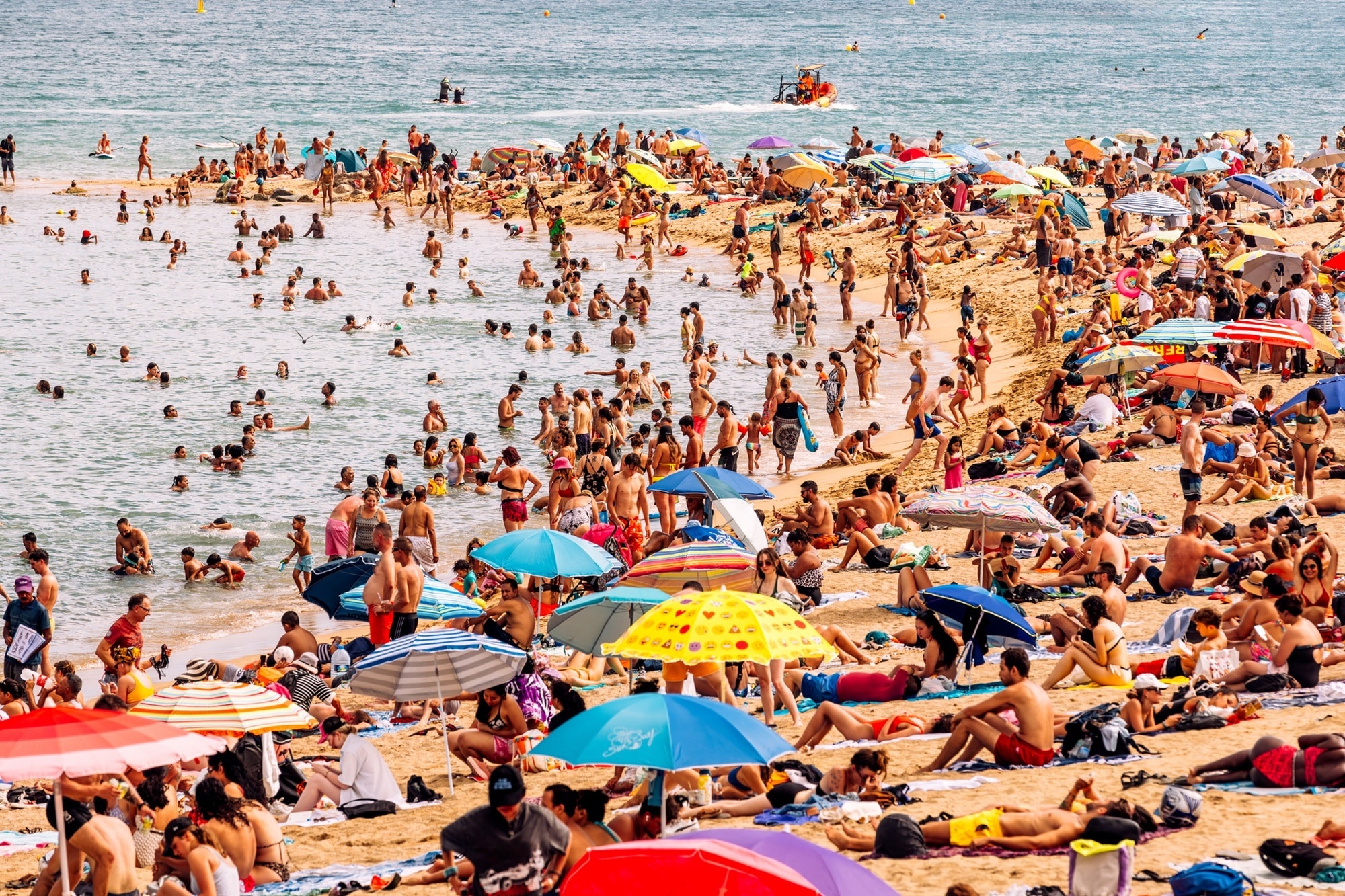
Last August 13, the waters of the Mediterranean Sea reached a record temperature of 28.54 °C, the highest ever recorded since 1940. The problem is not only that our sea is warming and salinising, but that it is doing so at an increasingly rapid rate.
According to what a study published in Geophysical Research LettersSince 2000, Mediterranean waters have warmed by about half a degree Celsius each year, while the temperature of the deep waters of the southern Adriatic has increased six times faster. «For us the alarming aspect is the speed of this change, and the depths that these significant changes reach», comments Elena Terzić, coordinator of the study.
We already knew that in recent years the first hundred meters of the Mediterranean Sea have been around 2°C warmer than the 1950-1999 average. What no one had ever analyzed was the pace of this warming, and whether it affected all areas equally. Thus, starting from a recent analysis that had detected unusual salinisation and an unprecedented increase in water temperature in the Adriatic, the two researchers Elena Terzić and Ivica Vilibić decided to measure the salinity and temperatures of the entire Mediterranean from 1950 to 2025.
In dire straits
What clearly emerges is that the increase in heat and salinity of the water is statistically detectable (and therefore not attributable to chance) up to 3,000-4,000 meters deep.
The problem is that warmer water is lighter, while salty water is denser: currently in surface waters heat prevails over salinity, while in deep waters the opposite happens. As long as salinity exceeds warming, the dense water will continue to sink (albeit warmer and therefore less oxygen-rich), mixing the deeper layers and transporting nutrients.
But if the heat were to exceed the salinity, we would have a serious problem: the deep sea circulation would transform, the warm water would no longer sink and marine life would suffer. All this, the study warns, is a risk especially in the southern Adriatic, where since 2000 the deep waters have warmed at a rate six times faster than in the rest of the Mediterranean.
Furthermore, looking at the Mediterranean allows us to preview what will happen to the oceans: «Considering its relatively rapid turnover and its strong sensitivity to atmospheric forcing, the Mediterranean can be considered an early indicator of the acceleration of the ocean’s response to climate change», conclude the two scholars.
