
The Night of San Juan is one of the most popular celebrations in Spain. Traditionally linked to the summer solstice and ancient rituals related to fire and renewal, it brings together hundreds of thousands of people each year on beaches, promenades, squares and public spaces throughout the country.
Bonfires, night baths, wishes written on paper and pyrotechnic shows are part of a tradition that is especially deep-rooted in Galicia, the Valencian Community, Andalusia, Catalonia and the Balearic Islands. However, along with its festive dimension there is another much less known reality: the enormous volume of waste that is generated in just a few hours.
Glass bottles, cans, plastic containers, food remains, ashes, burnt wood and cigarette butts turn the morning of June 24 into a true race against time for municipal cleaning services.
Barcelona collects up to ten times more garbage than on a normal summer day
Every year Barcelona faces one of the biggest logistical challenges related to the San Juan festival.
The metropolitan beaches receive tens of thousands of attendees and municipal services deploy special operations to return normality to the coast before opening to the public.
In the last two years it has collected an average of 62 tons of waste from beaches. The figure represents 10 times more garbage than a typical day during the peak summer season.
Although the figures vary depending on the year and weather conditions, abandoned waste continues to be one of the main problems associated with the festival.
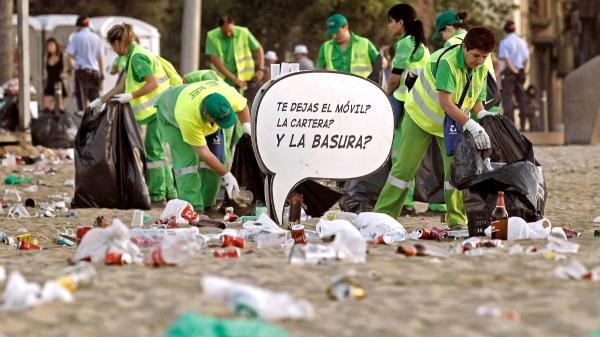
More than 140,000 people and dozens of tons of waste: the case of Valencia
Valencia has been appearing for years among the Spanish cities that generate the most waste during the celebration.
Data from 2025 show that municipal services removed about 60 tons of waste from the city’s beaches after Midsummer’s Eve. Of them, 50 tons corresponded to the Malva-rosa beach and another 10 tons to the southern beaches and La Marina.
The figure represents a slight improvement compared to 2024, when around 70 tons of garbage and ashes were collected after a night in which the Local Police estimated an attendance of close to 140,000 people.
To face this situation, the City Council deploys extraordinary operations every year made up of hundreds of workers, heavy machinery and specialized vehicles that allow the beaches to reopen a few hours after the celebration.
Irene: EFE/Manuel Bruque
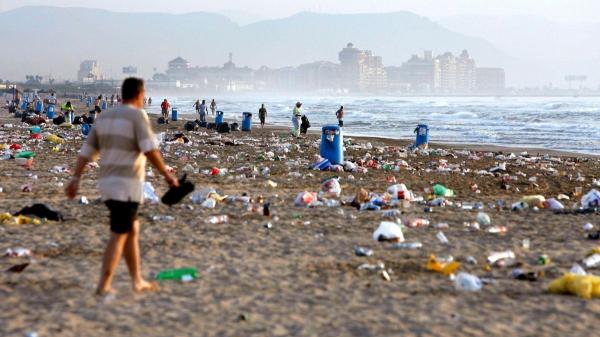
The images that every year reopen the debate about San Xoán in A Coruña
Few cities experience San Juan with as much intensity as A Coruña. The San Xoán festival is considered a Festival of International Tourist Interest and brings together tens of thousands of people around bonfires installed on urban beaches.
In 2025, municipal services removed about 44 tons of waste from the sandy areas of A Coruña. Although the figure was lower than the previous year, the images of garbage accumulated in Orzán and Riazor once again generated debate about the environmental impact of the celebration.
The magnitude of the event requires special security and cleaning devices to be deployed. For the 2025 edition, the City Council mobilized nearly a thousand people and set up dozens of selective collection points to try to reduce waste abandonment.
Despite these efforts, environmental organizations and municipal officials continue to warn about the problem of waste that ends up dispersing across the sand in each edition of the great popular festival.
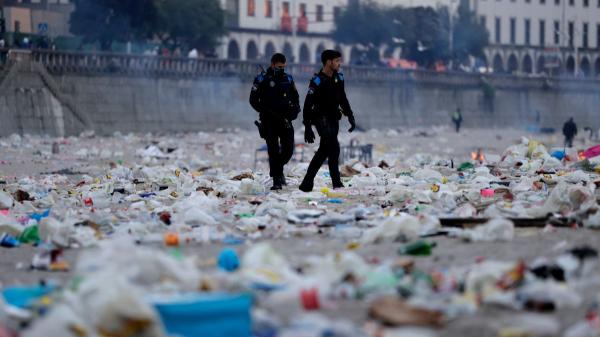
Málaga, Cádiz and other cities: the problem is repeated throughout the Spanish coast after the night of San Juan
The situation is repeated in numerous coastal municipalities. In Malaga, the Night of San Juan 2025 left more than 20 tons of waste on the beaches, especially in La Malagueta, where a good part of the festive activity was concentrated. In addition to the accumulated garbage, the City Council recorded damage to urban equipment and furniture. In previous years, the city exceeded 37 tons of waste collected after the celebration.
Cádiz also tends to be among the municipalities with the highest volumes of garbage associated with San Juan. According to compilations carried out by different national media, the city has managed to remove around 45 tons of waste after the festival.
The problem does not end in the sand: a good part of the waste ends up in the sea
The pollution generated during San Juan is not only a matter of urban cleaning. Environmental experts remember that a part of this waste ends up reaching the sea.
Ecologistas en Acción has been warning for years that the tides can carry packaging, plastics and other waste before municipal teams have enough time to remove them. The organization maintains that the coincidence of the festival with certain high tides increases the risk that waste will end up entering the marine ecosystem.
Most of the garbage found after these celebrations is made up of beverage containers, bags and single-use plastics, materials that can fragment into microplastics and remain in the environment for decades.
The concern makes sense because it is known that around eleven million tons of waste reach the sea every year around the world with the ecological impact that this implies.
Faced with this situation, numerous town councils have tightened the rules. Alicante, for example, banned bonfires on its beaches again in 2026 citing reasons of safety, cleanliness and environmental protection.
Other localities have chosen to enable controlled spaces, limit the materials allowed or reinforce selective collection devices.
However, specialists agree that no measure will be completely effective without citizen collaboration.
The Night of San Juan continues to be one of the most beloved traditions of the Spanish calendar. The challenge is to make a celebration with deep cultural roots compatible with the protection of coastal ecosystems that are under increasing pressure.
Images of beaches covered in garbage at dawn remind us every year that the magic of fire can have a serious environmental cost when civility does not accompany the party.
If you want to read more articles similar to The other side of Midsummer Night: up to ten times more garbage on the beaches at dawn, we recommend that you enter our Pollution category.
