
With the arrival of summer and tropical nights, sleeping without air conditioning becomes an almost impossible mission for many people. When the thermometer barely drops below 25 degrees during the early hours of the morning, maintaining a comfortable temperature in the bedroom seems like the only way to rest. However, there are still numerous myths surrounding the use of air conditioning that lead many families to use more electricity than necessary.
One of the most widespread is to think that the colder the bedroom, the better you sleep. However, experts agree that the real problem is not leaving the air conditioning running all night, but rather doing it with an inefficient setting. Setting a temperature that is too low can increase electrical consumption without providing greater comfort and even affect the quality of rest.
It’s not just a matter of savings. The doctor specializing in Sleep Medicine Javier Albares explains that the body needs to slightly reduce its body temperature to initiate sleep. “High temperatures affect our rest because the body needs to lower its temperature to initiate sleep. If you do not achieve this, it is difficult for you to sleep, you wake up more and the rest is not restorative,” he points out. For this reason, it is recommended to keep the bedroom between 24 and 26 degrees, a temperature sufficient to promote quality rest without forcing the device to work more than necessary.
The myth about air conditioning that many still believe
One of the most repeated beliefs every summer is that setting the air conditioning at 20 or 21 degrees helps you sleep better. Although the initial sensation is cooler, specialists explain that lowering the temperature so much does not necessarily improve rest and does increase the effort that the team must make to cool the room.
Each degree lowered below the recommended temperature forces the device to consume more energy to maintain that level of cooling throughout the night. This translates into a higher electricity bill at the end of the month, especially when the air conditioning remains on for several hours continuously.
In this sense, the Organization of Consumers and Users (OCU) remembers that reducing the temperature excessively does not make the home cool down faster. The device will continue to operate until the programmed value is reached and will consume more electricity the greater the effort required to achieve it. The organization estimates that each additional degree of cooling can increase energy consumption by around 7%, so it recommends keeping the air conditioning around 24 or 25 degrees whenever possible.
In addition to the financial expense, an excessively cold room can cause discomfort such as dry throat, a feeling of nasal congestion or waking up in the early morning, so maintaining a moderate temperature is usually the most recommended option for both comfort and efficiency.
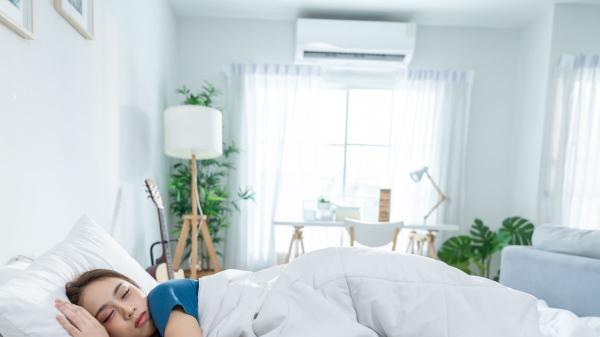
The error that can increase electricity consumption at night
When talking about air conditioning consumption, many people think that the biggest mistake is leaving it on while they sleep. However, the problem usually lies in the way it is used.
Keeping the thermostat at very low temperatures throughout the night forces the device to work continuously to compensate for the heat coming in from the outside. On the other hand, using functions such as night mode or setting a timer allows you to progressively reduce the power when the body has already reached a comfortable temperature.
Another common debate is whether to turn off the air conditioning once the room has cooled down or leave it running. The electrician and popularizer Carlos Llull recently spoke about this issue, explaining in his video that in equipment with inverter technology, constantly turning the device off and on again does not always mean savings. As indicated, the walls, ceiling and furniture continue to accumulate heat, so when the equipment starts up again it must make greater efforts to recover the programmed temperature. Therefore, in certain situations it is more efficient to maintain a stable temperature than to force the device to cool the room from zero over and over again.
This does not mean that the air conditioner should remain running at maximum power throughout the night, but rather that it is advisable to take advantage of the intelligent functions that most modern equipment incorporates to automatically adapt the operation of the device to the real needs of the moment.

How to sleep cool without spending more than necessary
Sleeping well during the hottest summer nights and keeping your electricity bill under control is possible by adopting some simple habits.
Experts recommend cooling the room before going to bed and then keeping the air conditioning between 24 and 26 degrees. This temperature usually offers an adequate balance between thermal comfort and energy consumption, preventing the device from having to constantly work to reach values that are too low.
Whenever the equipment allows it, it is also advisable to activate the night mode, since it progressively reduces the operating intensity as the morning progresses. Another option is to use a timer so that the air conditioner turns off automatically when the room has reached a comfortable temperature.
The OCU also advises performing periodic maintenance on the device, especially cleaning the filters, since equipment in good condition works more efficiently and consumes less electricity. Likewise, it is recommended to close blinds and curtains during the hours of greatest sunshine to prevent the home from accumulating heat, ventilate the house during the early hours of the morning or at dusk when the outside temperature drops and prevent the flow of cold air from directly affecting the bed.
In other words, sleeping with the air conditioning on is not the real problem. The difference is in the temperature chosen and in taking advantage of the equipment’s saving functions. A small change in the configuration can translate into a better rest and a much lower electricity bill throughout the summer.
If you want to read more articles similar to The phrase that debunks one of the most repeated myths about air conditioning: “The problem is not leaving it on all night, but how you use it”, we recommend that you enter our Energy Savings category.
