
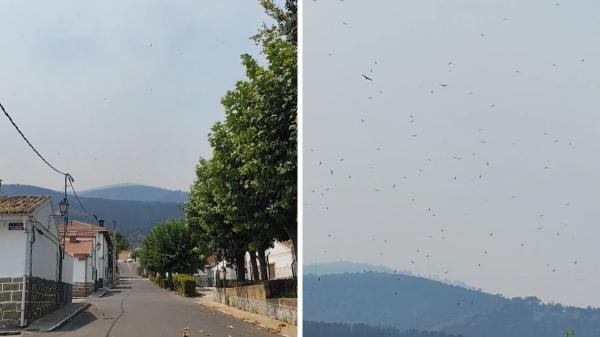
The images of hundreds of vultures flying over the sky of Los Tiemblos, in Ávila, while the forest fire advanced through the surroundings of the Iruelas Valley Natural Reserve have made the rounds on social networks through the video of Germán Huertas in During the recording he explains the seriousness of the situation for the animals and asks for all possible help to help them.
That phrase summarizes one of the less visible consequences of large forest fires. Beyond the flames and the loss of forest mass, fire completely alters the functioning of the ecosystem, forcing numerous species to move to find food, shelter and water. Vultures are only the most visible part of a problem that affects all the fauna in the environment.
Why do so many vultures fly over the fire area?
The presence of numerous vultures flying over the Iruelas Valley may be striking, but it is not strange behavior after a large fire. These gliding birds take advantage of warm air currents to move easily and observe large areas of land from the air.
In addition, the fire abruptly modifies the landscape and the behavior of the animals. Many species flee the flames in search of safe areas, while others may die during the fire or become weakened, altering the availability of food for scavenging birds.
Added to this is the smoke, heat and loss of plant cover, which forces the fauna to redistribute itself throughout the territory. Vultures, thanks to their extraordinary ability to travel long distances, are able to detect these changes quickly.
However, their presence does not necessarily mean that the fire will benefit them. Although adult specimens can easily escape by flying, the consequences for their breeding areas and for the entire ecosystem can last for years.
“The animals have not drunk water for days”: the effect of the fire that is almost invisible
One of the statements that has caught the most attention in the video is that the animals have not been able to drink water for several days. Although not all species are in exactly the same situation, fires can cause significant water stress for fauna.
The high temperatures, the dryness of the terrain and the advance of the flames cause many temporary ponds to disappear, small streams to reduce their flow and numerous water points to become covered in ash or become inaccessible.
For many animals, finding water becomes an even higher priority than finding food. Mammals, reptiles, amphibians and birds are forced to travel greater distances to hydrate, increasing their energy expenditure and exposure to predators or roads and inhabited areas.
In situations of large fires, it is also common for different species to coincide in the few water points that remain available, increasing competition for an increasingly scarce resource.
Not only the vultures suffer: this is how the fire affects all the fauna of the Iruelas Valley
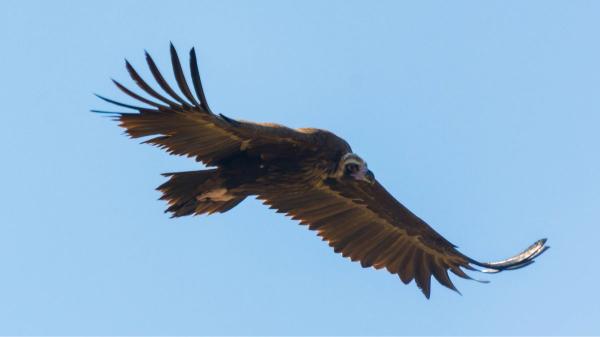
The Iruelas Valley Natural Reserve is home to one of the most important colonies of black vultures in Spain, as well as other species of great ecological value such as the Iberian imperial eagle, the griffon vulture and different forest raptors. But the impact of the fire goes far beyond these birds.
Mammals lose shelters and feeding areas; reptiles and amphibians, with less ability to escape from fire, may suffer high mortality; and numerous insects disappear along with the vegetation on which they depend. All of this triggers a chain effect that alters the relationships between predators, prey and scavenger species.
Additionally, many trees used for nesting can be destroyed or severely damaged. In the case of large birds such as the black vulture, which reuse their nests for years, the loss of these enclaves can affect future breeding seasons.
The recovery of the forest will take years, but the fauna begins to adapt from day one
When a fire is considered controlled, the recovery of the ecosystem has just begun. Although some species return quickly to explore the terrain, the complete regeneration of a Mediterranean forest can take decades.
During that time, the availability of food, water and shelter changes continually. Some birds take advantage of new open spaces, while others need mature forest masses to reproduce and will not return until the habitat recovers suitable conditions.
Therefore, images such as the one of the vultures flying over the sky of Los Tiemblos not only reflect the immediate impact of the fire. They also show how fauna tries to adapt to an environment that has changed radically in just a few days.
The fire leaves a visible mark on the landscape, but also another much more difficult to appreciate: one that affects the balance of an entire ecosystem and forces hundreds of animals to modify their behavior to survive. In many cases, finding water can be the first challenge of a recovery that will be long and complex.
If you want to read more articles similar to The vultures fly over the sky of Los Tiemblos after the fire: what this scene reveals about the fauna of the Iruelas Valley, we recommend that you enter our Biodiversity category.
