
Forget photos and stories, social media will soon be taken by storm with short videos generated on the fly with Vibes, ready to share in a few seconds.
Since November 6, Meta AI has launched a new function called Vibes in Europe, designed to transform any text into a hyper-realistic video in just a few moments. The app is part of the Meta Platforms group – Facebook, Instagram, Messenger and WhatsApp – but Vibes focuses entirely on the creation of short videos, generated by artificial intelligence to invade its own social networks (and those of others), in direct competition with ChatGPT, Google, Tik Tok and Shorts on YouTube.
Users just need to write a short description and the app, in a few seconds, will return a video to share, remix or transform into social content. No longer just images or stories, from now on social media will be full of videos generated on the fly.
All it takes is one click. The first step is to download the Meta AI app from your device’s store (Google Play for Android, App Store for iOS). Once installed and opened, you need to log in with a valid profile, such as a Meta account, Facebook, Instagram, and in some cases, even via WhatsApp. Once you have logged in, you access the main section where you can scroll, from top to bottom, videos published by other users in the feed. The menu symbol appears at the top left (three horizontal lines, from which you can access the history of your creations and the – still few – settings) and on the right there is a “+” to start creating your own contents.
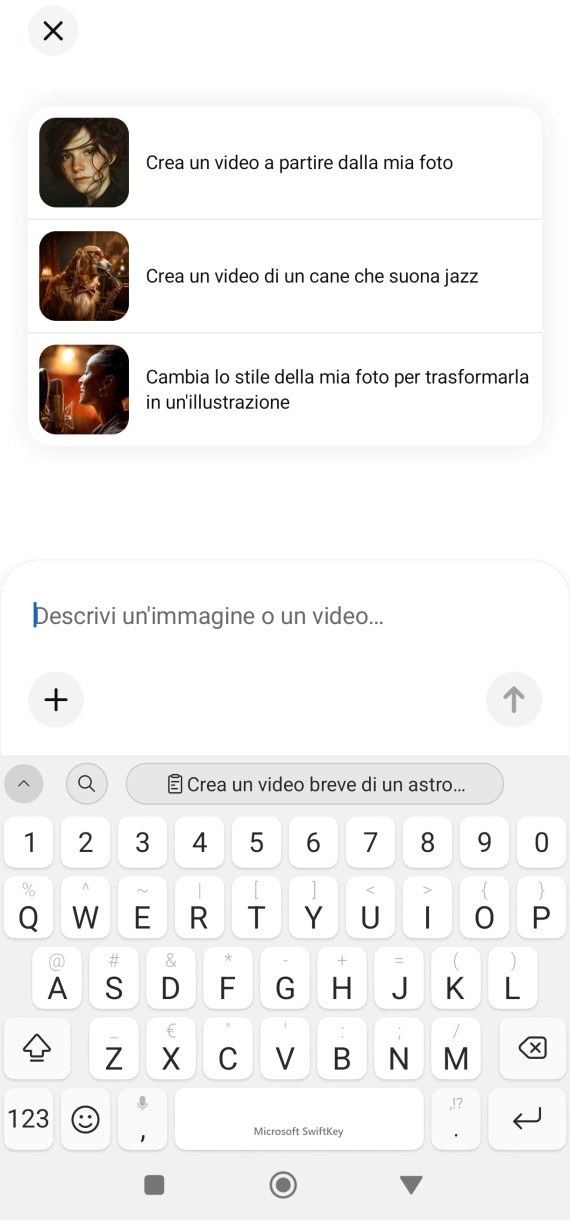

A few steps. By touching it, a text field appears (Step 1) with another “+” with which to add an image to animate or a starting video to modify; or, simply, just describe the video you have in mind in a few words, for example, “a kangaroo eating a pizza” or “an astronaut reading a book on the Moon”. In a few seconds the app generates four videos (Step 2) of approximately five seconds each to choose from.
Personalize. After selecting the desired video, the user can apply further changes: the app provides integrated tools to add music, change the visual style (for example “cartoon”, “cinematic”, “retro”) or extend the duration of the chosen video by a few seconds (Step 3).
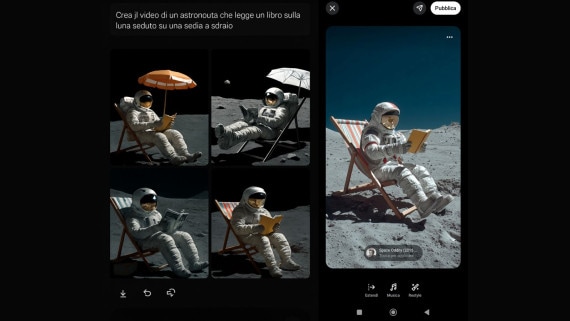

Share. Once the adjustments are completed (Final Video), the content can be published directly on the Vibes feed and sent via email or via social media. Shares in the Meta AI app feed increase the visibility of the creator, who receives interactions, comments and remixes from the community. The creators’ hope is that Vibes will become both a place to consume videos and a real creative “gym”, where anyone — without technical skills — can generate, remix and share.
Disturbing realism. This hope, however, clashes with the harsh reality, which concerns every type of generative artificial intelligence. Despite the enthusiasm, in fact, Vibes also raises serious questions, and when a video generated by AI appears indistinguishable from a real one, a field of ethical and social risks opens up: from deep fakes to the spread of false or manipulated content.
The speed of generation and the possibility of instant sharing offered by the app increase the potential for misinformation, putting Meta’s moderation systems and policies to the test. The company specifies that you cannot generate videos that contain graphic violence, nudity, health or political misinformation, promotion of hatred, or depictions of real people without consent.
Despite this, the thin line between creativity and manipulation remains difficult to control and if generative models can construct scenes that never happened or faces that do not exist, new verification tools and clearer rules will be needed to prevent artificial imagination from becoming totally indistinguishable from reality.
