Europe’s revolutionary CO2 storage ship marks a major breakthrough in the battle against climate change. This giant vessel, designed to transport liquid CO2 for deep undersea burial, represents a bold European initiative to tackle greenhouse gas emissions at scale. With capacity to bury 400,000 tons of carbon dioxide annually beneath the North Sea, this project demonstrates how clean energy innovations can transform our environmental impact.
The groundbreaking Greensand project : Europe’s answer to carbon storage
The Greensand project introduces a specialized vessel unlike any conventional ship. Rather than carrying passengers, containers, or petroleum products, this engineering marvel transports liquefied carbon dioxide. Captured from industrial sources, this CO2 travels to geological formations beneath Danish North Sea waters, where it’s permanently sealed over 1,800 meters below the seabed.
Led by INEOS Energy and Dutch shipbuilder Wagenborg Offshore, this ambitious European initiative launched with considerable fanfare. The custom-built vessel was officially christened on May 14, 2025, at the Royal Niestern Sander shipyard in the Netherlands. The event’s live broadcast highlighted Europe’s commitment to pioneering carbon capture and storage solutions.
While the concept of carbon capture isn’t new, the Greensand project elevates it to unprecedented industrial scale. This isn’t merely an experimental prototype but a fully operational component of a validated industrial process. The investment decision, finalized in December 2024, represents a significant commitment to this innovative planetary solution.
The complete carbon management chain involves :
- Capturing CO2 directly from industrial emissions
- Cooling the gas to -50°C and compressing it to 7 bars
- Transporting the liquefied CO2 via specialized vessels
- Injecting it into depleted hydrocarbon reservoirs
- Monitoring for long-term geological stability
Technical marvels and engineering challenges
Transporting liquefied carbon dioxide presents formidable technical hurdles. The vessel incorporates sophisticated systems for maintaining extreme cold temperatures and precise pressure conditions. Dutch engineers leveraged decades of experience building LNG carriers and chemical tankers to develop this specialized ship.
The vessel features reinforced isothermal tanks, thermal regulation systems, and comprehensive sensor networks. These technologies prevent accidental CO2 release during transport or unloading operations. Engineers had to overcome multiple challenges, including managing acidic corrosion risks, ensuring perfect circuit sealing, and maintaining cargo stability even in rough seas.
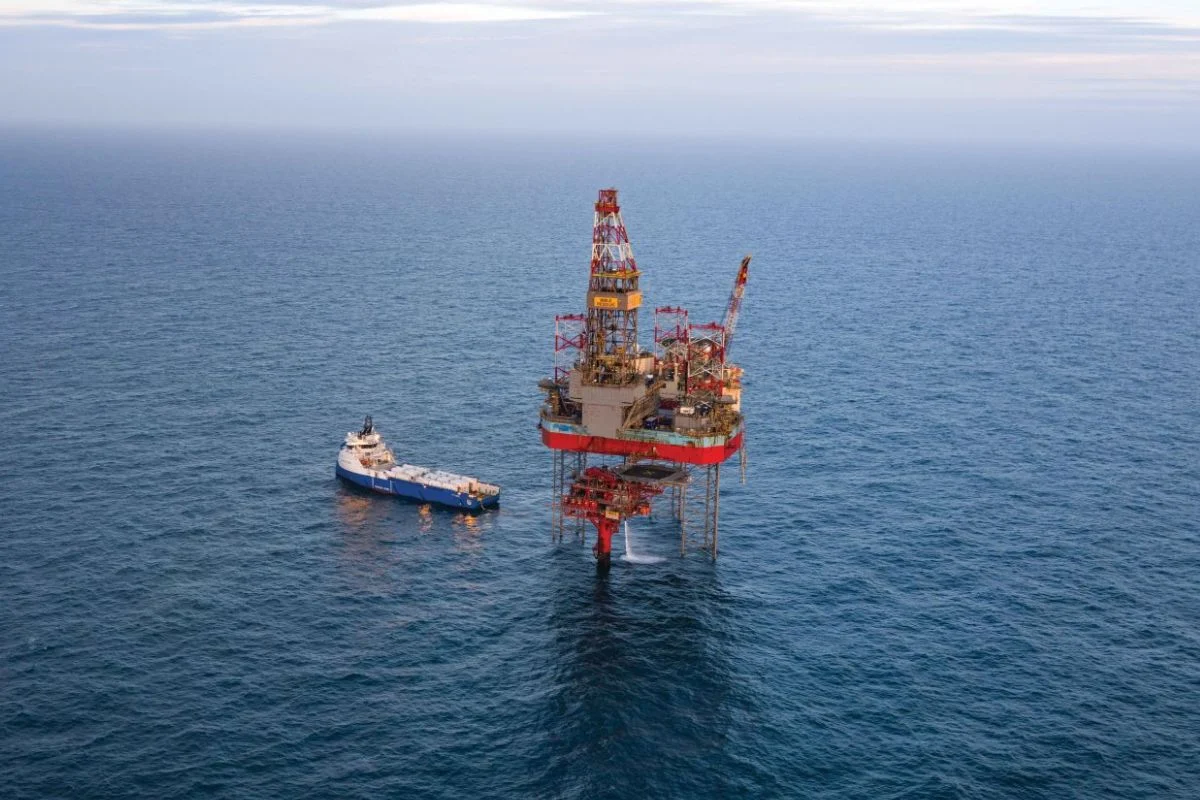
The injection point, located at the Nini West platform in Danish waters, utilizes geological formations that previously contained petroleum for millions of years. Scientists believe these layers will securely contain CO2 with similar effectiveness, provided proper pressure monitoring and leak detection systems remain operational.
The project benefits from substantial financial backing exceeding €140 million, combining private investment with European public funding. This capital supports not just vessel construction and port infrastructure but also the development of sophisticated energy-efficient monitoring systems for long-term storage supervision.
| Project Phase | CO2 Storage Capacity | Timeline |
|---|---|---|
| Initial Operations | 400,000 tons annually | 2025-2027 |
| Full Capacity | 8 million tons annually | 2030 onward |
Denmark leads Europe’s carbon storage revolution
Denmark’s leadership in this carbon storage initiative stems from several strategic advantages. The country possesses well-mapped depleted oil fields ideal for CO2 storage and maintains an exceptionally progressive energy policy. Danish public opinion generally favors carbon storage solutions, facilitating smoother administrative procedures and partnership development.
The Danish government envisions becoming Europe’s carbon capture and storage hub, repurposing existing petroleum infrastructure to inject unwanted greenhouse gases rather than extract fossil fuels. This geological reversal represents a meaningful transition in Europe’s environmental strategy and addresses marine pollution concerns through responsible carbon management.
While the initial 400,000-ton annual capacity seems modest compared to Europe’s total emissions, expansion plans target 8 million tons annually by 2030. For perspective, this expanded capacity would sequester approximately 2% of France’s current yearly emissions – a significant contribution to continental decarbonization efforts.
Concurrently, similar carbon capture initiatives are emerging across Europe. The Northern Lights project, developed by TotalEnergies in partnership with Equinor and Shell, began operations in September 2024 off Norway’s coast. This facility can currently store up to 1.5 million tons of CO2 annually at 2,600 meters beneath the seabed near Øygarden, with plans to expand to 5 million tons by 2028.
Europe’s strategic approach to carbon management
The European carbon capture landscape continues expanding with additional projects in Norway (Longship), the United Kingdom (Northern Endurance), and France (Aramis). However, Greensand distinguishes itself as the first to connect land-based carbon capture with marine storage via dedicated maritime transport, establishing a comprehensive carbon management model.
TotalEnergies has committed to developing storage capacity exceeding 10 million tons of CO2 by 2030, primarily in North Sea locations. This initiative offers practical alternatives to solar energy for hard-to-decarbonize industrial sectors. The Northern Lights project represents a decisive step toward creating a European carbon capture market that supports the EU’s climate objectives.
Europe’s strategic vision treats carbon dioxide as manageable waste – collected, packaged, shipped, and permanently secured. This approach creates a viable pathway for industrial emissions reduction while technological solutions for preventing various pollution sources continue developing.
With these pioneering initiatives, Europe demonstrates leadership in developing practical solutions for protecting marine environments while addressing climate challenges. The Greensand vessel represents not just an engineering achievement but a symbol of Europe’s commitment to innovative climate action that balances industrial needs with environmental imperatives.
