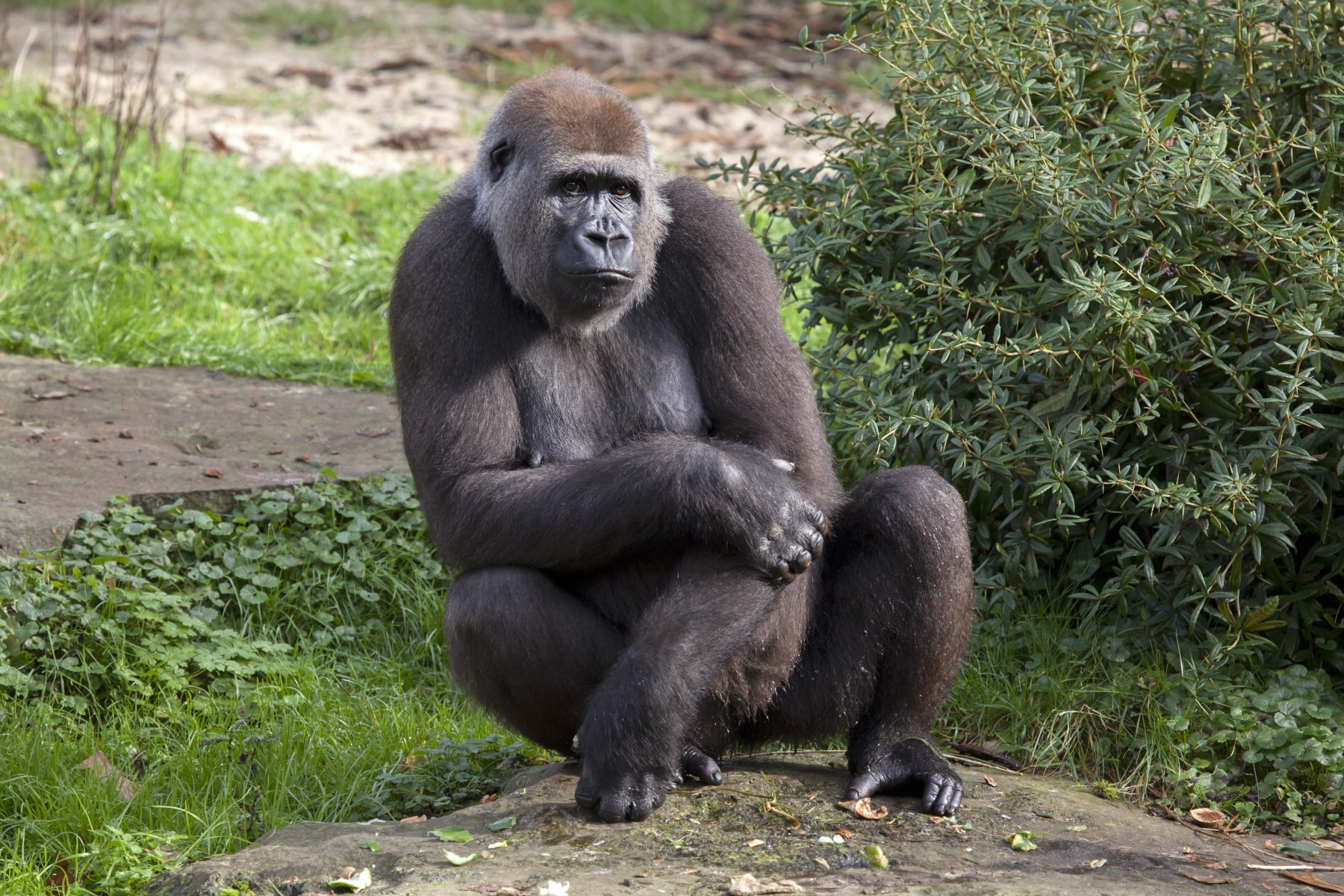
Until a few decades ago we were convinced that, at least among the mammals, a general rule was worth on the relationship between males and females: the former dominate, the latter, well, no. The first exceptions came to light about 50 years ago, when it was discovered that among the hyenas and some species of lemuri it was females to dominate on males. Since then, such cases have multiplied, to the point that talking about “exception” is now obsolete: the relationship between sexes in mammals is thought today, it is a spectrum, with the two extremes the absolute dominion of the male or female, and many intermediate situations.
Do you want a sensational example, which overturns what we thought about one of the most studied species in the world? Among the gorillas, at least those of the mountains, not all males dominate females, on the contrary: it demonstrates a study published on Current Biology.
Because the Gorlilla
The choice of gorillas, among all primates, as study subjects is linked to a consideration: we have always thought that the social structure of their herds was strictly patriarchal, as happens for example among chimpanzees. In addition, there is the fact that the sexual dwelling in the species is very marked: the females weigh half of the males, which also have much larger and more threatening canines.
On the other hand, however, we also know that in some cases it is Gorilla’s females to choose which male to reproduce with, not vice versa: it is a sign of dominance of the first on the latter, and this is why the team of the universities of Leipzig and Turku who conducted the study has decided to analyze in more detail the power relations between Gorilla. To do this they observed four different groups of mountain gorillas for a period of thirty years, and have now published their conclusions.
What changes in our idea of animal “patriarchy”
Conclusions that, as anticipated, overturn what we thought about the Gorillas. In each of the groups studied, in fact, practically all females have shown that they dominate at least one male. But be careful: in none of these cases it was the dominant male, or “alpha” if you prefer. The hierarchy of the pack is therefore more fluid than expected, but at least in the Gorilla it still sees a single male dominating on all.
There are some hypotheses that can explain this situation: it is possible, for example, that the alpha male gives a hand to females in dominating other males, so as to keep them at bay also for interposed Gorilla.
Or they could be the non-Alfa that is losing specifically so as not to be hunted by the group. For females, however, dominating some males could be a way to have privileged access to certain sources of food. Whatever the explanation, we have the confirmation that the Gorillas are not as patriarchal as we thought.
