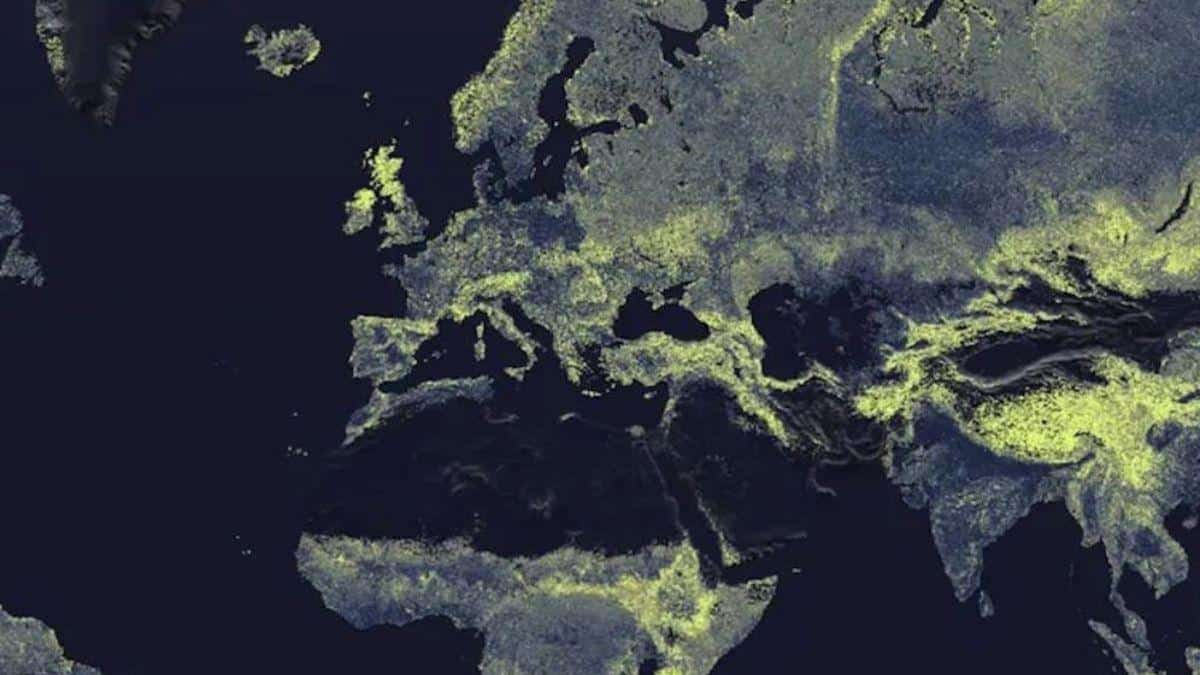
The earth’s surface holds secrets that remain hidden even from those who have studied nature for decades. A new international study has brought to light one of the most impressive biological structures on the planet, an immense underground network made up of microscopic fungi that extends under forests, grasslands, wetlands and farmland. Although it is invisible to the human eye, its size has surprised the scientific community. Researchers calculate that if all its filaments were placed in a straight line, they would reach about 110,000 billion kilometers. A distance so enormous that it is equivalent to approximately 10% of the diameter of the Milky Way.
An underground network of extraordinary dimensions
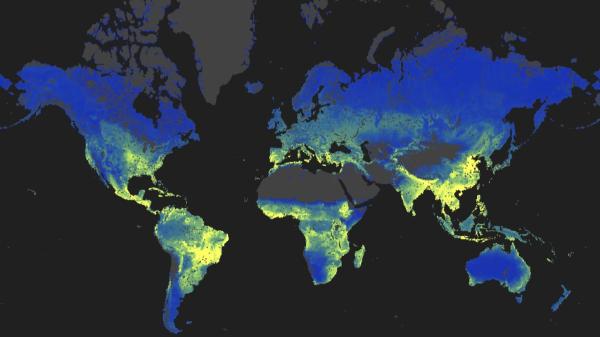
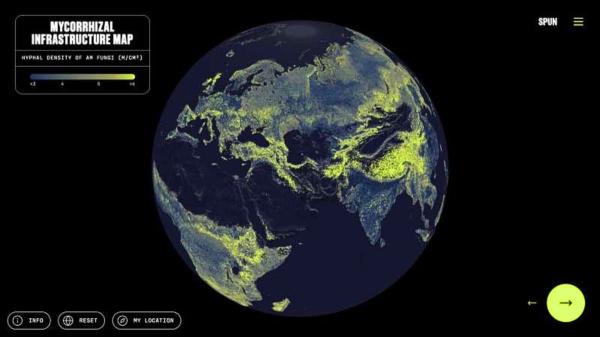
The discovery has been possible thanks to the preparation of the first large world map of underground fungal networks, recently published in the scientific journal Science. The work offers an unprecedented view of an essential part of terrestrial ecosystems that, until now, had remained largely out of the reach of global studies.
These networks are formed by arbuscular mycorrhizal fungi, organisms that establish a close cooperative relationship with most of the plants that inhabit the Earth. Through millions of microscopic connections, these fungi integrate into plant roots and participate in the constant exchange of nutrients.
What has drawn the most attention of scientists is the magnitude of this hidden structure. The calculations carried out by the research team indicate that the total sum of all the filaments present in the surface layer of the soil reaches a length that is difficult to imagine. The estimated 110,000 trillion kilometers make this network one of the largest known biological structures.
Although this is an indicative comparison, experts point out that this length represents approximately 10% of the diameter of the Milky Way, a reference that allows us to better understand the real scale of the discovery.
How fungi that connect plants underground work
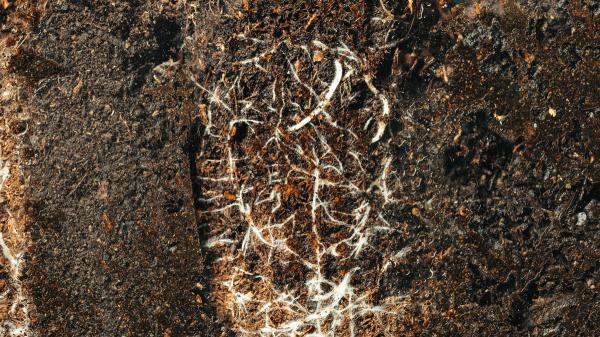
The key to this gigantic network is found in structures called hyphae. They are extremely fine filaments that extend through the soil and connect the fungi to the roots of the plants.
Through these connections, a mutually beneficial exchange occurs. Fungi capture essential nutrients present in the soil, especially phosphorus and nitrogen, and transport them to the plants. In exchange, they receive carbon generated by plant photosynthesis, which they use as a source of energy to grow and expand.
This system of cooperation or symbiosis has been operating for millions of years and constitutes one of the most important mechanisms for the maintenance of terrestrial ecosystems. Thanks to these networks, many plants can access resources that would otherwise be difficult to obtain.
The researchers also highlight that these structures play a fundamental role in soil health. Its activity contributes to improving fertility, favors the circulation of nutrients and helps maintain the biological balance of numerous natural habitats.
For this reason, understanding how these networks are distributed and function has become a priority for scientists studying biodiversity and ecological processes on a global scale.
The “hidden forest” that extends beneath grasslands and wetlands
To create the new world map, researchers compiled information from 16,669 soil samples included in more than 300 scientific studies carried out in different regions of the planet.
Subsequently, they used artificial intelligence tools to estimate the density of fungal networks present in the Earth’s surface layer. The results allowed us to identify the areas where these organisms reach a higher concentration.
The conclusions reveal that wild grasslands are among the main reservoirs of fungal biomass on the planet. In particular, those located in elevated areas or subject to periodic flooding present some of the highest densities recorded by researchers.
Evolutionary biologist Justin Stewart, one of those responsible for the work, described these regions as authentic forests hidden beneath the Earth’s surface. Although they may look like simple expanses of grass from the outside, beneath them lies a complex biological infrastructure that connects thousands of organisms and supports numerous ecological processes.
Experts warn, however, that these ecosystems are increasingly threatened by the transformation of the territory and the expansion of certain human activities.
A key piece for the climate that could be at risk
In addition to their ecological importance, these underground networks play a relevant role in climate regulation. Various previous research cited in the study indicates that mycorrhizal fungi are capable of capturing enormous amounts of carbon dioxide each year.
Estimates suggest that they could absorb the equivalent of about 3.9 billion metric tons of CO₂ annually, a figure comparable to a significant portion of global emissions from fossil fuels.
However, the new map also highlights the impact of human activity on these structures. The researchers observed that agricultural soils have a density of fungal networks considerably lower than that found in other natural ecosystems.
According to the authors, practices such as the intensive use of fertilizers or certain phytosanitary products could be contributing to this reduction. In some cases, the difference reaches around 50% compared to less disturbed land.
Despite the relevance of the discovery, scientists believe that there is still much to investigate. Some regions of the planet, especially certain rainforests and desert areas, continue to present significant uncertainties. Upcoming studies will attempt to determine more precisely how these networks grow, how much carbon they store, and what their role may be in combating climate change over the coming decades.
If you want to read more articles similar to The discovery that surprises scientists: a hidden network beneath the Earth as extensive as 10% of the Milky Way, we recommend that you enter our Biodiversity category.
