The new Copernicus report raises the alarm: global warming is happening faster than expected. This is why according to scientists the next 5 years will be decisive for the climate crisis and what we risk by exceeding the limits.
In the last 3 years, the average global temperature has exceeded the 1.5°C of warming set by the Paris Agreement as a ceiling to limit the consequences of the climate crisis. If it continues at this rate, the world could reach that limit by 2030, a decade earlier than predicted at the time. Facing ever more extreme weather phenomena.
Copernicus data on the climate crisis: goodbye optimism
The alarm is raised in the new Global Climate Data Report 2025 presented by the European Center for Medium-Range Weather Forecasts (ECMWF), based on data from the Copernicus service. Precisely in the weeks in which, for the second time, the USA is leaving that Agreement at the behest of President Donald Trump, who is stopping policies to reduce emissions.
What to do? «Global warming knows no borders», replied Florian Pappenberger, director general of the ECMWF, to journalists from all over the world who asked him for a comment during the press conference to present the Report. «Therefore we will continue to monitor global warming to allow all countries to take actions to adapt to climate change, which is there for all to see: the last 11 years have been the hottest on record». And, ECMWF climate scientists predict, 2026 is set to be the fourth record year, above 1.4 °C compared to the pre-industrial period.

Hot spots: 2025 was a year of (negative) records
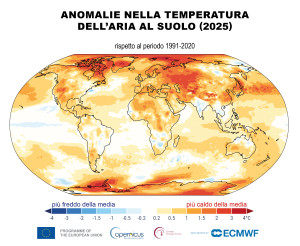
The data leaves no room for misunderstanding: 2025 was the third warmest year on record, after 2024 (when the pre-industrial average was exceeded by 1.6 °C for the first time) and 2023. In 2025, global surface air temperatures were 1.47 °C higher than the pre-industrial level.
The consequences were enumerated by Samantha Burgess, strategic manager for climate at ECMWF: «Half of the world’s land surface recorded an above-average number of days with at least one severe heat stress (perceived temperature of 32 °C or more). High temperatures have triggered large forest fires, severe storms and lower-than-average global ice extent. The Poles remain among the most sensitive “hot spots” on the planet: Antarctica recorded the warmest annual temperature ever recorded and the Arctic the second warmest. The melting of the ice reduced the albedo, i.e. the reflected solar radiation, the seas absorbed more heat and this accelerated the further disappearance of the ice.”

107 billion in damages: the cost of extreme events
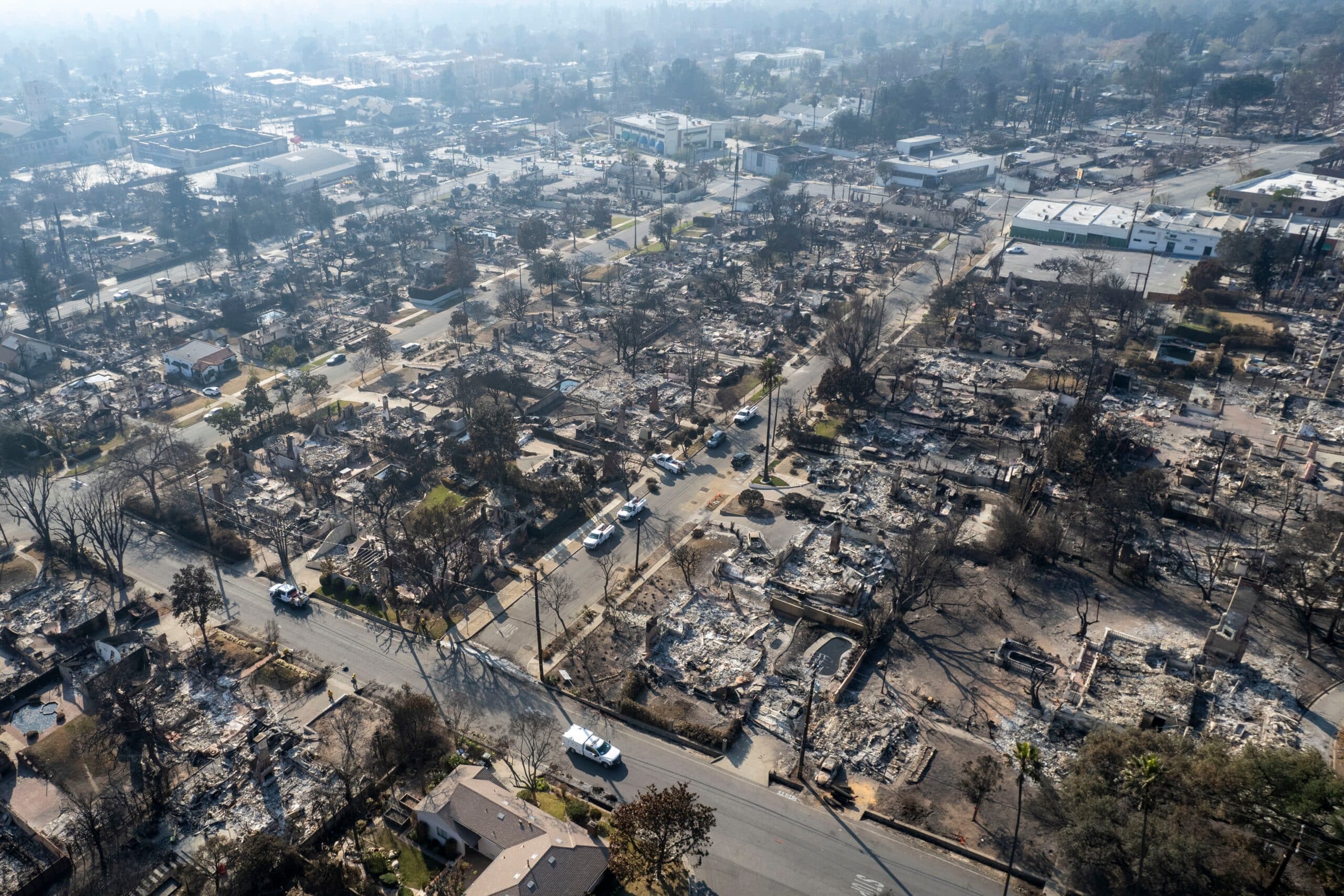
We have seen the consequences: the victims of the heat waves were over 62 thousand. According to the insurance company Swiss Re, in 2025 extreme events caused damages estimated at 107 billion dollars, especially for the Los Angeles forest fires (the most damaging ever globally) and for Hurricane Melissa, one of the most powerful ever recorded in the Atlantic (winds of 298 km/h). In Europe, summer fires have burned more than a million hectares.
Italy in check: floods in the North and drought in the South
And Italy didn’t fare well either, as recalled by a report from the “City Climate” national observatory: 376 extreme weather events were recorded which caused damage in Italy (+5.9% compared to 2024). The most frequent phenomena? Flooding from intense rain (139), wind damage (86) and river flooding (37). Genoa, Milan and Palermo are the most affected cities. And the South (Sardinia, Puglia, Sicily) has once again ended up in the grip of drought.
Intervention window: what remains to be done by 2030
«This situation», commented Carlo Buontempo, director of the Copernicus Climate Change Service, «is due to greenhouse gases which have constantly increased in recent years. The atmosphere is sending us a message, and we must listen to it: We will continue to monitor atmospheric indicators to help policymakers understand the risks of continued emissions and respond effectively. The world is approaching the temperature limit set by the Paris Agreement, and we are likely to exceed it within this decade: the choice we have now is how best to manage the consequences. Satellite data, for example, has allowed hospitals, retirement homes and energy suppliers to prepare for the impact of heat waves.”
