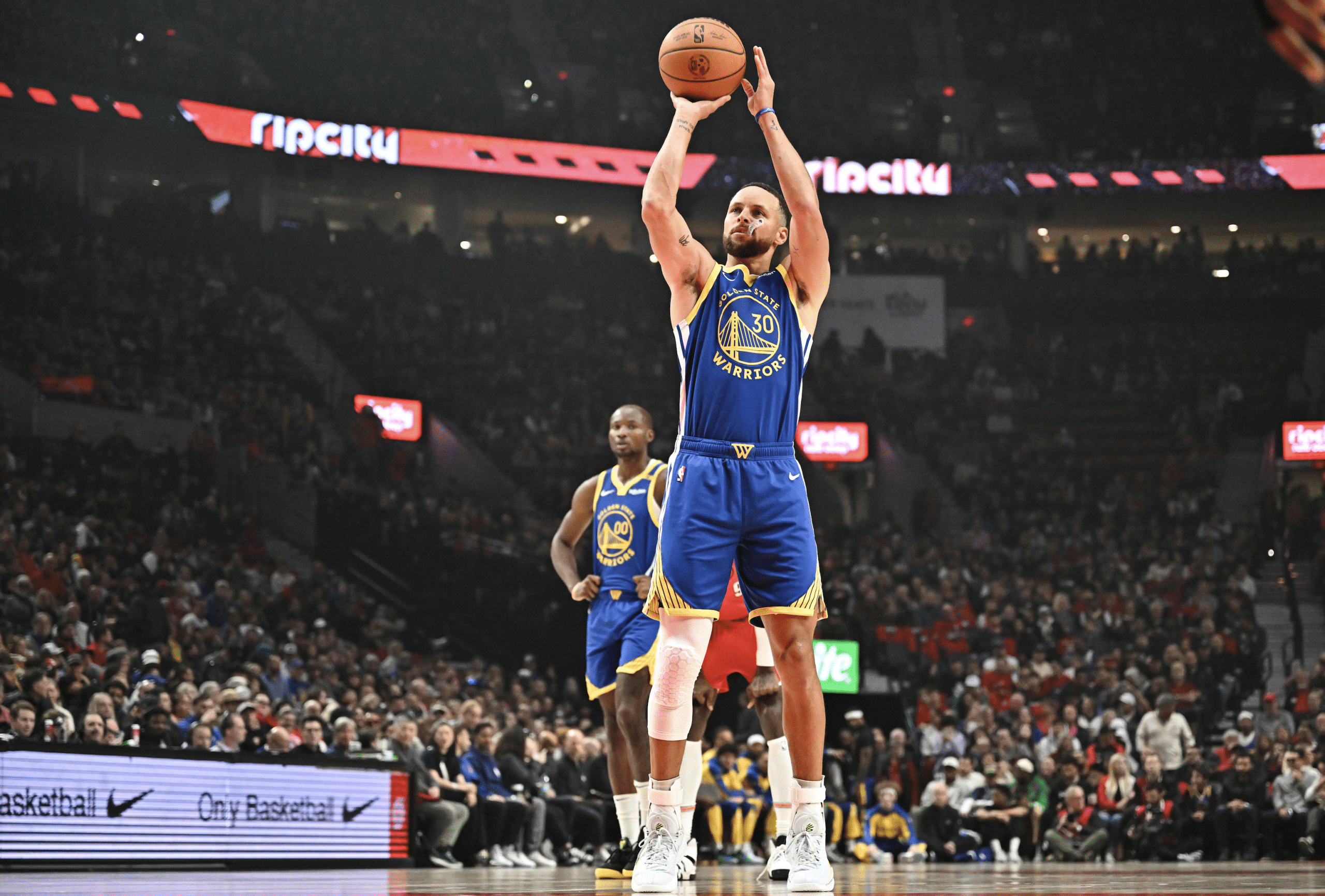
In modern basketball the free throw is one of the few gestures that is almost completely controllable and often decisive in key moments of the game. Precisely for this reason it was analyzed in a study published in Frontiers in Sports and Active Living (Cabarkapa et al., 2023), who used an advanced three-dimensional markerless motion capture system to study its biomechanics in detail.
The effective free throw numbers
The researchers compared players with a high percentage of goals from the foul line (≥70%) and players with lower percentages (<70%), analyzing both the preparation phase and the moment of release of the ball. The results show that the effective free throw is not a question of strength, but of control and stability of the movement.
The magic corner
From a physical point of view, scientific literature converges on some optimal values. The most effective release angle is between 50 and 52 degrees, while the ball exit speed is relatively low, around 7.0–7.5 m/s. In these conditions the flight time is approximately 1 second. The ball spins backwards with a backspin of 2–3 revolutions per second, which stabilizes the trajectory and increases the chances of scoring upon contact with the rim.
The most effective shot does not aim at the geometric center of the basket, but at a point slightly further back, the rear part of the iron (referring, to be clear, to the shooter’s point of view: therefore towards the backboard). With a more curved trajectory, the ball has a margin of error of about 4–5 centimeters, making it more likely to go in even if the shot is not perfectly centered.
The numbers of the infallible free throw
The study adds a key element: more precise players perform the gesture with lower joint speeds, particularly at the knees and center of mass. In other words: the knees extend more smoothly, not with a quick or abrupt push, and the body rises and “straightens” continuously, without jerks, with a more fluid and repeatable overall movement. Furthermore, the release of the ball occurs from a higher height on average, around 2.0–2.2 metres, keeping the torso more vertical and reducing the forward inclination.
A particularly interesting fact concerns the comparison between shots scored and errors among the most accurate players: forcing the release height can be counterproductive. In fact, in incorrect shots, the excessive extension breaks the balance of the gesture, confirming that the free throw is a sub-maximal movement (i.e. in which none of the factors takes on its maximum value) based on rhythm, coordination and control.
