
Ectotherms are animals that cannot produce their own heat, with characteristics such as thermal environmental dependence. Some examples are crocodiles, snakes, ants and beetles. To know the living beings on our planet, there are various classifications. One of them is the one that tells us about the ability to heat your own body or depend on external conditions, that is, ectothermy. If you want to know more about what ectothermic animals are, their characteristics and examples, continue reading this BIOencyclopedia article.
What are ectotherms
Ectotherms are animals that do not have the ability to produce heat with their own body in a sustained manner. Their morphology and physiology do not allow them to generate their own heat, so they must rely on and seek external sources to balance their body temperature. They are commonly called cold-blooded animals, however, this term is incorrect, because even though they cannot generate their own internal heat source, once they have raised their blood temperature, it can show the levels of what endothermic animals have, which are capable of generating their own heat internally.
The habits that ectotherms have developed are the basis of their survival, since they have learned to develop certain mechanisms that allow them to survive. For example, in warm seasons, these animals can take advantage of external conditions to generate internal energy, but when cold seasons come, their requirements for food, movement and strength decrease, so as not to wear out their internal body heat. When they have periods of inactivity, they drop their body temperature according to the prevailing conditions of the environment.
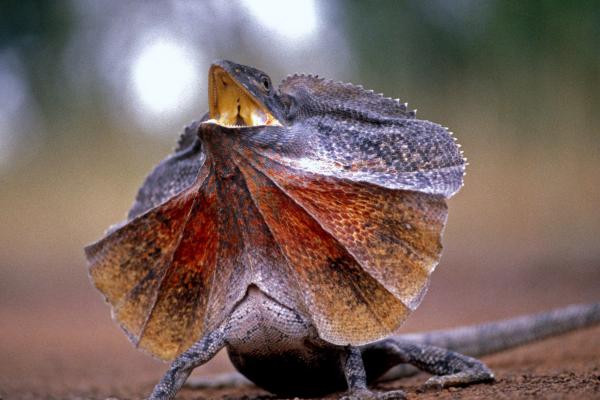
Characteristics of ectotherms
- They cannot generate their own internal heat.
- They depend on external sources to regulate their body temperature.
- They produce little or no metabolic heat and expel it quickly.
- They feed very spaced out.
- They live long periods of brumation, that is, lethargy with a drastic decrease in vital functions.
- They generate energy investment by requiring up to 17 times less food than other animals.
- They have thermoregulatory behaviors.
- They generate dependence on environmental temperature, a characteristic for which they are also known as poikilotherms.
Methods to regulate the temperature of ectotherms
Ectothermic animals regulate their temperature in various ways:
- They can take advantage of sunlight during the day, and because their bodies do not have feathers or fur, they make better use of the thermal exchange with the environment. They also direct their body in organic orientation with the sun’s rays.
- Another way to regulate your internal heating is through darkening your skin, thanks to chromatophores, that is, cells with pigments inside to reflect light.
- Another technique they use to maintain an adequate temperature is to create burrows, tunnels, nests or safe spaces where the temperature is maintained and they are protected from both extreme temperatures outside and dangers, such as predators.
Examples of ectothermic animals
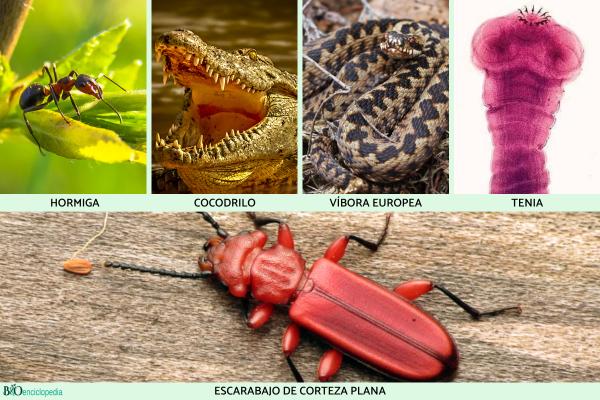
Here are some examples of cold-blooded animals:
Ants (Formicidae)
They build tunnels beneath their burrows and surface stones to conserve heat. Curiously, this condition helps them more than it harms them, since they are not in danger when there are high temperatures, such as, for example, that caused by global warming.
Crocodiles (Crocodylae)
When night comes, crocodiles enter river water that is warmer than the land where they live. This way they warm up. At dawn, they come out of the water and stand in the sun with their mouths open, trying to make the most of the heat of the sun’s rays.
European viper (Vipera berus)
They spend a large part of the day exposing themselves to the sun to capture all the heat they can. To successfully hatch their eggs, incubation includes a viviparous phase.
Hades (Taenia spp.)
Tapeworms are parasites that, when they reach adults, lodge in the intestine of the human body. They come in the form of eggs in poorly prepared or undercooked foods, including beef and pork. Once they have lodged in someone’s body, they become cysts that depend entirely on the person. Thus, within the human intestine, these tapeworms can maintain an internal temperature of 37 ºC, and be at the same time ectotherms and homeotherms, which is when they remain within their body temperature limits, without depending on external conditions.
flat bark beetle (Cucujus clavipes)
Like all ectotherms, it has evolved modified behaviors to resist the lack of internal heat. Thanks to these, it is capable of resisting -58 ºC and, in extreme cases, it has shown that it could resist up to -150 ºC, “vitrifying” the body fluids inside, in order to survive.
Also, you are probably wondering if certain groups of animals are cold-blooded or not, such as, for example, if Fish are ectotherms or endotherms, amphibians and reptiles are ectotherms or endotherms, and birds are ectotherms or endotherms. Here we are going to tell you: apart from invertebrates, which are the largest group of ectotherms, fish, amphibians and reptiles are ectotherms; the birds, no.
Differences between endotherms and ectotherms
- The main difference is that ectothermic animals do not produce sustained body heat and endotherms do. Thus, in this type of classification, as you have already seen, endotherms do produce their own heat. However, ectotherms and poikilotherms depend on external conditions and some habits that they have learned to develop, to maintain their balanced body temperature.
- The consumption of food for their energy intake also makes them different, since ectotherms almost do not need to eat, so they space their meals much further apart, while endotherms do feed continuously.
- Among ectotherm animals, invertebrates predominate and, on the other hand, endotherms are vertebrates.
Here you can learn more about Endothermic Animals: what they are and examples.
If you want to read more articles similar to Ectotherms: what they are, characteristics and examples, we recommend that you enter our Biodiversity category.
- Mia, B. (2024). Ectothermic Animals: Ectothermic animals, sometimes called “cold-blooded” animals, cannot control their own body temperature. (np): Amazon Digital Services LLC – Kdp.
- Hill, R.W., Wyse, G.A. (2006). Animal Physiology. Argentina: Editorial Médica Panamericana SA
