
Good environmental news is so rare that, when it arrives, it deserves to be celebrated. Brazil has just recorded the lowest level of deforestation in the Atlantic Forest since systematic monitoring of this ecosystem began in 1985.
According to data released by the SOS Mata Atlântica Foundation and the satellite observation systems used in the country, during 2025, 8,658 hectares of forest were lost, a figure that represents a reduction of close to 40% compared to the previous year and marks a historical minimum in more than 40 years of records.
The achievement has been greeted with enthusiasm by conservation organizations, who see this trend as a demonstration that environmental protection policies, satellite surveillance and pressure from civil society can produce tangible results. However, they also remember that the Atlantic Forest continues to be one of the most degraded ecosystems on the planet.
The forest that houses one of the highest concentrations of biodiversity on the planet
Although the Amazon usually attracts international attention, the Atlantic Forest is one of the great ecological treasures of South America. It originally covered around 142 million hectares along the Atlantic coast of Brazil and also extended into Paraguay and Argentina. Today less than a third of that surface remains and only a small part preserves ecological conditions close to the original ones.
Its biological importance is extraordinary. The World Wildlife Fund (WWF) considers it one of the main biodiversity hotspots on the planet. It is home to more than 20,000 species of plants, thousands of animal species and an enormous number of organisms that do not exist anywhere else in the world. About 40% of its vascular plants and up to 60% of some vertebrate groups are endemic.
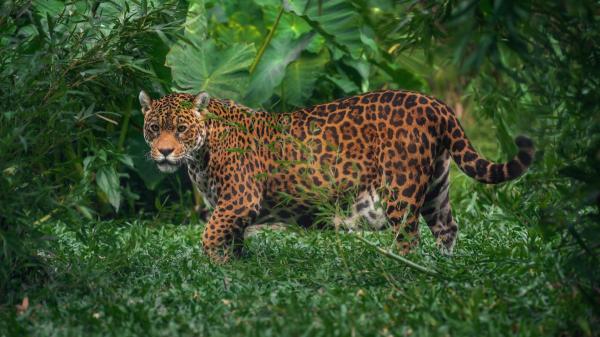
In its forests live emblematic animal species such as the jaguar, the golden lion tamarin, the maned sloth, toucans, capuchin monkeys and hundreds of birds exclusive to the region. A scientific study identified more than 220 endemic bird species, of which a significant proportion are threatened or already considered locally extinct.
Why the Atlantic rainforest is vital for millions of people in Brazil
The importance of the Atlantic Forest is not limited to biodiversity. It also plays a fundamental role in the daily lives of millions of people.
This forest is located precisely in the most populated region of Brazil. Large metropolitan areas such as Rio de Janeiro, São Paulo, Curitiba and Belo Horizonte are located there. It is estimated that around 80% of the Brazilian population lives within the area of influence of this biome.
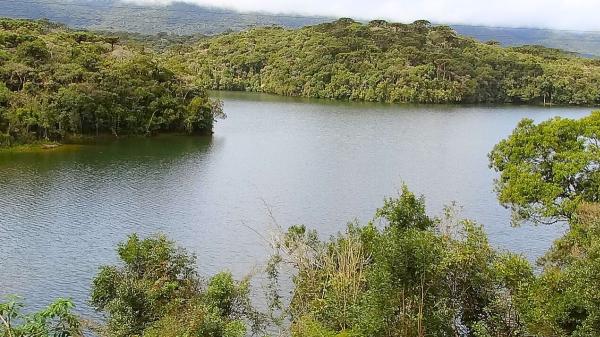
In addition, it constitutes one of the largest reserves of fresh water in the country. CAF (Development Bank of Latin America and the Caribbean) highlights that the ecosystems associated with the Atlantic Forest supply water to about 60% of the Brazilian population. Forests regulate rainfall, protect soils and help maintain the functioning of watersheds essential for human consumption, agriculture and energy generation.
For this reason, conserving the Atlantic Forest is not only a matter of nature protection. It is also a strategy for adaptation to climate change and water security for one of the most urbanized regions in Latin America.
This is how Brazil has managed to reduce deforestation to a 41-year low
Environmental organizations attribute the improvement to several factors. Among them, the strengthening of satellite monitoring systems, the increase in environmental surveillance, the application of sanctions against illegal activities and the restoration work carried out by public and private entities stand out.
The SOS Mata Atlântica Foundation has been monitoring changes in forest cover for decades and believes that the sustained reduction in deforestation demonstrates that environmental protection can generate results when there is institutional continuity.
Furthermore, in recent years ecological restoration projects have multiplied. Initiatives promoted by governments, universities, NGOs and companies have made it possible to recover degraded areas and reconnect forest fragments that had been isolated.
Scientists issue a warning despite the historical record
Despite the progress, scientists insist there is no reason for complacency. More than 80% of the original forest has disappeared due to agricultural expansion, livestock farming, urbanization and infrastructure. In many places only small isolated fragments survive.
Fragmentation is one of the main current problems. Even if an area preserves trees, the disconnection between forests makes the movement of species difficult, reduces genetic diversity and increases vulnerability to fires, droughts and extreme climate events.
Another challenge is that part of the forests that are recovered are young formations that do not yet have the ecological complexity of the mature forests lost during previous decades. Experts remember that restoring an ecosystem can take generations.
The sign that shows that the recovery of nature is possible
The historic reduction in deforestation in the Atlantic Forest does not mean that the environmental crisis is over. However, it does offer an important lesson at a time marked by bad news about biodiversity and climate change.
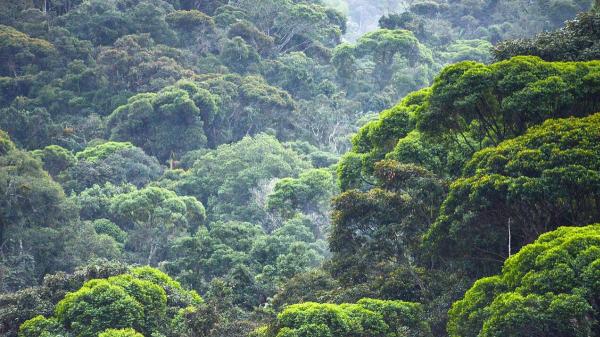
When scientific oversight, environmental legislation, conservation funding, and social support are in place, ecosystems can begin to recover. The Atlantic Forest remains one of the most threatened forests in the world, but data from 2025 shows that it can also become one of the most hopeful examples of large-scale environmental restoration.
Protecting this forest does not only mean saving jaguars, monkeys or rare birds. It also means preserving the water, climate and quality of life of millions of people in one of the most important regions of South America.
If you want to read more articles similar to Enthusiasm among biologists: Brazil’s Atlantic forest reaches its lowest level of deforestation in 41 years, we recommend that you enter our Ecosystems category.
