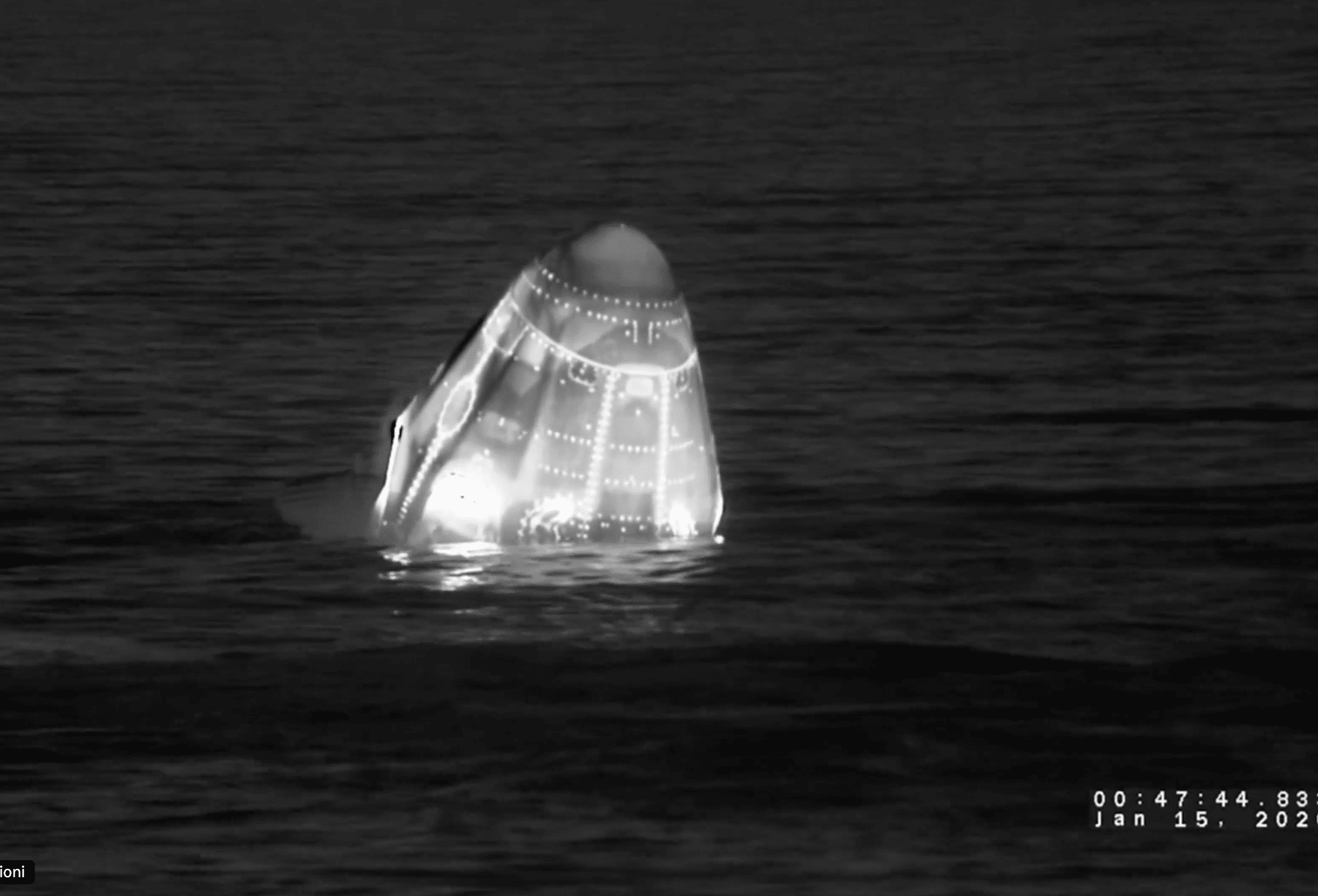
The SpaceX Crew Dragon capsule with the four astronauts of the Crew-11 mission has returned to Earth. It is the first time in history that an ISS crew has been evacuated for medical reasons.
The capsule SpaceX Crew Dragon Endeavour with the mission astronauts on board Crew-11 returned to Earth early (as announced a few days ago) after a return flight that began on January 14, 2026 from International Space Station (ISS). The ditching took place in the Pacific, off the coast of California, at 9:40 am Italian time on January 15, 2026, with (according to NASA) “favorable meteorological conditions and with the crew in stable conditions”.
The mission, which started on August 1, 2025 and initially scheduled until February 2026, was stopped several weeks early for medical reasons, marking the first time in the history of the ISS in which NASA decides to bring the entire crew back to Earth due to a health problem.
They were on board four international astronauts: Zena Cardman (NASA), mission commander; Mike Fincke (NASA), pilot; Kimiya Yui (JAXA, Japan), mission specialist; Oleg Platonov (Roscosmos, Russia), mission specialist. All have completed approx 167 days in orbit before re-entry.
Because it is a historical event
The decision to bring forward the return was not caused by an accident or failure of the International Space Station, but by a medical problem detected on January 7 involving one of the crew members. NASA specified that the situation was stable, but that the person concerned needed assistance diagnostic tests and treatments not available in orbit, making an early return prudent. In respect of medical privacy, the agency did not disclose either the astronaut’s name or the nature of the pathology.
This is an event unprecedented in the almost 25 years of continuous activity of the ISS and in the history of human spaceflight: although there have been cases of health problems in orbit in the past, never before had an entire crew rotation been interrupted for medical reasons.
What happens now
Following the return of Crew-11, the ISS continues to operate with a skeleton crew awaiting the arrival of the next rotation mission. NASA is evaluating whether to bring forward the launch of the Crew-12 to re-establish the normal operational structure of the station and recover part of the postponed scientific activities and spacewalks. The event is also fueling broader reflection on space medicine, in particular on the need to enhance diagnostic and medical intervention capabilities in orbit in view of future long-duration missions, from the Moon to Mars.
