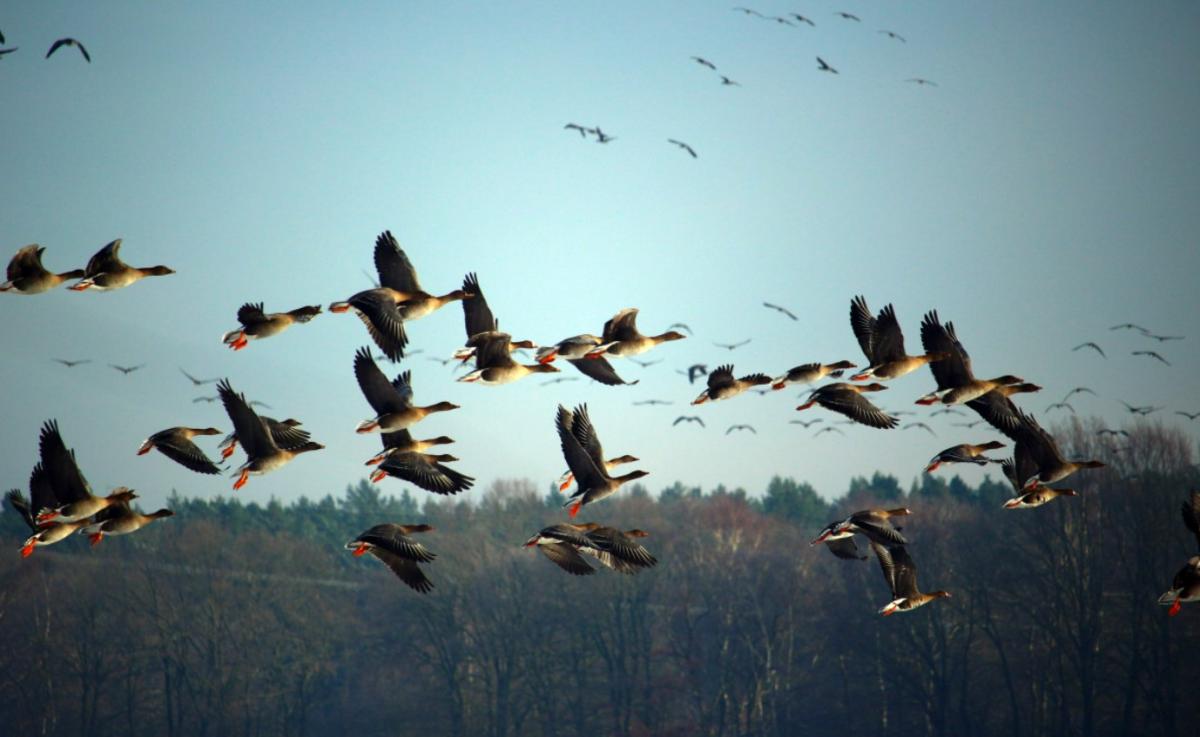
Migration is a large-scale phenomenon, of enormous complexity and that is repeated in nature throughout the entire planet. It is strongly marked by seasonality and is related to the biological clocks of animals, reproduction and the search for food.
If there is a group of animals in which migration is especially present and is also easy to observe, it is birds. And thanks to their ability to fly, but also to swim in many cases, and their unmatched ability to navigate, birds have made migration their natural environment. Although not all species have the need to be migratory, which is why they are called resident birds.
In this BIOencyclopedia article we will learn about what migratory birds are, their characteristics and examples from different countries.
What are migratory birds
A group of birds that share the main characteristic of moving annually synchronously with the seasons to reach latitudes in which to develop their basic vital activities adequately or more easily are called migratory or migratory birds. Almost all of these birds carry out migration for reasons of weather and reproduction, while others move in search of appropriate hunting or feeding places in general, although the latter case is not always considered a migration phenomenon.
Among the birds that migrate, you can find species of all kinds, such as, for example, the great black kite or the little barn swallow, which carry out their migration by air, or the Magellanic penguin, which makes it through the sea.
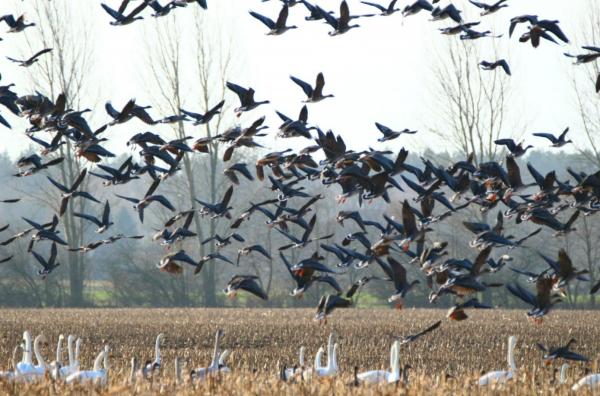
Characteristics of migratory birds
Being such an enormously diverse group, it is difficult to find common characteristics for all the species that make it up, especially if you look at their anatomy. Generally, these birds do not have an anatomical configuration expressly developed for migration, although they do have certain characteristics that allow or facilitate them to migrate, but the most important properties are generally of another type, such as, for example, specific behaviors or physiological factors:
- Generally, we think of robust and large species such as large raptors, but in reality robustness is not related to large movements. What is really associated with this is the massive energy expenditure involved and, therefore, the ability to accumulate energy reserves to carry out the migration. This is the main common characteristic of migratory birds. Both large, robust birds and small birds, which at first glance may appear fragile or weak, are capable of storing a large amount of energy in the form of intramuscular fatty tissue to prepare for migration. An example of a small species that carries out a large migration is the sandpiper.
- Important sense of direction that, although common to all birds, is extremely relevant in the case of migratory birds to be able to reach their destination without getting lost.
- Their reproductive and breeding stages present a strong seasonality, which is both a consequence and a cause of their migratory habits. Unlike many species of birds resident in tropical areas, whose reproduction is not so strongly conditioned by seasonality. For example, psittacine birds (parrots and conures in general) are capable of reproducing and breeding at any time of the year.
Why do migratory birds migrate?
The purpose of migrations is always to cover the basic vital needs of food, reproduction and breeding. So you could say that migration is related to survival. These large movements are strongly linked to seasonal changes in climate, which is why the weather is considered one of the main triggers for bird migration.
Migratory birds generally spend the breeding season in northern areas of the planet, where spring and summer are less hot, while when winter approaches they move south in search of areas with less cold winters. This roughly summarizes the climatological reasons for the migration. Furthermore, the availability of food is a determining factor when triggering the migratory phenomenon, being the second major reason for the migration of birds.
On the other hand, when analyzing the causes that cause the series of behaviors prior to and contemporary with migration, we must pay attention to their genetic basis:
- It is known that the length of the days is the main factor that birds use to locate themselves in time and know what season they are in, which they can measure thanks to their biological clocks. This causes a series of physiological changes in the individual’s body that can affect their entire body, even being common the development of certain areas of the brain related to orientation, singing and reproduction.
- These physiological changes promote behaviors such as increased food intake for the accumulation of fatty tissue, greater care of plumage and a progressive increase in the birds’ activity and waking hours. This set of behaviors is what is known as migratory alacrity, a widely studied phenomenon that can be observed even in caged individuals.
- At the time of beginning the migration itself, the pressure of the aforementioned migratory alacrity causes some individuals to take flight, thus initiating the migration, which is followed by the rest of the specimens in their flock. Once in the air, orientation plays a crucial role, but knowledge of birds’ migratory routes is attributed to a genetic basis and a learning process in almost equal parts.
As you can see, it is difficult to answer the question that heads this section in a single sentence, since migration is a very complex phenomenon that involves many factors, causes and triggers.
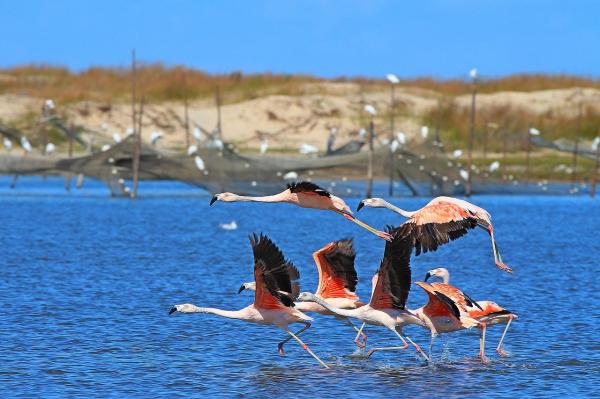
How migratory birds orient themselves
Again to explain this ability, we must talk about multiple factors. We can cite genetic tools, which birds have from birth, and skills that arise from experience and learning.
As expected, when an individual makes his first migration he does not have the previous experience of older companions, but he does have at his disposal a series of senses that, when working together, allow him to orient himself in a spectacular way:
- First of all, birds have the sense of magnetoreception, which allows them to sense the planet’s magnetic field. This way they can know if they are moving towards one of the Earth’s poles or not.
- In addition to the previous sense, sight plays a crucial role, since birds are able to see the magnetic field. This process is mediated by the reception of blue light in your eyes, which is the majority light on our planet during the day. In this way they can differentiate which pole they are moving towards.
- Smell may also be important, although it is thought that it does not reach the level of relevance of the previous senses, but it helps birds create a map of smells that they can use in their subsequent migrations.
- Additionally, they can use the position of the sun and moon as a reference to guide their flights.
In contrast to genetic factors, there are learned ones:
- As the animal travels along the routes in its migrations, it is able to memorize the places where it rests, the geographical features it overcomes or avoids, and the smells it perceives, generating what is known as a cognitive map of migration. This is undoubtedly of great relevance in the orientation of the following migratory movements.
- Thanks to experience, it is known that older birds can carry out more precise movements than the youngest ones in the flock, correcting, for example, with greater accuracy the detour caused by the wind.
Examples of migratory birds
The examples are almost countless, but below you can see some representative ones from different countries:
Migratory birds in Spain
- Barn Swallow (Hirundo rustica)
- Northern Swallow (Cecropis daurica)
- House Martin (Delichon urbicum)
- Sapper martin (Riparia riparia)
- Common swift (Apus apus)
- Lesser kestrel (Falco naumanni)
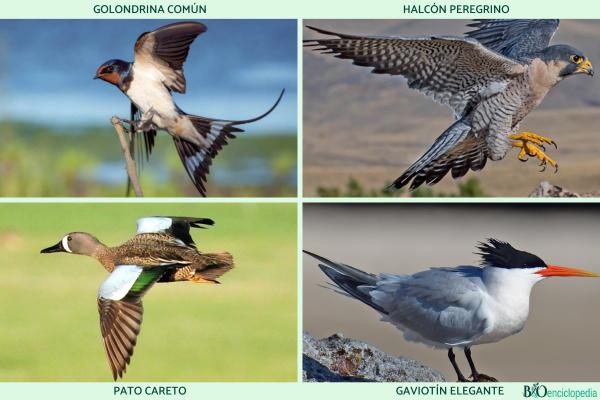
- Peregrine falcon (Falco peregrinus)
- Short-eared owl (Asio flammeus)
- European scops owl (Otus scops)
- Common flamingo (Phoenicopterus roseus)
- White stork (Ciconia ciconia)
- Black stork (Ciconia nigra)
- Purple Heron (Ardea purpurea)
Migratory birds in Colombia
- Black-faced Duck (Dendrocygna widowata)
- Southern Elaenia (Elaenia spectabilis)
- Quincha de Soatá (Amazilia castaneiventris)
- Orange Warbler (Setophaga fusca)
- White-breasted Swift (Cypseloides lemosi)
- Black-winged Sparrowhawk (Buteo platypterus)
Migratory birds in Mexico
- Barn Swallow (Hirundo rustica)
- Yellow warbler (Setophaga petechia)
- Broad-tailed hummingbird (Selasphorus platycercus)
- White pelican (Pelecanus erythrorhynchus)
- Great white heron (Ardea alba)
- Osprey (Pandion haliaetus)
Migratory birds in Chile
- Arctic Plover (Pluvialis squatarola)
- Large Pitotoy (Tringa melanoleuca)
- White Sandpiper (Calidris alba)
- Elegant Tern (Sterna elegans)
- Skimmer (Rhynchops niger)
- Straight-billed Curlew (Limosa haemastica)
Now that you have learned all this about migratory birds, we encourage you to learn about the Monarch Butterfly, another animal that makes a spectacular migration.
If you want to read more articles similar to Migratory birds: what they are, characteristics and examples, we recommend that you enter our Biology category.
- Svensson, L. (2010). Bird guide. Spain, Europe and the Mediterranean region. 2nd Edition. Omega Editions.
- Manzanares, A. (2012). Birds of prey of the Iberian Peninsula, Balearic Islands and Canary Islands. Omega Editions.
- SEO Birdlife – BBVA Foundation (2008). Encyclopedia of the birds of Spain. www.seo.org
- Moncada, M. (2018). Spain, one of the main migratory corridors in the world due to its geographical location. Available at: https://www.nationalgeographic.es/animales/2018/05/espana-uno-de-los-principales-corredores-migratorios-del-mundo-por-su-ubicacion-geografica
- Tala, C. (2006). Official Veterinary Bulletin. Government of Chile.
- Colombia. Ministry of Environment and Sustainable Development – WWF Colombia (2012). Guide to Migratory Species of Biodiversity in Colombia – Birds. Volume 1.
