
Posidonia oceanica (Posidonia oceanica) is a marine plant typical of the Mediterranean Sea that forms extensive underwater meadows in coastal areas. Although it is often confused with an algae, it is a higher plant with roots, stems and leaves, adapted to living completely submerged in salt water. These Posidonia meadows play a fundamental role in the balance of marine ecosystems, since they influence water quality, biodiversity and the protection of the coastline.
Therefore, we are going to dedicate this Evidence Network article to tell you more about what Posidonia oceanica is, what its habitat is and what it is for, as well as its relevance to the environment.
What is Posidonia oceanica and what are its characteristics?
Posidonia oceanica is a marine plant endemic to the Mediterranean Sea. Although it is often confused with an algae, it is actually a higher plant, with roots, stems, leaves, flowers and fruits, which evolved to live completely submerged in salt water.
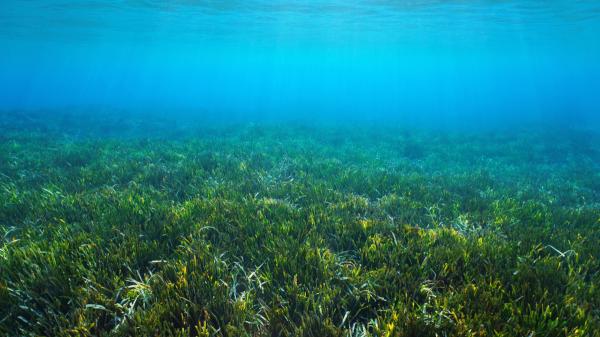
It forms extensive underwater meadows that develop from shallow waters to about 30 or 40 meters, as long as the water is clear and receives enough sunlight. These grasslands can occupy large areas of the seabed and are considered one of the most important and productive ecosystems in the Mediterranean.
Among its main features are:
- Long, ribbon-shaped leaves, intense green in color, which can exceed one meter in length and are renewed every year.
- Rhizomes (underground stems) that grow horizontally and vertically, allowing the plant to expand slowly and anchor itself to the substrate. In this other post you can learn more about Rhizomes: definition and examples of plants.
- Very slow growth, just a few centimeters per year, which means that the grasslands take centuries to form.
- Exceptional longevity. Some current grasslands are thousands of years old, making them one of the oldest living organisms on the planet.
- Occasional flowering, which does not occur every year, and production of fruits known as “sea olives”.
We encourage you to discover more about Are algae plants?
What is the habitat of Posidonia meadows like?
Posidonia oceanica meadows develop in clean, calm and well-lit waters, characteristic of the Mediterranean coast. The presence of sunlight is essential, since this plant carries out photosynthesis, which is why it is usually found from very shallow areas to depths that, in optimal conditions of transparency, can reach 30 or even 40 meters.
The substrate on which it grows is usually sandy or mixed, although it can also colonize rocky bottoms thanks to its rhizomes, which fix firmly and stabilize the soil. Over time, the accumulation of sediments and plant remains forms structures known as “mattes”, authentic natural barriers that raise the seabed and protect it from erosion.
This habitat is characterized by great environmental stability, with relatively constant temperatures and low turbidity. These conditions allow the grasslands to act as one of the richest ecosystems in the Mediterranean, hosting fish, mollusks, crustaceans and numerous species of invertebrates that find refuge among the leaves.
Furthermore, Posidonia meadows function as an engineering ecosystem, since they modify the environment in which they live. They are capable of reducing the force of currents, promoting sedimentation and maintaining water clarity. All of this turns its habitat into a key environment for the health of the coast and for the balance of Mediterranean marine ecosystems.
What is posidonia used for?
Posidonia oceanica fulfills essential functions for the balance of the Mediterranean Sea and for the protection of the coast. One of its main functions is the production of oxygen. Through photosynthesis, Posidonia meadows release large amounts of oxygen into the water, improving its quality and favoring marine life. For this reason, they are often considered the “lungs of the Mediterranean”.
It also plays a key role as a refuge and breeding area for numerous species. Among its leaves and rhizomes live juvenile fish, mollusks, crustaceans and other organisms that use the grasslands as protection from predators and as a source of food.
Another fundamental aspect is its function in protecting the coastline. The meadows cushion the impact of currents and waves, reducing erosion of the seabed and beaches. In addition, the remains of leaves that reach the shore form natural accumulations that help preserve the sand and protect the coast against storms.
Posidonia also acts as a carbon sink, storing large amounts of CO₂ in its rhizomes and in the sediments that accumulate under the meadows. This process contributes to mitigating the effects of climate change and turns Posidonia into a natural ally against global warming. Discover more here about Carbon Sinks: what they are, function, types, examples and importance.

What threats do Posidonia meadows face?
Despite their great ecological value, Posidonia oceanica meadows are in decline in many areas of the Mediterranean. Their extremely slow growth makes them especially vulnerable to environmental disturbances, as damage can take decades or even centuries to recover.
One of the main threats is human activity on the coast. Anchoring boats on the grasslands causes the leaves and rhizomes to break, destroying large surfaces in a short time. Added to this are coastal works, dredging and artificial beach regenerations, which alter the seabed and increase the turbidity of the water.
Pollution is another key factor. Wastewater discharges, fertilizers and other pollutants reduce water quality and make it difficult for light to enter, essential for photosynthesis. The excess of nutrients also favors the growth of algae that compete with the posidonia and can suffocate it. In this link you can see more information about the Causes and consequences of sea pollution.
Climate change represents a growing threat. Rising water temperatures, marine heat waves and rising sea levels affect the survival of these grasslands, especially in shallow areas.
Finally, the introduction of invasive species can alter the balance of these ecosystems. Some exotic algae grow rapidly and displace Posidonia, reducing its extent and weakening the meadows.
If you want to read more articles similar to Posidonia oceanica or Posidonia meadows: what is it, what is its habitat and what is it for?, we recommend that you enter our Other environment category.
- The Posidonia Oceanica of the Mediterranean Sea. (July 16, 2022). Acronautica. Available at: https://www.acronautica.com/la-posidonia-oceanica-del-mar-mediterraneo/
- Curiosities of Posidonia oceanica. Aquae Foundation. Available at: https://www.fundacionaquae.org/wiki/posidonia-oceanica/
- Do you know the importance of Posidonia oceanica? Benissa. Available at: https://www.benissa.es/sostenibilidad/conoces-la-importancia-de-la-posidonia-oceanica/
- Posidonia oceanica, the exclusive aquatic plant of the Mediterranean. Koldourize auger. Available at: https://koldourizarbarrena.com/posidonia-oceanica/
