
Air conditioning has become one of the main tools to deal with high temperatures, especially during heat waves. Its use allows maintaining a comfortable temperature inside homes, offices and businesses, and is essential to protect the health of the most vulnerable people when the heat is extreme.
However, its operation also has a less well-known side: it can contribute to increasing temperatures in cities and, indirectly, to global warming. Understanding how this phenomenon occurs helps to understand why experts insist on combining air conditioning with other measures that reduce urban heat and improve energy efficiency.
Why air conditioning can make cities even hotter
Contrary to what many people think, an air conditioner increases the heat in cities. An air conditioner works by extracting heat from inside a home and expelling it outside through the outdoor unit. Thanks to this, the rooms can be cooled, but it also causes the streets, patios and facades to receive that heat, raising the temperature of the immediate environment.
The effect is especially notable in densely urbanized cities, where asphalt, concrete and tall buildings are abundant, but green areas are scarce. During a heat wave, thousands of devices operating at the same time expel heat outside, making it difficult for the city to cool down at night and contributing to the well-known urban heat island effect. This causes a vicious circle that means that the hotter it is outside, the more people use the air conditioning, and the more it is used, the more heat is released into the urban environment.
The intensity of this phenomenon depends on several factors, such as ventilation between buildings, the presence of trees, the type of streets or the number of devices installed in the same area. In neighborhoods with little vegetation and poor air circulation, the impact may be greater than in areas with parks or open spaces.
This does not mean that air conditioning is harmful in itself. During episodes of extreme heat it is a fundamental tool to protect health, especially in older people, children or people with chronic diseases. However, experts warn that relying solely on air conditioning to adapt to rising temperatures does not solve the underlying problem. In addition to the heat expelled outside, the increasing use of this equipment increases electricity demand and, if that electricity comes from fossil fuels, it also increases greenhouse gas emissions.
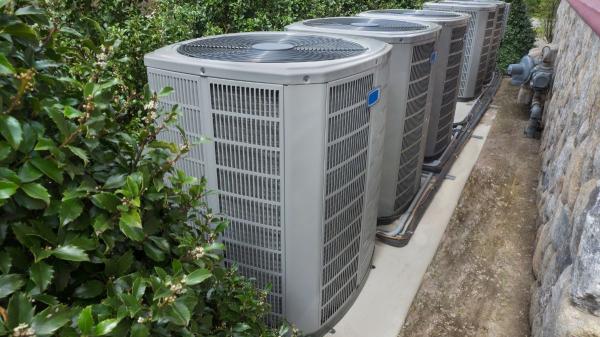
Does air conditioning pollute? This is what really happens
Air conditioning does not pollute the outside air in the same way as a vehicle or an industry, since it does not directly emit smoke or particles during its operation. However, it can contribute to climate change due to electricity consumption and the use of refrigerant gases with a high global warming potential.
When millions of devices operate at the same time during the hottest months, electricity demand increases considerably. If that electricity is generated from fossil fuels, more emissions of carbon dioxide (CO₂) and other greenhouse gases are produced. For this reason, the environmental impact of air conditioning depends largely on how the energy it consumes is produced.
Another important aspect is coolants. Current models mainly use hydrofluorocarbons (HFCs), gases that do not damage the ozone layer, but can have a global warming potential hundreds or even thousands of times greater than CO₂ if released into the atmosphere through leaks, breakdowns or improper management at the end of the device’s useful life. For this reason, international and European regulations promote their progressive replacement by alternatives with less climate impact.
Tips to use the air conditioning efficiently and not abuse its use
Air conditioning will continue to be an essential tool during heat waves, but responsible use can reduce both energy consumption and its environmental impact. The key is not to stop using it, but to do it in the most efficient way possible.
One of the most important tips is to avoid setting temperatures that are too low. Experts recommend keeping the thermostat between 24 and 26 °C, a range that offers thermal comfort and significantly reduces electricity consumption compared to settings of 20 or 21 °C.
It is also advisable to take advantage of passive strategies to keep your home cool. Lowering blinds and awnings during the hours of greatest sunshine, ventilating the house first thing in the morning or at night, and closing doors and windows while the air conditioning is running help retain the cold and reduce the time the equipment needs to be on.
Maintenance is another fundamental aspect. Cleaning the filters frequently improves air quality, allows the appliance to operate more efficiently, and reduces electricity consumption. Likewise, periodically checking the condition of the equipment helps detect possible refrigerant leaks that could increase its environmental impact.
Whenever possible, it is advisable to use ceiling or standing fans as a complement. In many cases, air movement allows you to maintain a pleasant thermal sensation without having to lower the air conditioning temperature further, which translates into lower energy consumption.
Finally, improving the insulation of the home is one of the most effective measures in the long term. Windows with good insulation, blinds, thermal curtains or adequate sun protection reduce heat entry and reduce dependence on air conditioning during the summer months.

If you want to read more articles similar to The air conditioning paradox: it cools your house, but it also contributes to global warming, we recommend that you enter our Climate Change category.
