The Everglades in Florida have been facing one of the most difficult invasive species to control for decades. The Burmese python, a huge snake native to South and Southeast Asia, has established itself in this ecosystem and has become a threat to numerous native species.
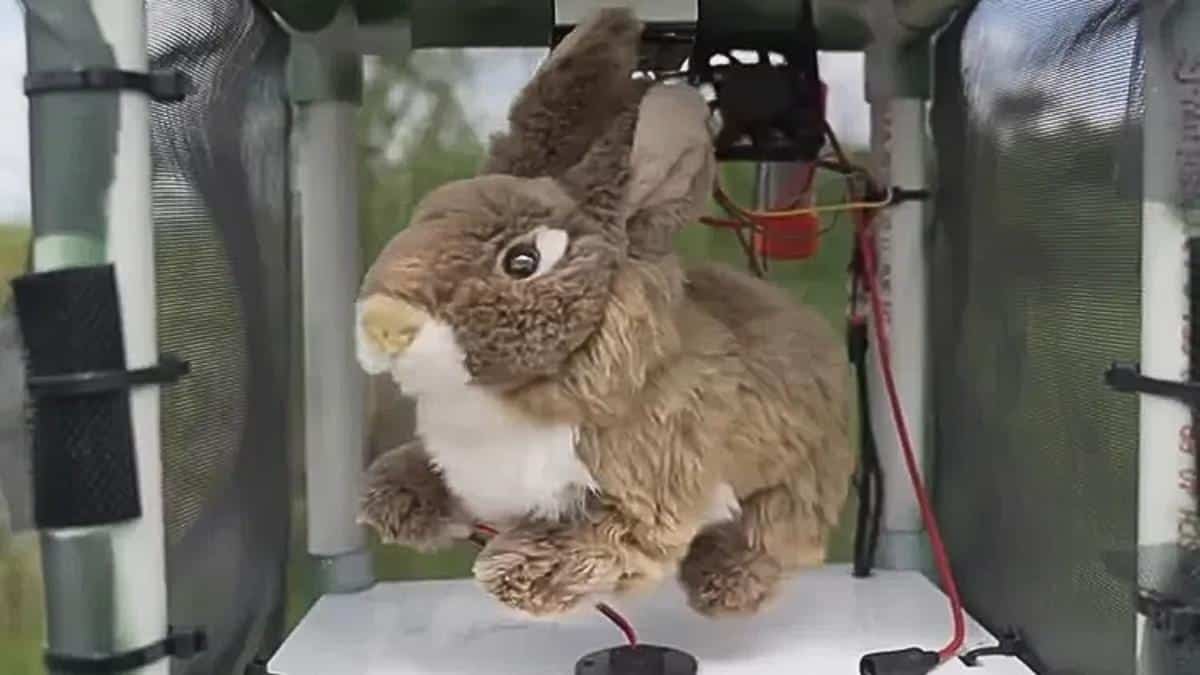
Now, researchers are testing a striking and unusual strategy to locate it: robot rabbits capable of imitating real prey. The objective is not for these devices to capture the snakes, but to get them to come out of their hiding places in order to detect them and remove them from the natural environment.
A huge snake that has altered the Everglades
The Burmese python (Python bivittatus) is one of the largest snakes in the world. In Florida it can reach extraordinary sizes: the largest specimen recorded there measured approximately 5.8 meters, while wild specimens are usually considerably smaller.
The species is not part of the native fauna of Florida. Its presence in the south of the state is mainly related to the trade in exotic animals and to specimens that escaped or were released. The breeding population was established in the Everglades and has since spread throughout much of southern Florida.
The problem goes far beyond the size of these snakes. Pythons are generalist predators capable of feeding on a wide variety of mammals, birds and reptiles. Studies by the United States Geological Survey (USGS) have linked its expansion to sharp declines in different populations of mammals in the ecosystem.
In some areas, the populations of certain mammals have decreased by between 85 and 100%, although these changes respond to the complex interaction of different ecological factors.
The real problem is finding the pythons
It may seem that removing a snake several meters long from the wild should be relatively simple. However, locating it is one of the main obstacles faced by those responsible for controlling this species.
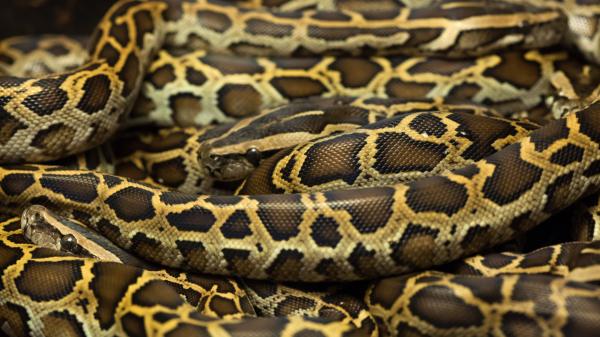
Pythons can remain hidden among wetland vegetation and their coloration provides them with excellent camouflage. Furthermore, the Everglades form a huge territory with areas that are difficult to access, which makes it especially difficult to detect specimens before capturing them. The USGS precisely points out the low probability of detection as one of the big problems in controlling these snakes.
Therefore, researchers are looking for methods that allow the pythons themselves to reveal where they are. And this is where a curious ally appears: a rabbit that is not really a rabbit.
Robot rabbits imitate prey to attract snakes
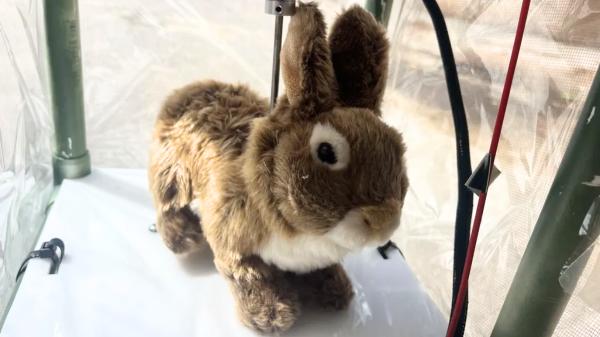
The South Florida Water Management District and the University of Florida have tested 120 robot rabbits as decoys for pythons. At first glance they may look like toys, but they have been modified to reproduce some of the characteristics that snakes would find in real prey.
The devices can generate heat and scent, as well as perform movements meant to mimic the behavior of Everglades swamp rabbits. They are also solar powered and can be activated and controlled remotely.
The choice of the rabbit is not accidental. These small mammals are part of the pythons’ diet, so researchers try to take advantage of the snake’s natural behavior to get it to approach the lure.
The robots are placed inside small enclosures equipped with cameras. When a python approaches, the system can send a signal to those responsible for the program, who can travel to the location to remove the reptile.
Thus, the robot rabbit does not function as a hunter, but as a tool to solve one of the biggest problems in controlling this invasive species: knowing where it is.
A new tool to control an invasion that is difficult to stop
The strategy is part of a much broader set of methods aimed at controlling the spread of the Burmese python in Florida. Researchers have been studying their behavior, movements and reproductive patterns for years to find more effective ways to locate and remove specimens.
The difficulty is enormous. Pythons already occupy much of South Florida and their presence affects a food web in which numerous species participate. Furthermore, the very nature of the ecosystem makes finding these large reptiles complicated.
Robot rabbits have yet to demonstrate the extent to which they can contribute to improving python capture on a large scale. For now, they represent an experimental solution that combines technology, animal behavior and conservation to address one of the Everglades’ most unique problems.
The image is surprising: small artificial rabbits moving through the Florida wetlands to attract some of the largest snakes on the continent. But behind this peculiar strategy there is a very specific objective: detect an invasive predator that has been altering one of the most emblematic ecosystems in the United States for decades.
If you want to read more articles similar to The invasive snake of up to 6 meters and 90 kg in Florida has an unexpected enemy: robot rabbits, we recommend that you enter our Biodiversity category.
