
The Mediterranean Sea is home to a plant that turns out to be more important than one might initially think. It is about the Posidonia oceanica and, according to Germán Portillo, an environmentalist specialized in Environmental Education, “posidonia meadows play a fundamental role in the balance of marine ecosystems.”
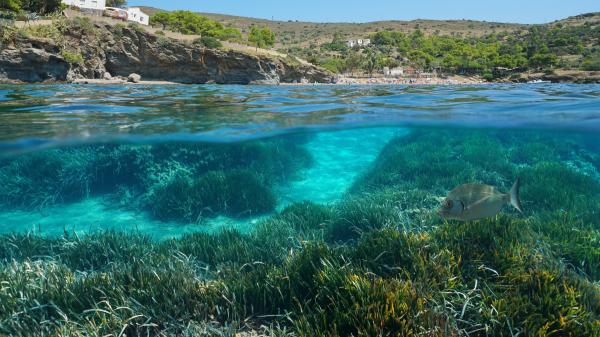
Although it is often confused with an algae, it is a plant that could have evolved to live in salt water and is endemic to the Mediterranean Sea. Posidonia forms extensive underwater meadows that develop in clear waters, where it receives enough sunlight. “These grasslands can occupy large areas of the seabed and are considered one of the most important and productive ecosystems in the Mediterranean,” he says. For this reason, it is considered that Posidonia could help save the Mediterranean.
Posidonia oceanica forms seagrass beds that can save the Mediterranean
According to environmentalist Germán Portillo, “posidonia creates a key habitat for the health of the coast and for the balance of Mediterranean marine ecosystems.” Furthermore, he explains that there are multiple reasons, since this marine plant serves several key points. “One of its main functions is the production of oxygen through photosynthesis.” Posidonia meadows are often considered the ‘lungs of the Mediterranean’, “as they release large amounts of oxygen into the water,” he says.
However, there are more beneficial aspects, such as its key role as a refuge and breeding area for a large number of animal species. “Juvenile fish, mollusks, crustaceans and other animals live among its leaves that use the grasslands as a place of protection, breeding and a source of food.”
In addition, these marine plants also have a function as protectors of the coastline, since, according to Portillo, “they cushion the impact of currents and waves, reducing erosion of the seabed and beaches.”
Finally, and one of the most relevant points why it is considered that Posidonia can save the Mediterranean, it is stated that this plant acts by mitigating the effects of climate change, which is why it is considered a natural ally against global warming that affects the Mediterranean Sea so much. How do you do it? The truth is that this marine plant acts as a carbon sink. “As it is a carbon sink, it can store large amounts of CO₂ in its rhizomes and in the sediments that accumulate under it,” responds the environmental specialist.
It is not just climate change: the other threats that are destroying posidonia in the Mediterranean
Climate change brings an increase in water temperature, marine heat waves and a rise in sea level, factors that, without a doubt, affect the survival of seagrasses, although at the same time they are key to stopping this process.
Although climate change is one of the main threats to Posidonia meadows, there are more factors that work against it. Some natural, such as its extremely slow growth, and others at the hands of humans.
According to the environmental expert, “the anchoring of boats on the grasslands causes their destruction in a short time. Other problems that these ecosystems face are coastal works, dredging and artificial regeneration of beaches, which alter the seabed and increase the turbidity of the water, which makes the photosynthesis process difficult, among other complications.” Of course, marine pollution is another threat these organisms face. “Discharges of wastewater, fertilizers and other pollutants reduce water quality and make it difficult for light to enter,” he says.
Finally, a threat that must not be overlooked is that of invasive species in the Mediterranean. In the specific case of Posidonia, the expert indicates that some exotic algae “grow quickly, compete with Posidonia and can suffocate it, reducing its extension and weakening the meadows.”
Where is there more Posidonia oceanica in Spain?
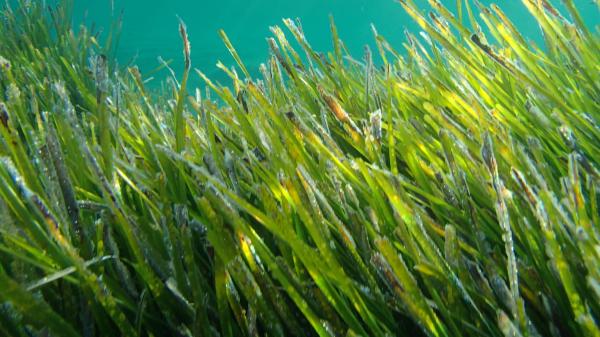
This aquatic plant is distributed along the Mediterranean coasts, but in some areas it has been more affected than others. Currently, the part of Spain that concentrates the most oceanic posidonia is the Balearic Islands. In fact, it is considered that half of the posidonia on the Spanish coasts of the Mediterranean is in the Balearic Islands. The Balearic Islands are the place where this plant has been found at a greater depth, being able to live at more than 40 meters, thanks to the quality and transparency of the water in this area.
Posidonia resists: a report confirms the recovery of seagrass beds in Benidorm
Although they face several threats, according to a report by the Institut d’Ecologia Litoral, Benidorm’s posidonia meadows are in good health. The annual report of the Posimed project indicates a positive trend in the stability and density data of the coverage of the Posidonia meadows on the coast of Benidorm. The Councilor for Beaches and Environment, Mónica Gómez, has declared that the Posidonia oceanica meadow “is distributed along the entire coastline of Benidorm and constitutes a large green lung under the sea, which is responsible for the quality and transparency of our bathing waters, also being a refuge and breeding area for numerous marine species and protecting our coast from erosion.” Therefore, the Posidonia meadows of the Mediterranean are already showing signs of improvement and, little by little, they can help more to mitigate the serious effects of climate change and the pollution of Mediterranean waters.
If you want to read more articles similar to This is the little-known plant from the Mediterranean Sea that could save it: “It is essential for the balance of marine ecosystems”, we recommend that you enter our Other environment category.
- Posidonia, the submerged forest of the Mediterranean. Discover Menorca. Available at: https://www.descobreixmenorca.com/es/posidonia/
- Institute of Coastal Ecology. Posimed. Available at: posimed.ecologialitoral.com
