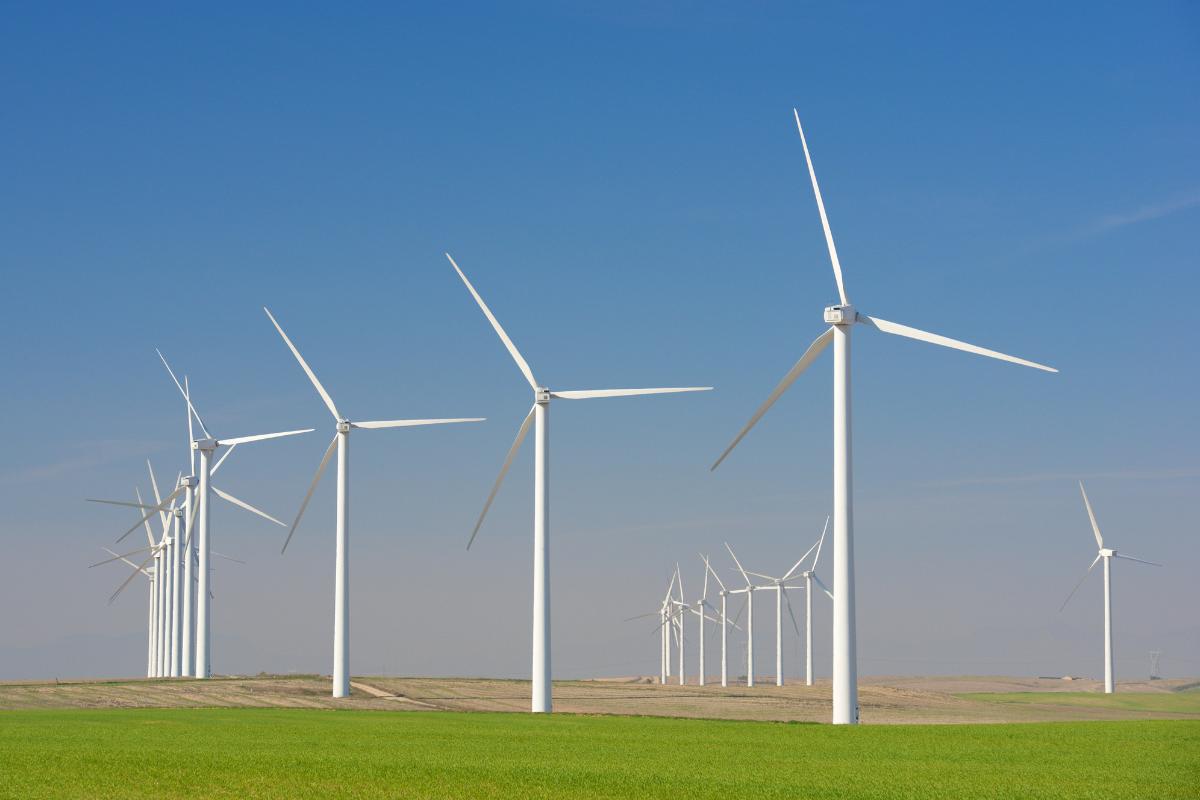
In Spain there are a total of 1,345 wind farms that have more than 22,000 windmills and generate approximately 39,000 jobs. With a cumulative power of 30,000 MW, wind energy has been the main source of electrical energy generation in its territory during 2023. Wind energy is a renewable, unlimited and inexhaustible source of energy, which takes advantage of the kinetic energy of the wind through wind turbines to produce electricity. Spain has positioned itself as the second European country in installed wind power and the fifth in the world.
In the following Evidence Network article, we will describe in detail everything you need to know about wind farms in Spain, we will find out how many parks exist, which are the Spanish communities with the most parks and we will also discover 10 examples. Don’t miss it!
How many wind farms are there in Spain?
Spain has been a pioneer in using wind energy as a renewable energy source and the first parks have been installed in regions with frequent winds. Likewise, it is the second country in Europe in installed wind power and the fifth country in the world after China, the United States, Germany and India. But how many wind farms are there in Spain? According to data obtained from the Wind Business Association (AEE), there are currently a total of 1,345 wind farms with more than 22,000 windmills in more than 1,053 municipalities, in which more than 39,000 people work.
These advances are mainly due to the legislation in force in Spanish territory such as the Electricity Sector Law of 1997 and its development regulations, the Research and Development Program for the use of wind energy and its conversion into electricity of 1979 launched by the Ministry of Industry and Energy, and the National Renewable Energy Plan approved in 2011, among other legal tools.
Benefits of wind energy
Wind energy has numerous benefits, including:
- Take advantage of the energy produced through the wind (abundant and inexhaustible), avoiding the use of fossil fuels and the emission of large tons of carbon dioxide into the atmosphere
- Generates employment.
- Compared to other energy sources, its installation and commissioning costs are cheaper.
- Its maintenance is simple because the systems become more efficient over time.
- Reduces the cost of electricity.
Environmental impact of wind energy
Although wind energy has a lower environmental impact compared to other energy sources, the installation and start-up of the parks generates certain consequences on the environment, such as:
- Noise pollution due to the noise produced by the turbine.
- Alterations in the soil, since it can partially or totally destroy it, compact it and/or erode it.
- Removal and degradation of plant cover.
- Collision of birds against the turbine blades.
- Destruction or degradation of habitats.

Which are the Autonomous communities with the most wind farms?
The analysis of the distribution of wind farms shows that in almost all provinces there are wind farms with the exception of Madrid, Córdoba, Girona, Alicante, Badajoz and the autonomous cities of Ceuta and Melilla. However, their distribution between regions is very unequal.
According to a report by the Wind Business Association (AEE) that deals with the macroeconomic impact of the sector, five autonomous communities: Castilla y León, Aragón, Galicia, Andalusia and Castilla-La Mancha, concentrate more than 70% of the country’s wind power. 50% of the new 1,600 MW that are operational were located in plants in Castilla-La Mancha (837 MW) and approximately 30% in Aragón (492 MW). Likewise, new powers were installed in Castilla y León, Catalonia, the Canary Islands, Navarra, Asturias and Andalusia. Below, you can see this map of the wind farms in Spain, with the power of each autonomous community.

Examples of wind farms in Spain
- El Tablado (Castilla y León): located in Borobia and Beratón, province of Soria. It has a power of 19.80 MW.
- El Cerro (Castilla y León): located in the Sedano Valley and the Altos de Dobro in the province of Burgos, it has a power of 19.80 MW.
- Magaña (Castilla y León): present in Oncala, Soria, with a power of 24.75 MW.
- Páramo de Poza II (Castilla y León): located in Poza de la Sal, Burgos. It has a total power of 48.74 MW.
- Juno (Castilla y León): the Juno wind farm covers Suellacabras, Narros, Magaña and Aracón (municipal ejidos in the province of Soria) and has a power of 49.50 MW.
- La Serreta (Aragón): in Rueda de Jalón and Plasencia de Jalón, province of Zaragoza, it has a power of 49.50 MW.
- Tardienta I (Aragón): within the municipality of Tardienta in Huesca, the Tardienta I wind farm is located with 49.50 MW of power.
- Sierra Costera II (Aragón): the Sierra Costera II wind farm covers the municipalities of Cañada Velilla, Cuevas de Almudén, Mexquita de Jarque and Galve, and is located in the province of Teruel. It has a MW power: 40.80.
- Cerro Vicente (La Mancha): located in Pozo Cañada and Chinchilla del Monte Aragón, Albacete generates a power of 39.10 MW.
- Campalbo (La Mancha): located in Graja y Campalbo, province of Cuenca, it has a power of 49.30 MW.
Now that you have more information about wind farms in Spain, you may also be interested in these articles on Renewable energies in Spain and Renewable energies: what they are and examples.
If you want to read more articles similar to Wind farms in Spain, we recommend that you enter our Renewable energies category.
Wind Business Association. Available at https://aeeolica.org/
Espejo Marín, C. (2004). Wind energy in Spain. Geographical investigations, no. 35, 2004; pp. 45-65.
Ruiz, JM, & Serrano, MLT (2006). Identification of significant environmental impacts in the implementation of Wind Farms. An example in the municipality of Jumilla (Murcia). Geographic Investigations (Esp), (41), 145-154.
