Summer heat challenges our refrigerators in ways we rarely consider. Most people instinctively adjust their appliance settings when temperatures soar, yet this well-intentioned action often backfires spectacularly. The culprit? A fundamental misunderstanding of how cooling systems actually function during warmer months.
Understanding refrigerator temperature controls during hot weather
Many homeowners make a critical error when summer arrives. They assume the numbered dial on their refrigerator corresponds directly to degrees, leading to incorrect adjustments that compromise food safety and energy efficiency. These numbers actually indicate cooling power levels, not temperature measurements.
On most models featuring numbered dials or switches positioned near the door, higher numbers generate stronger cooling. This counterintuitive system confuses countless users who expect traditional temperature readings. During winter months, setting the dial to 3 provides adequate refrigeration. However, summer conditions require increased power, typically demanding settings between 4 and 5.
The most common mistake involves reducing the dial to 1 when temperatures climb. This action significantly weakens cooling capacity precisely when maximum performance becomes essential. Food spoilage accelerates, energy consumption paradoxically increases, and the compressor works harder to maintain safe temperatures. Understanding this relationship transforms how we approach seasonal adjustments.
Professional appliance technicians recommend monitoring your refrigerator’s behavior after making changes. The compressor, located at the unit’s rear, produces distinctive sounds during normal operation. These audio cues reveal whether adjustments improve or hinder performance. When turning the dial higher triggers compressor activation, cooling power increases appropriately.
Optimizing ventilation and maintenance for summer efficiency
Beyond temperature settings, proper ventilation becomes crucial during hot weather. Many refrigerators struggle not due to internal settings, but because external conditions prevent adequate heat dissipation. Your appliance needs breathing room to function effectively when ambient temperatures rise.
Maintaining minimum clearances ensures optimal performance. Leave at least 5 centimeters between the refrigerator’s back and any wall surface. Above the unit, provide 10 centimeters of clearance before reaching the ceiling or cabinets. These spaces allow hot air to escape properly, preventing the system from overworking.
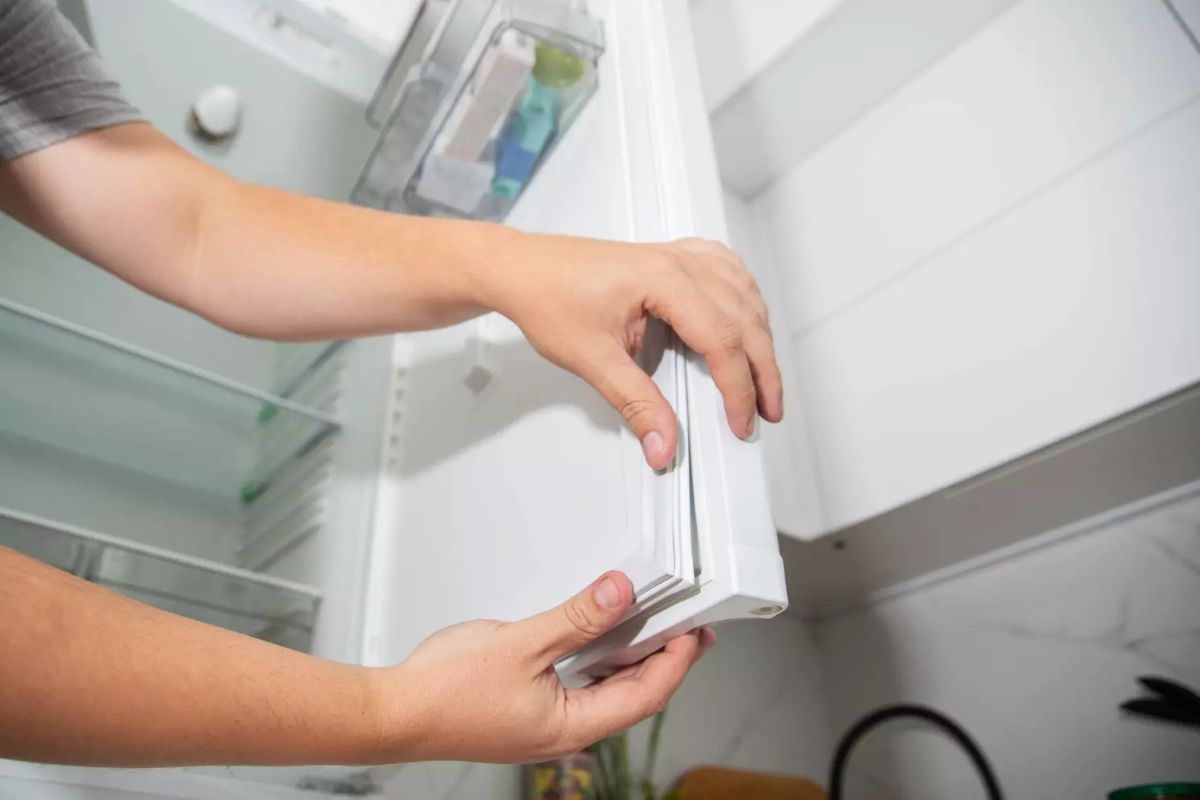
Regular maintenance significantly impacts summer performance. Dust accumulation on rear coils forces the motor to work harder, increasing energy consumption while reducing cooling effectiveness. Monthly cleaning of these components during warm months prevents efficiency losses. Similarly, door seals require attention as heat can compromise their integrity.
| Maintenance Task | Frequency | Summer Impact |
|---|---|---|
| Coil cleaning | Monthly | High – prevents overheating |
| Seal inspection | Weekly | Critical – stops warm air entry |
| Clearance check | Seasonal | Essential – enables heat dissipation |
Door seal maintenance becomes particularly important as temperatures rise. Breathe: the way you do it is unique and says a lot about your health research shows how environmental factors affect our bodies, similarly temperature fluctuations stress refrigerator seals. Wipe them regularly with damp cloths to maintain flexibility and prevent cracking.
Strategic food placement and usage habits for maximum cooling
Understanding internal temperature zones transforms food storage effectiveness during summer months. Static cooling systems create distinct temperature gradients that smart users can exploit for optimal preservation. Different foods require specific temperature ranges, making placement strategy crucial.
The coldest zone, typically 0-3°C, occupies the bottom shelves where dense cold air naturally settles. Raw meats and fish belong here, especially during hot weather when bacterial growth accelerates. Middle sections maintain 4-6°C, perfect for dairy products that need consistent cooling without freezing.
Vegetable drawers operate at 8-10°C, providing humidity control alongside moderate cooling. Door compartments, experiencing the most temperature fluctuation, suit items like beverages and condiments that tolerate 6-8°C ranges. Following these placement principles maximizes your refrigerator’s natural cooling patterns.
- Bottom shelves: raw proteins requiring 0-3°C
- Middle areas: dairy products needing 4-6°C stability
- Vegetable drawers: produce thriving at 8-10°C with humidity
- Door sections: beverages and condiments accepting 6-8°C variations
Usage habits significantly impact cooling efficiency during summer. Frequent door opening introduces warm air that the system must remove. Each opening can raise internal temperatures by several degrees, forcing the compressor to work harder. Planning access reduces energy waste while maintaining consistent temperatures.
Modern dietary research, including studies on how the sugars you drink are more harmful than those you eat, emphasizes proper food storage’s role in health maintenance. Similarly, the obesity epidemic is more linked to an incorrect diet, than to sedentary lifestyle research highlights how food quality affects wellbeing.
Advanced techniques for perfect summer refrigeration
Professional techniques can fine-tune your refrigerator’s performance beyond basic adjustments. Compressor sound analysis provides immediate feedback about setting effectiveness. This motor creates recognizable patterns during normal operation, cycling on and off according to temperature demands.
Testing different settings while listening for compressor responses reveals optimal configurations. When increasing the dial number causes the compressor to stop, you’ve decreased cooling power. Conversely, if it activates immediately, cooling capacity has increased. This feedback method surpasses guesswork, enabling precise calibration.
Environmental factors beyond temperature affect performance. Humidity levels influence how hard your refrigerator works to maintain set temperatures. High humidity makes the system work harder, similar to how why does alcohol hurts our body so bad research shows external factors impact internal processes.
Kitchen ventilation improvements can dramatically enhance refrigerator efficiency. Reducing ambient heat through exhaust fans or air conditioning decreases the workload on cooling systems. Even simple changes like relocating heat-producing appliances away from refrigerators yield noticeable improvements.
Memory and cognitive function research, such as is it good for the pencils for memory? studies, demonstrates how environmental optimization affects performance. Kitchen organization applies similar principles, where scientists reveal how to cut onions without crying, and their method is incredibly simple techniques show how understanding mechanisms improves outcomes.
Health considerations also matter when optimizing refrigeration. Research on why does obesity take away the taste of eating us? connects proper food storage with maintaining nutritional quality. Additionally, concerns about the eritrito sweetener is dangerous for the health of the cerebral blood vessels underscore the importance of preserving food integrity through proper cooling.
