
For centuries, beavers completely disappeared from Spain. Nobody expected to see them again in the rivers of the peninsula. Therefore, when gnawed trees, strange footprints and small prey began to appear in different parts of the Ebro basin, many researchers thought that there had to be an alternative explanation. However, there wasn’t one. The beavers were back, and behind their return was an even more surprising story: someone had illegally released 18 beavers in Spain. Today, more than two decades later, these animals are already advancing through the Catalan rivers and are the protagonists of one of the most curious ecological debates in recent years.
The beaver mystery that baffled scientists
The story began in the early 2000s. While studying other species on the banks of the Aragón River, several researchers began to detect signs that were difficult to ignore: chewed trunks with a very specific shape, burrows, remains of accumulated branches and marks that clearly pointed to the presence of beavers.
The problem was obvious. Officially, there were no beavers left in Spain for centuries.
For a long time there were doubts about when exactly the European beaver disappeared from the Iberian Peninsula. Some theories pointed to the 17th or 18th century, although other studies place the last reliable evidence even much earlier. The only thing clear was that the species had been extinct in Spanish territory for a long time.
That is why the discovery left scientists baffled. Shortly after, investigations ended up revealing the most unexpected explanation: someone had clandestinely released 18 European beavers from Bavaria between Navarra and La Rioja. It was discovered that the reintroduction of these specimens was carried out by Central European naturalist activists, who did not take into account Spanish or European regulations.
The animals survived, and not only that: they began to rapidly expand along different river stretches.
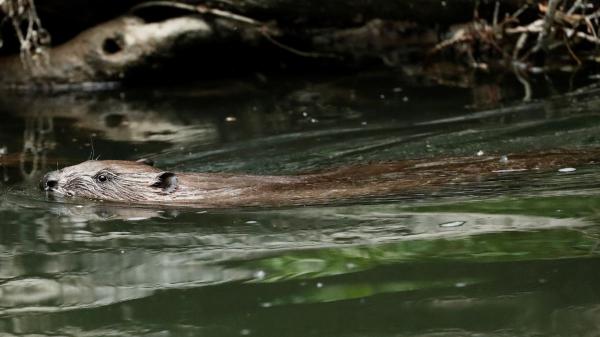
Beavers in Spain: from an illegal release to an unstoppable expansion
What seemed like an isolated action ended up becoming an expansion that was difficult to stop. In just a few years, beavers began to colonize new points in the Ebro basin. Their ability to adapt to the environment and reproduce accelerated the process much more than the administrations expected.
As time went by, the species advanced downriver until reaching areas close to Catalonia. The latest confirmed sightings already place specimens in areas of the Segrià, very close to the confluence between the Segre and the Cinca.
Experts believe it was only a matter of time. In fact, many researchers believe that beavers will end up settling stably in different Catalan river stretches in the coming years.
The most striking thing is that the return of the beaver in Spain began to be considered a problem. In the first years, administrations tried to capture specimens to prevent the species from expanding. However, population growth made any eradication attempt very difficult.
Over time, the view of these animals also changed. Europe recognized that the European beaver was a native species that had become extinct due to human pressure and hunting. Finally, in 2020, Spain included the beaver in the List of Wild Species under Special Protection Regime (LESRPE), which means that it is currently protected by law.
The paradox is difficult to ignore: a species that returned through an illegal release ended up becoming a protected animal.
The unexpected effect of beavers on water and climate
But the debate over beavers is not just about their expansion. In recent years, various scientific studies have begun to point out that these animals could have positive effects on ecosystems and water.
Beavers build small dams with branches, mud and sediment. These structures slow down the passage of water and generate wet areas around the rivers. Thanks to this, water infiltrates better into the soil and helps recharge aquifers.
In addition, these wetlands retain moisture for longer and create natural refuges for many other species. For these reasons they are known as “ecosystem engineers.”
Some researchers also highlight another possible benefit: the ability to store carbon. A recent scientific study concluded that areas with beaver presence can capture up to 26% more carbon thanks to the accumulation of sediment and organic matter.
In a context marked by drought and extreme temperatures, many experts consider that these transformations could help mitigate some effects of climate change.
For this reason, the beaver has gone from being seen only as a problematic species to also becoming a possible environmental ally.
An open debate as they continue to move forward
Even so, not everyone welcomes its expansion. Some farmers have expressed concern about possible damage near crops located next to rivers, especially from the felling of small trees and branches.
Specialists, however, remember that beaver activity is usually concentrated very close to the shores and that their impact is usually localized.
While the debate continues, beavers continue doing what they have been doing for centuries: building dams, modifying small river stretches and expanding into new territories.
And so, more than twenty years after that illegal release of 18 animals, Spain is experiencing a situation as strange as it is fascinating: an extinct species has returned, has already reached the Catalan rivers and could end up helping to repair part of the environmental damage caused by humans themselves.
If you want to read more articles similar to 18 beavers were illegally released in Spain after centuries of disappearance: now they have arrived in Catalonia, we recommend that you enter our Biodiversity category.
