
The fight against climate change forces us to rethink even such everyday elements as the pavement that covers streets and highways. Although rarely mentioned in sustainability debates, the manufacturing of asphalt mixtures generates a significant carbon footprint due to the extraction of materials, industrial processes and the transportation necessary for its production.
With this challenge in mind, Barcelona has decided to convert part of its streets into an urban laboratory for climate innovation. The City Council has selected the Biochar project as one of the winning initiatives of the “21st century street section” challenge, promoted together with the BIT Habitat Foundation, BIMSA and the Barcelona Provincial Council. The objective is to develop more sustainable pavements capable of drastically reducing emissions associated with public works.
The proposal has a particularly striking element: using waste from the olive sector, such as olive pits, to make part of the asphalt.
The unexpected ingredient that replaces part of traditional asphalt
The key to the project lies in replacing the so-called filler calcareous, a mineral powder that is part of conventional asphalt mixtures, biochar or biochar.
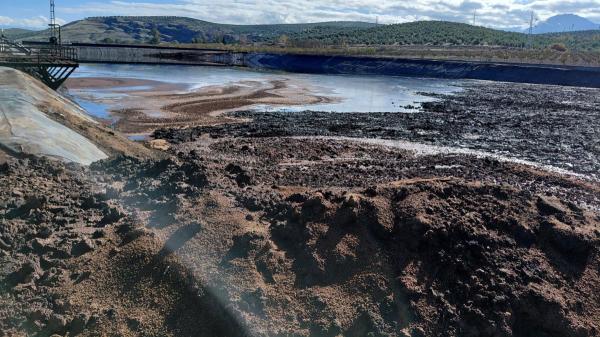
This material is obtained through the thermochemical transformation of biomass, in this case olive pits and pine remains. The result is a carbon-rich product capable of storing carbon dioxide for long periods of time.
According to the BIT Habitat Foundation, the biochar used in the project has a high potential for carbon sequestration and maintains performance equivalent to those of conventional materials currently used in the construction of urban pavements.
The technology has been developed by the companies AMSA and ELSAN together with researchers from the Universitat Politècnica de Catalunya (UPC), while the Andalusian company Carboliva provides the biochar made from olive grove waste.
According to calculations made by the project team, the complete replacement of the filler by biochar would allow the CO₂ emissions associated with the manufacturing of these asphalt mixtures to be reduced by around 75-76%.
Why this asphalt can become a small CO₂ store
The main difference between this pavement and conventional pavement is that the carbon previously captured by olive trees during their growth is trapped within the biochar and remains immobilized under the urban soil for decades.
Instead of acting solely as a building material, pavement becomes a small carbon sink. This characteristic has aroused growing scientific interest in different industrial sectors because it allows agricultural waste to be transformed into materials capable of contributing to the decarbonization of infrastructure.
The Spanish Biomass Association (AVEBIOM) highlights that this approach constitutes an example of a circular economy, since it converts a low-value agricultural by-product into a raw material for advanced industrial applications.
The idea also fits with a line of research that is gaining weight in numerous countries. A report from the Intergovernmental Panel on Climate Change considers biochar one of the technologies with the potential to remove carbon from the atmosphere and store it in a relatively stable way in different industrial and agricultural uses.
The big question: does it last the same as conventional asphalt?
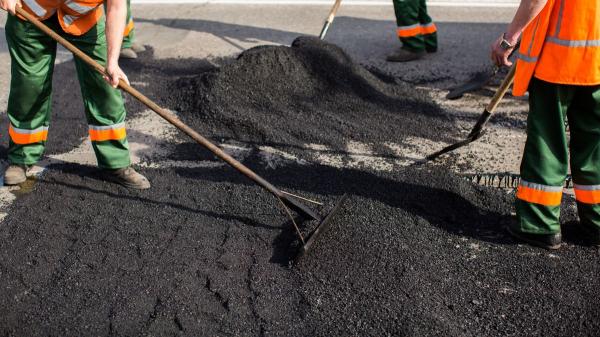
The big question is whether a mixture made from agricultural waste can withstand the intense traffic of a big city.
The first tests carried out by the UPC suggest that it is. Researchers have observed that mixtures with biochar equal and even exceed some of the performance of conventional asphalt. Among the advantages identified are greater water resistance, better behavior against sudden changes in temperature and a greater ability to resist the appearance of cracks.
Improving durability is especially relevant in a context of climate change. More frequent heat waves and extreme thermal oscillations are accelerating the deterioration of numerous urban pavements and roads in different regions of the world.
The date on which Barcelona will begin to test it
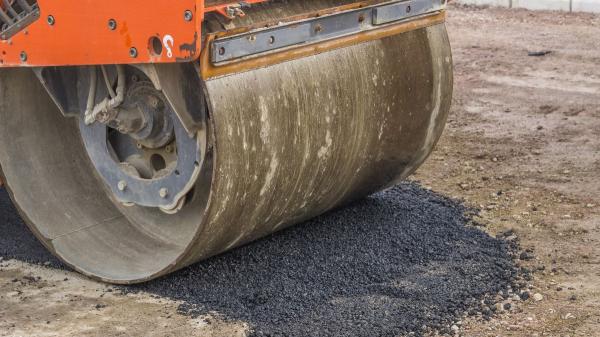
The project is currently in the applied research and prototyping phase. The initiative has funding of 90,000 euros and will continue to be developed until September 2026. A testing phase will then begin on real streets in Barcelona, scheduled for 2027.
During this period, technicians will evaluate aspects such as mechanical resistance, durability, behavior in traffic and real carbon storage capacity. If the results confirm the initial expectations, the system could be extended to other urban actions and become a model that can be exported to other European cities.
The initiative reflects an increasingly visible trend in contemporary urban planning: taking advantage of waste from agricultural activities to develop more sustainable construction materials. In this case, a by-product as abundant in Spain as olive pits could end up forming part of the streets of one of the main European cities.
Beyond technological curiosity, the project raises a fundamental question: whether the urban infrastructures of the future can stop being a source of emissions and become an active tool against climate change.
If you want to read more articles similar to Barcelona will turn olive pits into roads: the new asphalt that promises to reduce CO₂ emissions by up to 76%, we recommend that you enter our Ecological technology category.
