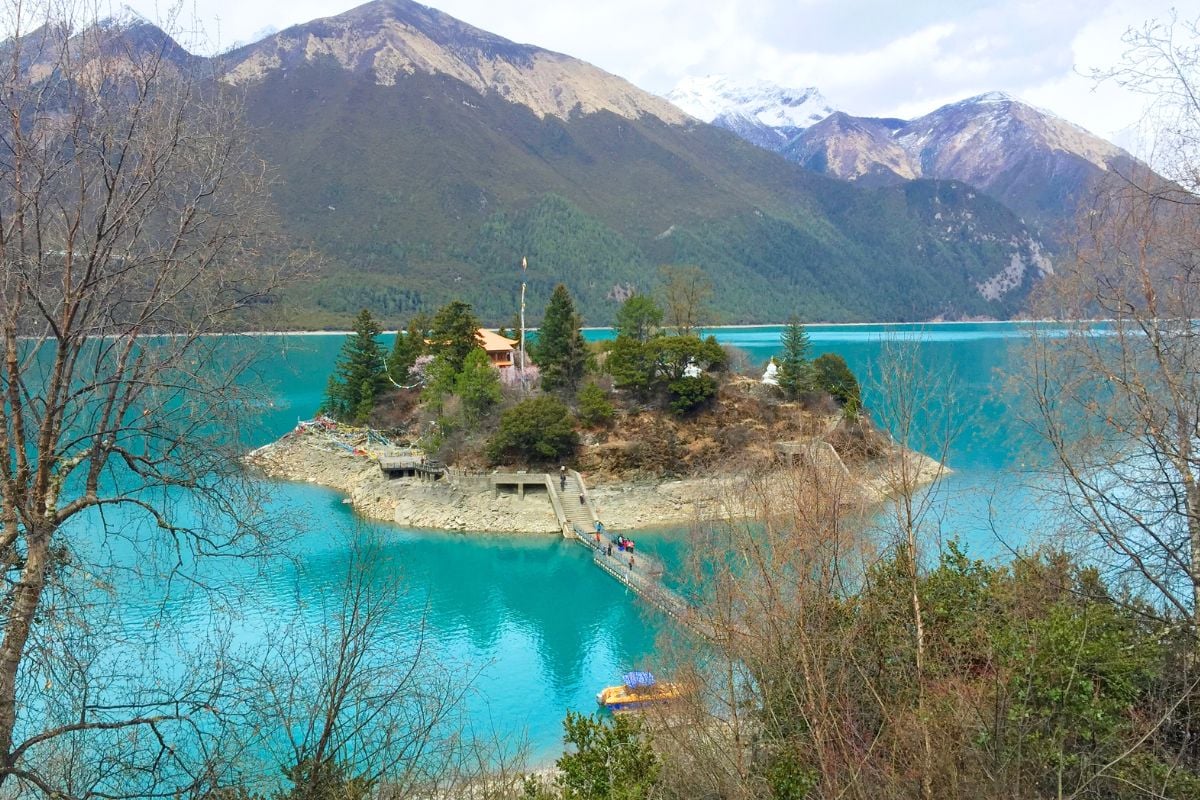
The world’s largest hydroelectric project has officially broken ground in Tibet, marking a pivotal moment in global energy infrastructure. This 154 billion dollar megaproject represents China’s most ambitious hydroelectric endeavor, dwarfing even the massive Three Gorges Dam in scale and complexity. The Yarlung Tsangpo River, flowing through the heart of the Tibetan plateau, will soon host five interconnected power stations designed to generate unprecedented amounts of clean electricity.
Located in Nyingchi, a strategic city nestled in the southeastern slopes of the Himalayan range, this colossal undertaking promises to reshape regional energy dynamics. The project’s magnitude extends beyond mere construction statistics, potentially influencing geopolitical relationships across South Asia. Chinese officials ceremonially initiated construction activities, emphasizing the project’s significance for national energy security and regional development.
Technical specifications and engineering challenges of the Tibetan hydroelectric complex
This extraordinary infrastructure project consists of five cascading hydroelectric facilities positioned at various altitudes along the Yarlung Tsangpo River. The engineering design resembles a gigantic staircase carved into mountain terrain, maximizing energy generation potential through strategic elevation differences. Annual electricity production targets reach 300 billion kilowatt-hours, representing triple the capacity of China’s existing Three Gorges Dam facility.
The total investment of 1.2 trillion yuan demonstrates China’s commitment to renewable energy expansion on an unprecedented scale. Construction challenges include extreme altitude conditions exceeding 3,000 meters, seismic activity risks, and harsh weather patterns typical of high-altitude environments. Engineers must navigate complex geological formations while ensuring structural integrity against natural disasters common in earthquake-prone regions.
| Project Component | Specification | Impact |
|---|---|---|
| Number of facilities | 5 cascading stations | Maximized energy output |
| Annual production | 300 billion kWh | Triple Three Gorges capacity |
| Total investment | 154 billion USD | Largest infrastructure project |
| Altitude | Over 3,000 meters | Extreme construction conditions |
The China Yajiang Group, a newly established state-owned enterprise, oversees project management, construction coordination, and environmental preservation responsibilities. This specialized organization represents China’s strategic approach to managing complex infrastructure developments while maintaining centralized control over critical national assets.
Environmental concerns and ecological implications across the Himalayan watershed
The Yarlung Tsangpo River supports unique ecosystems containing endemic species and ancient forest communities adapted to specific water cycles. Construction activities threaten to disrupt delicate ecological balances, potentially causing irreversible habitat destruction and biodiversity loss. Migratory fish populations face significant challenges as dam structures interrupt natural spawning routes and seasonal movement patterns.
Thousands of local residents must relocate from ancestral lands, continuing China’s history of large-scale population displacement for infrastructure projects. Unlike previous relocations, these communities inhabit remote high-altitude environments with limited alternative settlement options. The causes of deforestation often include massive infrastructure projects that require clearing vast forest areas for construction access.
River flow modifications could affect downstream agricultural systems, particularly in regions dependent on predictable seasonal flooding patterns. Traditional farming communities have adapted cultivation practices to natural water cycles over generations, making sudden changes potentially devastating for food security. Water quality concerns arise from construction-related contamination and altered sediment transport patterns. Understanding how to avoid water pollution becomes crucial when managing such large-scale water engineering projects.
The project’s environmental monitoring systems must address these critical challenges :
- Protection of endangered species habitats
- Preservation of forest ecosystems
- Maintenance of water quality standards
- Mitigation of downstream agricultural impacts
- Community resettlement with adequate compensation
Geopolitical tensions and regional diplomatic challenges surrounding water resources
The Yarlung Tsangpo River transforms into the Brahmaputra as it flows through India and Bangladesh, serving millions of people dependent on its waters for agriculture and daily survival. Any upstream modifications to flow patterns could significantly impact downstream communities, creating potential for international disputes over water rights and resource management.
India has responded by accelerating its own hydroelectric projects in Arunachal Pradesh, a disputed territory claimed by China as part of Tibet. This competitive infrastructure development reflects broader strategic rivalries between Asian powers seeking to secure energy resources and regional influence. The environmental impact of oil and natural gas alternatives makes hydroelectric projects increasingly attractive despite their own ecological challenges.
Chinese authorities emphasize cooperation and shared benefits, presenting the project as regional energy security enhancement rather than geopolitical maneuvering. However, critics argue that controlling major river systems provides significant leverage in diplomatic negotiations and regional power dynamics. The potential for water flow manipulation during political tensions raises concerns about weaponizing natural resources.
Vice Premier Zhang Guoqing highlighted technological innovation, seismic safety measures, and environmental compatibility during project inauguration ceremonies. These assurances attempt to address international concerns while maintaining China’s sovereign right to develop internal resources according to national priorities.
Long-term implications for global renewable energy development and regional stability
This unprecedented hydroelectric project represents China’s commitment to renewable energy transition while demonstrating state capacity for managing complex infrastructure challenges. The project’s success could influence similar developments worldwide, particularly in regions with significant hydroelectric potential but limited technical expertise or financial resources.
Export electricity plans extend China’s energy influence beyond national borders, creating economic dependencies that complement existing trade relationships. Regional countries may benefit from increased electricity access while potentially compromising energy independence through reliance on Chinese-controlled infrastructure. This dynamic mirrors broader patterns in China’s Belt and Road Initiative infrastructure development strategy.
Urban areas across Asia struggle with pollution challenges, and projects like this could help address energy needs while reducing reliance on fossil fuels. However, the most polluted cities in the world often require comprehensive environmental strategies beyond just clean energy generation.
Educational institutions play vital roles in environmental awareness, and understanding actions to take care of the environment at school helps develop future environmental stewards. Meanwhile, what is reforestation and its importance becomes increasingly relevant as large projects like this require careful environmental restoration planning.
The project’s ultimate success depends on balancing energy production goals with environmental protection, community welfare, and regional diplomatic stability. Future monitoring will determine whether this massive infrastructure investment achieves sustainable development objectives or exacerbates existing environmental and political challenges across the sensitive Himalayan region.

AI is the son of the AMD
AI is the spawn of Satan…king of all evil.
This is why China illegally occupied Tibet.